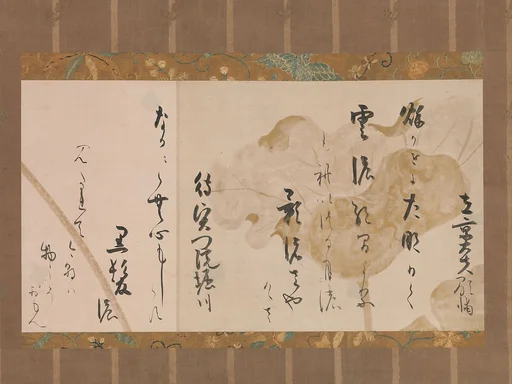
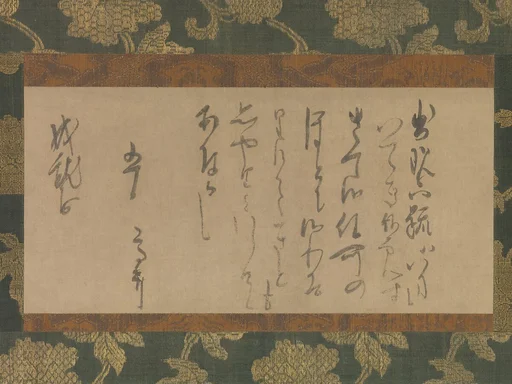
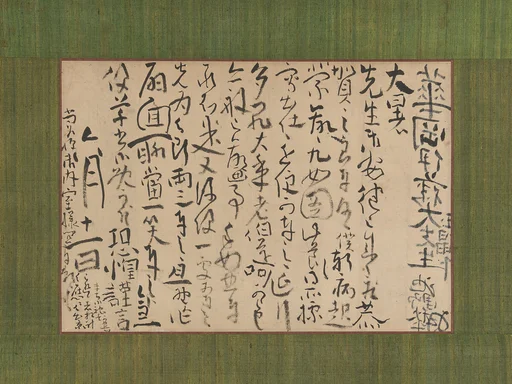
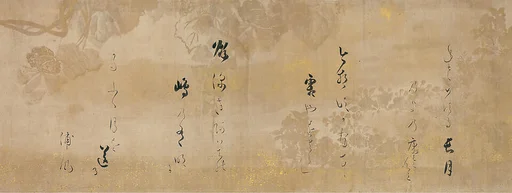
蜀山人賛 狂歌|Two Kyōka (Playful Thirty-One- Syllable Verse)
Shokusanjin (Ōta Nanpo)
1819 · Hanging scroll; ink on paper · Asian Art
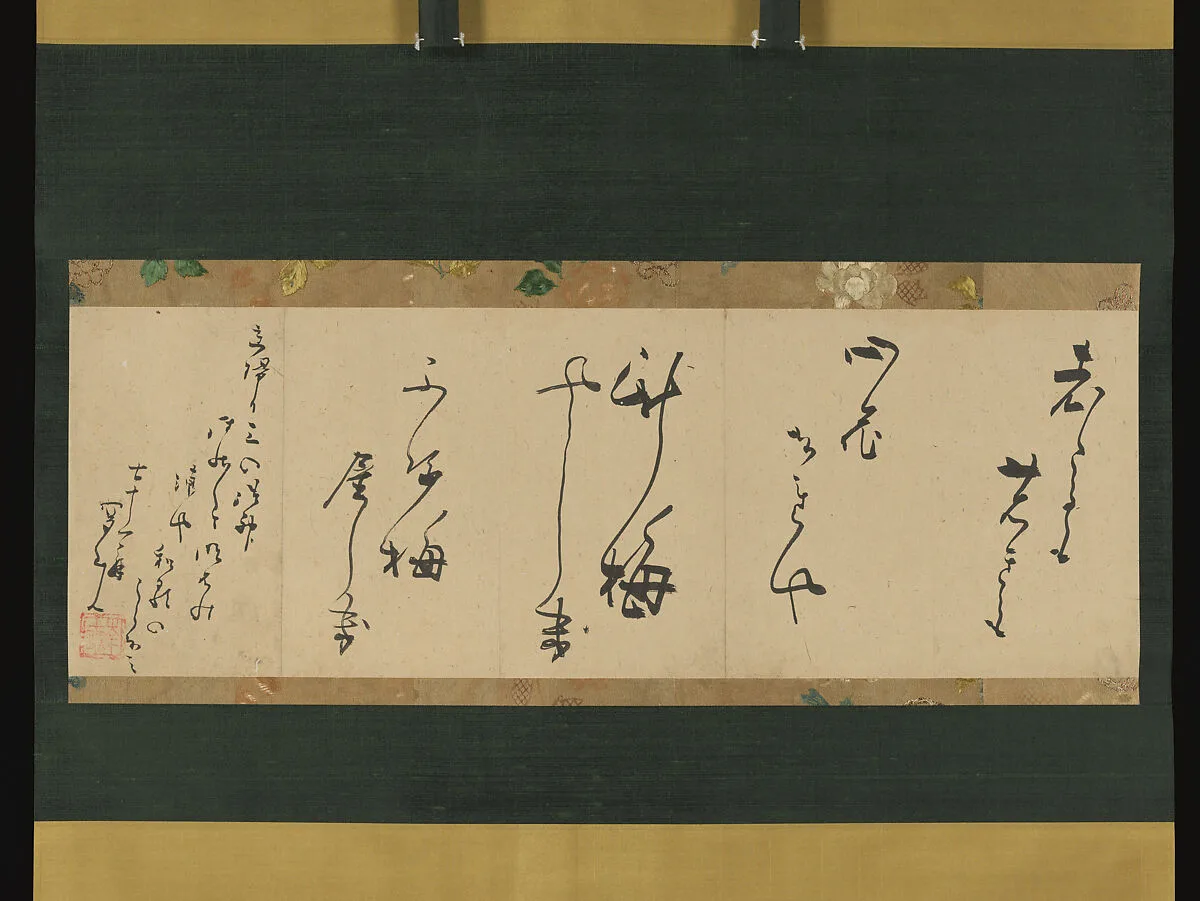
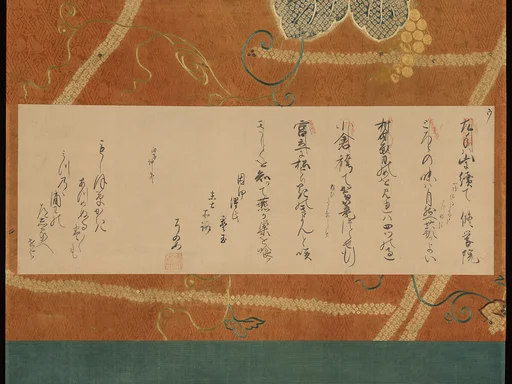
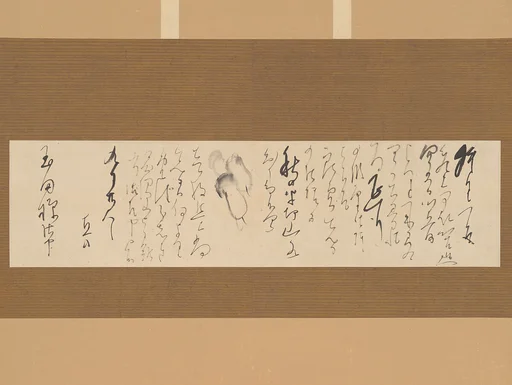
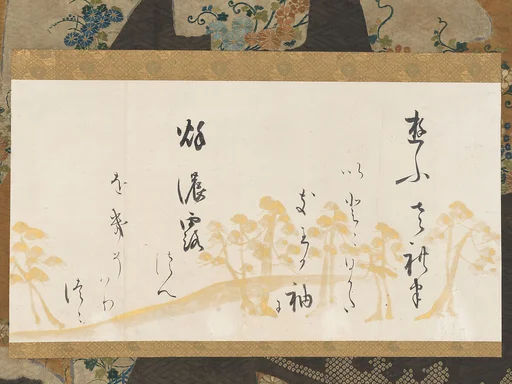
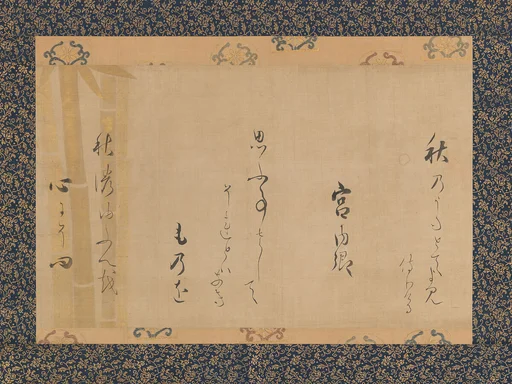
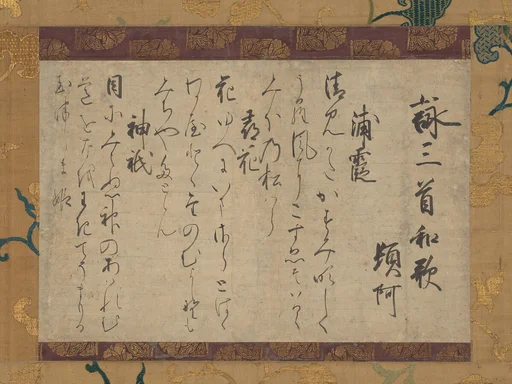
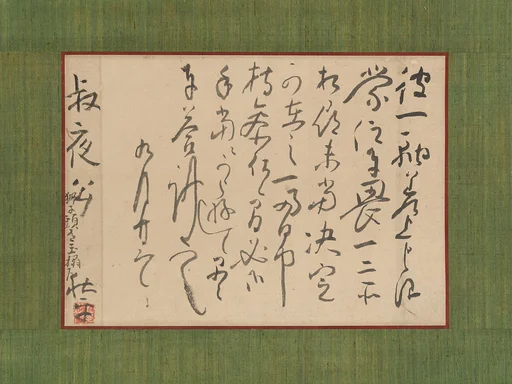
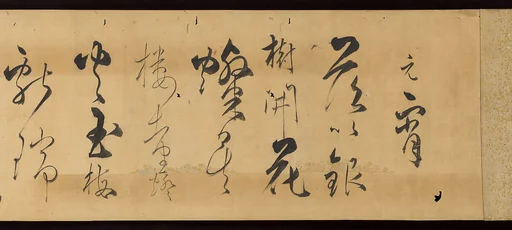
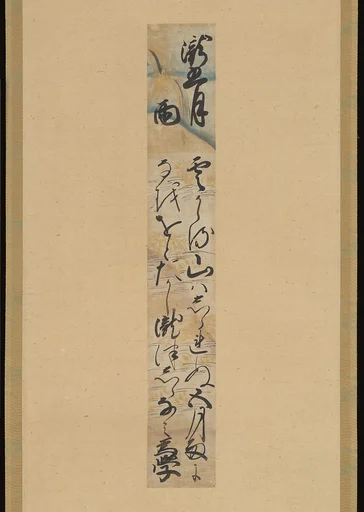
Two Japanese poems, one in oversized characters, the other more compactly rendered, are inscribed with dynamic flourish by Shokusanjin (Ōta Nanpo), one of the great literary arbiters of late Edo-period salon culture. The first poem celebrates the “New Plum Residence” in Edo (present-day Tokyo), which still survives, and includes the “Garden of One Hundred Flowers of Mukojima” (Mukojima Hakka-en), originally built by Sawara Kikuu (1762–1831), a wealthy literatus and antiquarian. The second poem is about the three spirits of poetry, Sumiyoshi-gami, Tamatsushima-gami, and Tenman-tenjin. Well versed in both classical Chinese and Japanese literature, Shokusanjin was on close terms with artists of various schools. Inscriptions in his idiosyncratic calligraphic style appear on many paintings of this era.
- Artist
- Shokusanjin (Ōta Nanpo)
- Date
- 1819
- Medium
- Hanging scroll; ink on paper
- Culture
- Japan
- Department
- Asian Art
- Credit line
- Purchase, Raymond and Priscilla Vickers Gift, 2017