Untitled
Tang Yin|Unidentified artist
Date unknown · Hanging scroll; ink and color on paper · Asian Art
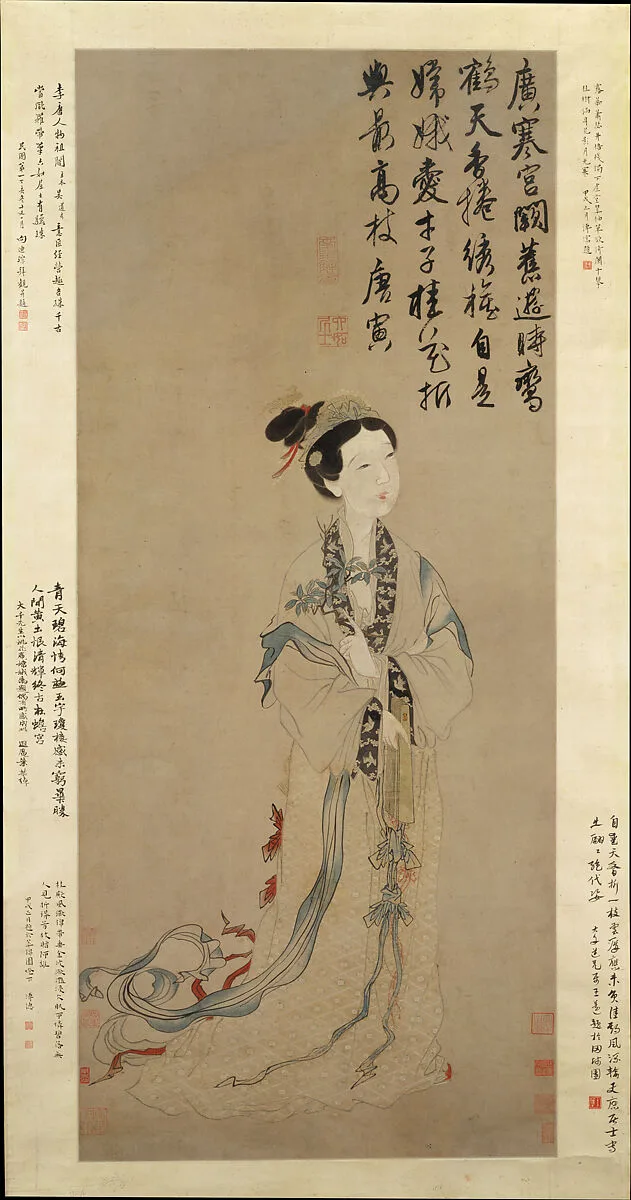
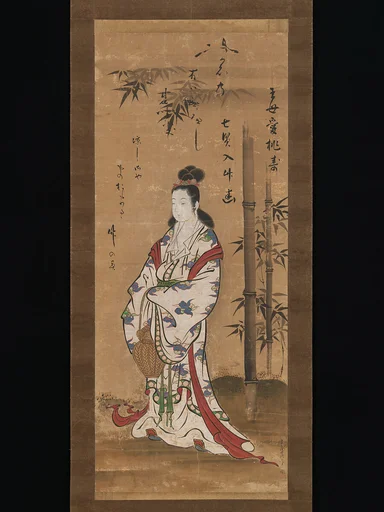
A supremely gifted scholar and painter, Tang Yin forfeited all chances of an official career after being involved in an examination scandal in the capital in 1499. Turning to painting and writing poetry for a living, he led the life of a dissolute scholar and died in poverty. The brilliantly executed Moon Goddess, Chang E is a poignant reminder of Tang Yin's dashed dreams for success in the official examinations, symbolized by the cassia branch in the goddess's left hand. (The word for "cassia" [gui] is a pun on the word for "nobility" [also pronounced gui].) Tang Yin's poem, in bold calligraphy, reads: She was long ago a resident of the Moon Palace, Where phoenixes and cranes gathered and embroidered banners fluttered in heavenly fragrance. Chang E, in love with the gifted scholar, Breaks off [for him] the topmost branch of the cassia tree. A frequent visitor to Suzhou's notorious pleasure quarter, Tang Yin may have painted this glamorous figure, a portrait perhaps, for a favorite companion, whom he regarded as a goddess condemned to mortal suffering. A rectangular seal next to his signature proudly proclaims the artist's moment of worldly success, which occurred in 1498: "Placed First [in the] Nanjing [Provincial Examination]."
- Artist
- Tang Yin|Unidentified artist
- Date
- Date unknown
- Medium
- Hanging scroll; ink and color on paper
- Culture
- China
- Department
- Asian Art
- Credit line
- Gift of Douglas Dillon, 1981