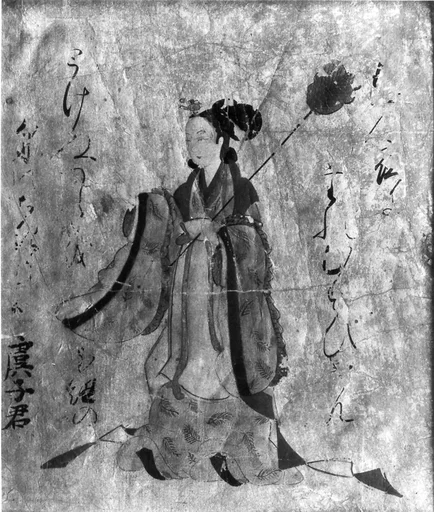
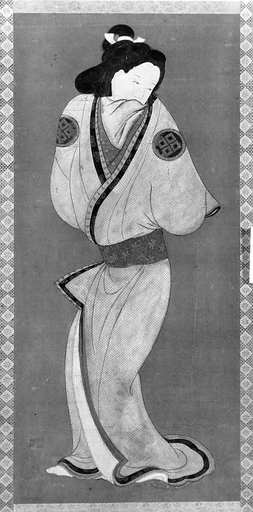
狩野常信筆 楊貴妃吹笛図|Yang Guifei Playing a Flute
Kano Tsunenobu
17th–18th century · Hanging scroll; ink and color on silk · Asian Art
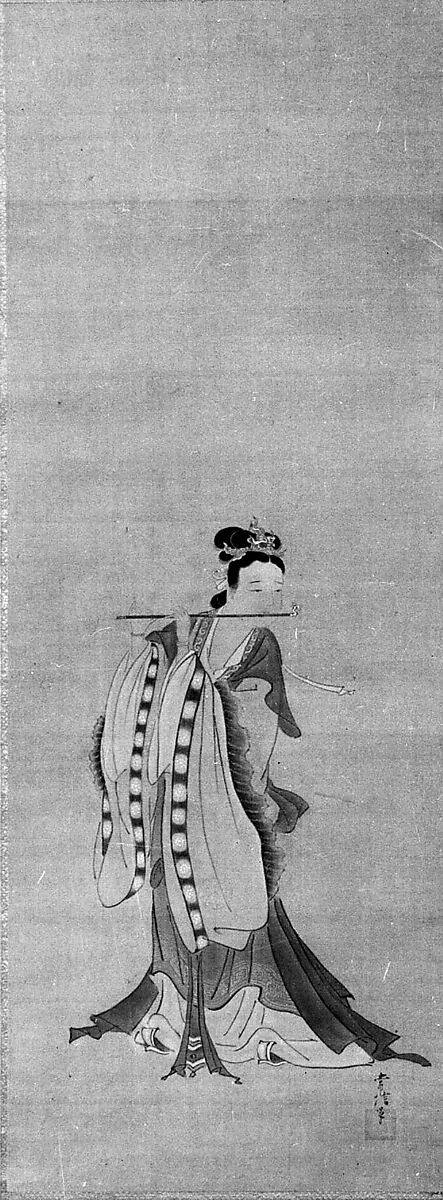
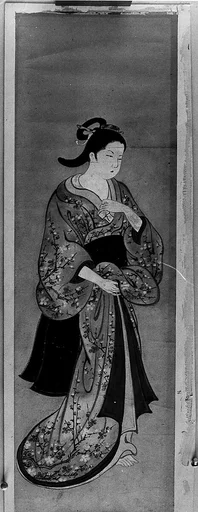
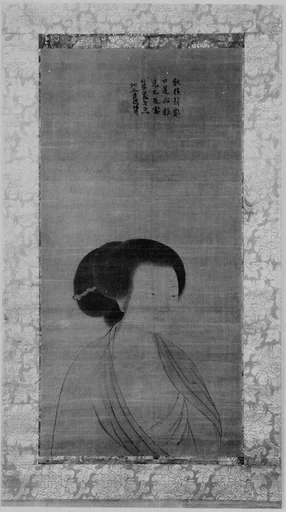
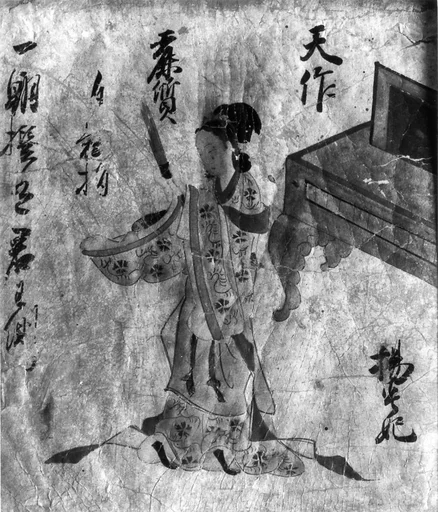
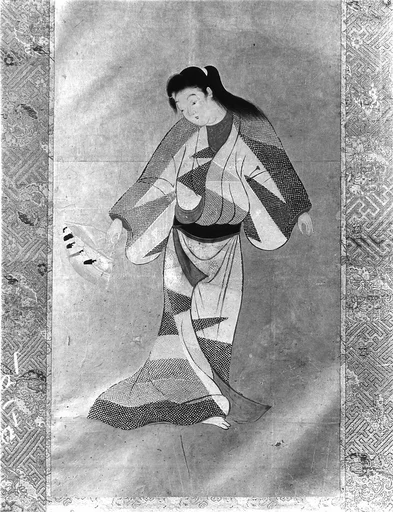
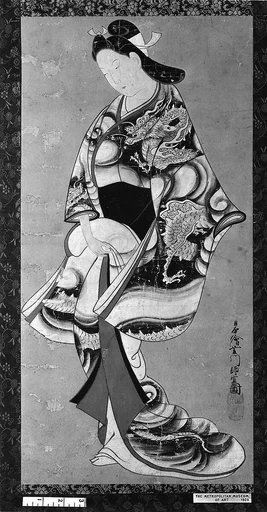
Academic painters in the Edo period also sought to represent beauties in their paintings, but drew on a continental figure painting tradition instead of using the demimond directly as their subject. Yang Guifei, ill-fated concubine of the Tang emperor at the time of the An Lushan rebellion and most likely first known through a poem by Bai Luodian (772–846), was a metaphor for womanly beauty from very early times. There are references to her in the eleventh-century Tale of Genji [Genji Monogatari] and in the slightly earlier Pillow Book [Makura sōshi]. By the seventeenth century, her perosnification of fleshly beauty was so pervasive it was used to sell skin-whitening cream, a product described in a short vignette in The Mirror of Townsmen in our Land [Honcho chōnin kagami], a collection of merchant tales written by the novelist Saikaku (1642–1693) and published a year after his death.
- Artist
- Kano Tsunenobu
- Date
- 17th–18th century
- Medium
- Hanging scroll; ink and color on silk
- Culture
- Japan
- Department
- Asian Art
- Credit line
- The Howard Mansfield Collection, Purchase, Rogers Fund, 1936