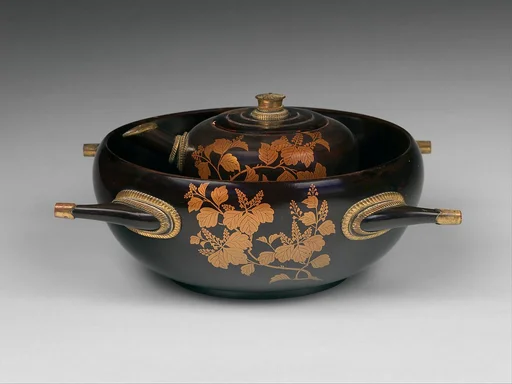
菊桐紋蒔絵提子|Sake Ewer (Hisage) with Chrysanthemums and Paulownia Crests in Alternating Fields
Unknown
early 17th century · Lacquered wood with gold hiramaki-e and e-nashiji (“pear-skin picture”) on black ground · Asian Art
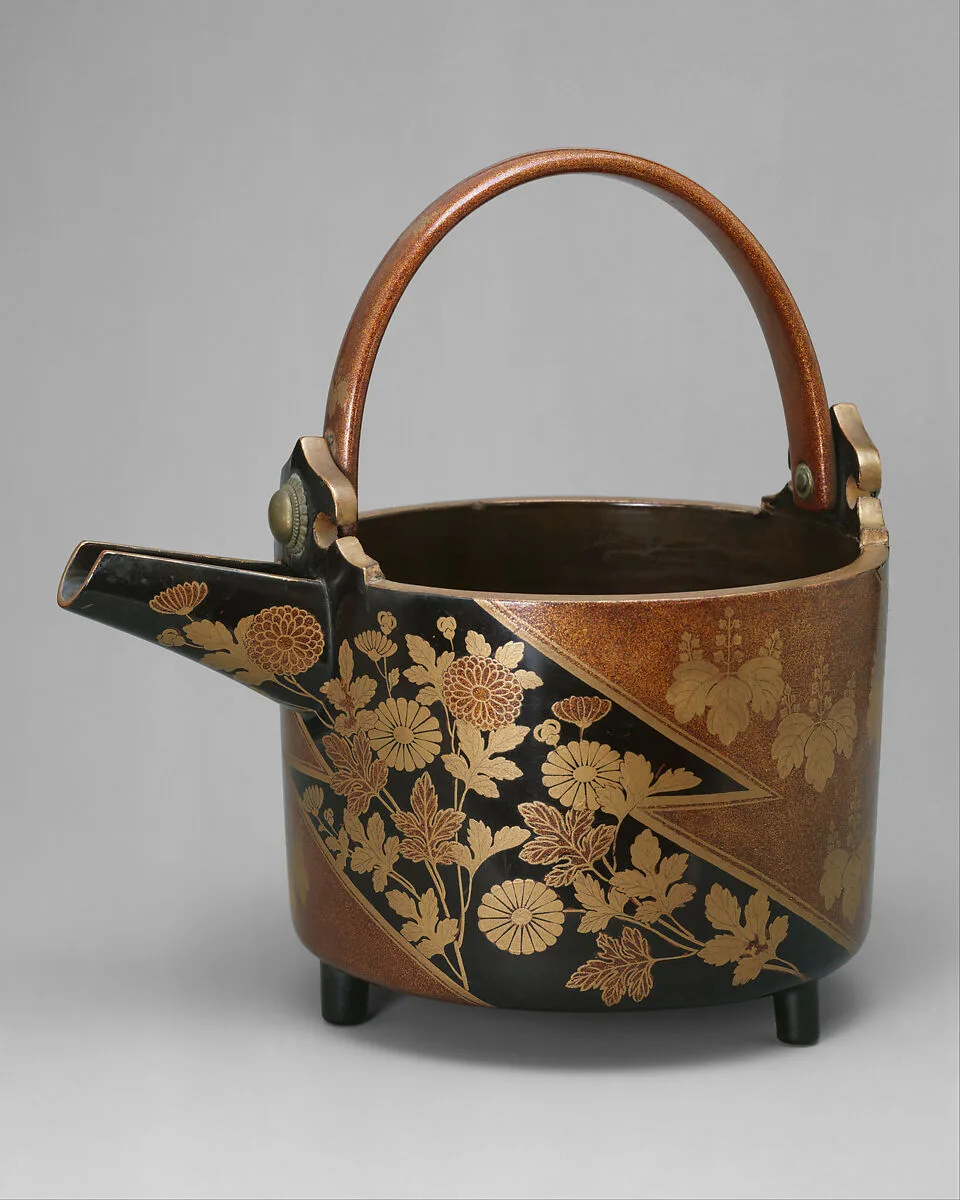
The Kōdaiji style was the most prominent development in the history of Momoyama-period lacquer art, and is characterized by bold, large-scale patterns, autumn grass motifs, and crests executed in gold hiramaki-e (“flat sprinkled picture”) on a black ground. Patronage and construction of the temple for which the style is named are associated with Toyotomi Hideyoshi and his wife Nene (Kōdai-in, 1548–1624), and with shogun Tokugawa Ieyasu (1543–1616), who generously supported the creation of the temple precinct and mausoleum in 1605 in honor of his opponent Hideyoshi. The application of the flat maki-e and large repetitive patterns made it possible to decorate everyday household objects with gold designs. Hideyoshi used this style to represent his political power and authority.
- Artist
- Unknown
- Date
- early 17th century
- Medium
- Lacquered wood with gold hiramaki-e and e-nashiji (“pear-skin picture”) on black ground
- Culture
- Japan
- Department
- Asian Art
- Credit line
- Purchase, Gift of Mrs. Russell Sage, by exchange, 1980