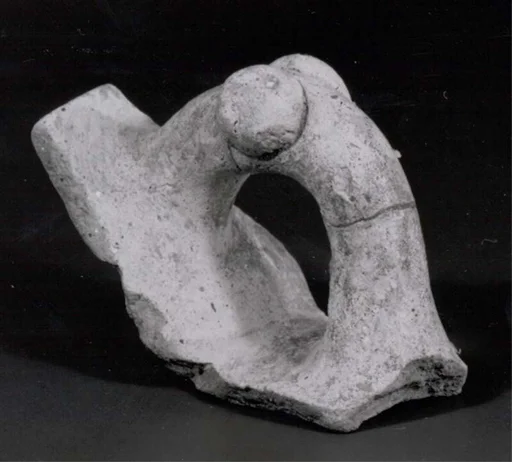
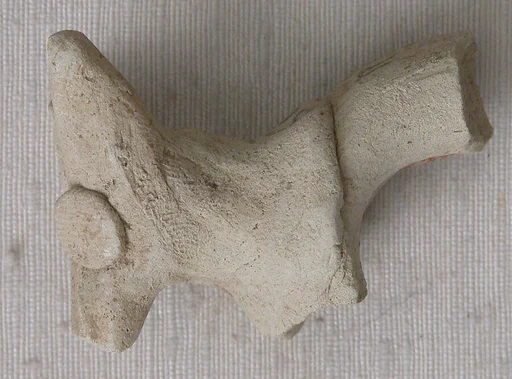
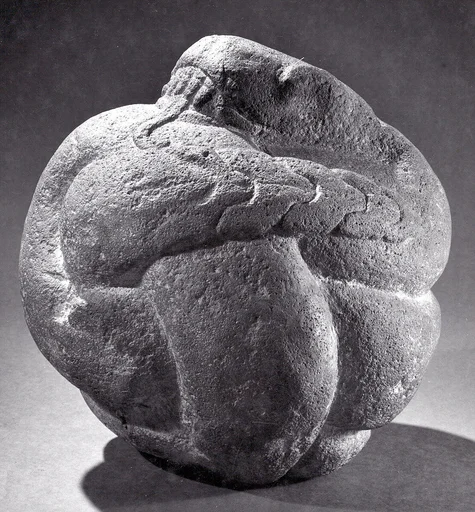
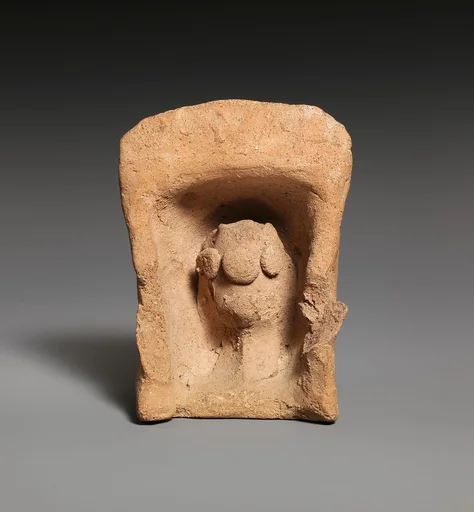
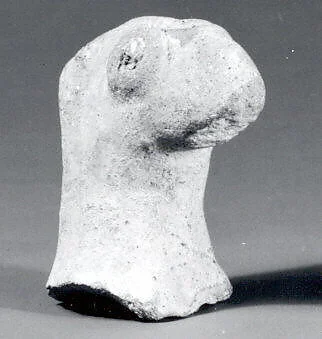
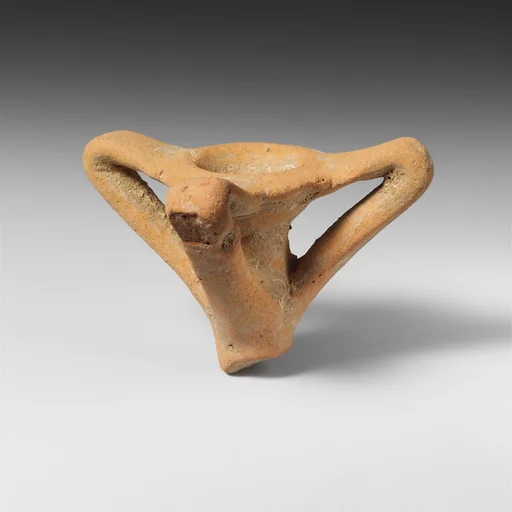
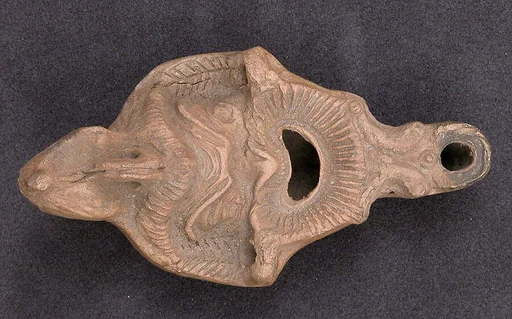
埴輪猪|Haniwa (hollow clay sculpture) of a boar
Unknown
5th century · Earthenware · Asian Art
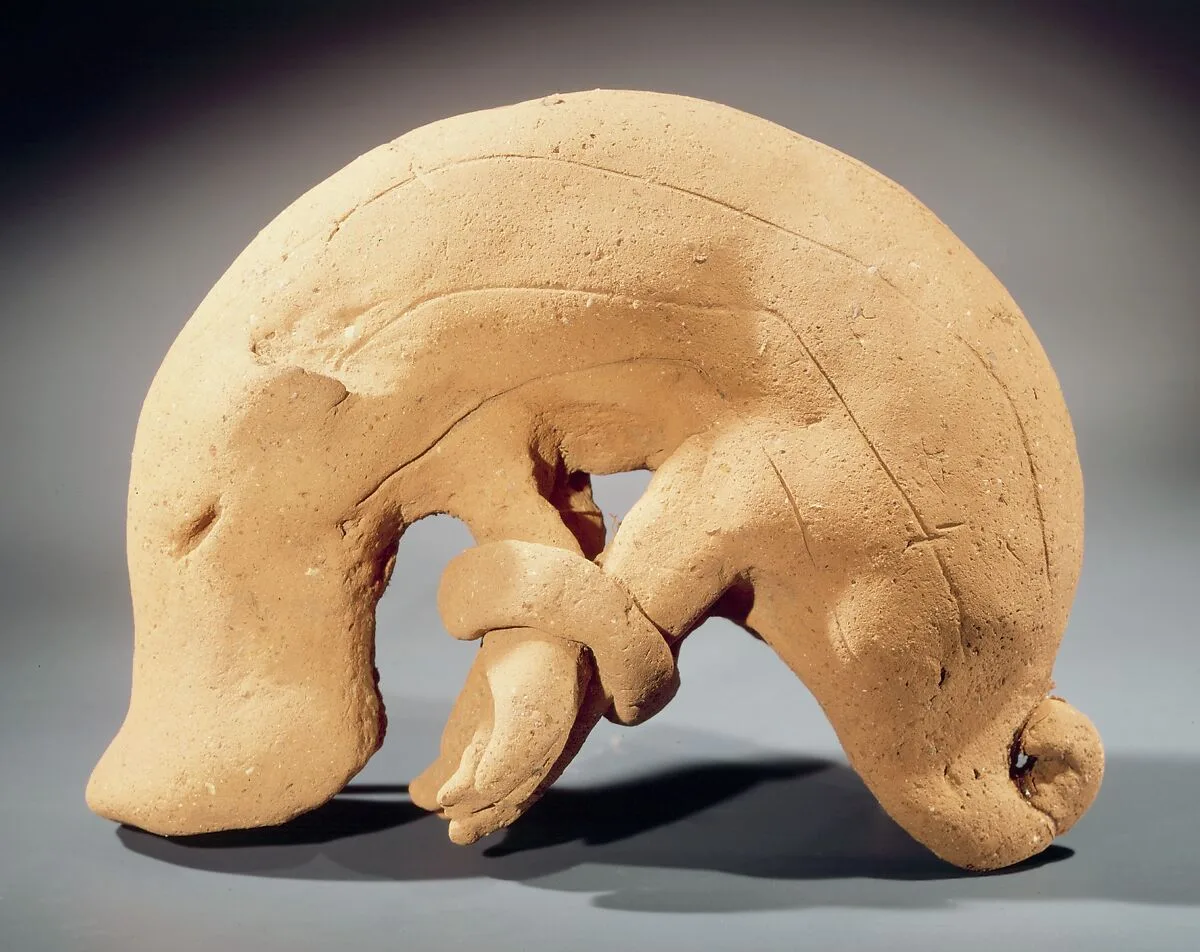
Earthen tomb mounds, common burial practice on the Asian continent, were brought to Japan around the third century. Haniwa (clay cylinders)—at times numbering in the thousands—were placed in rows or scattered outside these tombs. Sculptors sometimes topped cylinders with figures or animals, themselves often almost abstract in aesthetic. The shape of this poignant example recalls an infant boar’s large snout, curled body, and bound limbs.
- Artist
- Unknown
- Date
- 5th century
- Medium
- Earthenware
- Culture
- Japan
- Department
- Asian Art
- Credit line
- The Harry G. C. Packard Collection of Asian Art, Gift of Harry G. C. Packard, and Purchase, Fletcher, Rogers, Harris Brisbane Dick, and Louis V. Bell Funds, Joseph Pulitzer Bequest, and The Annenberg Fund Inc. Gift, 1975