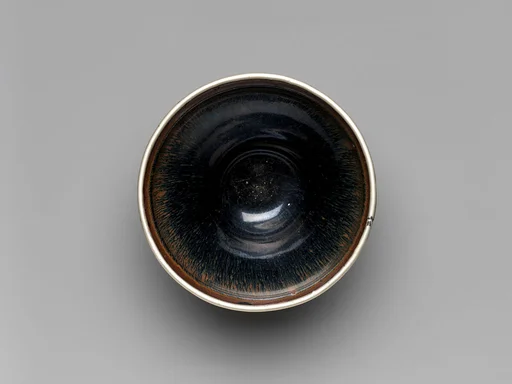
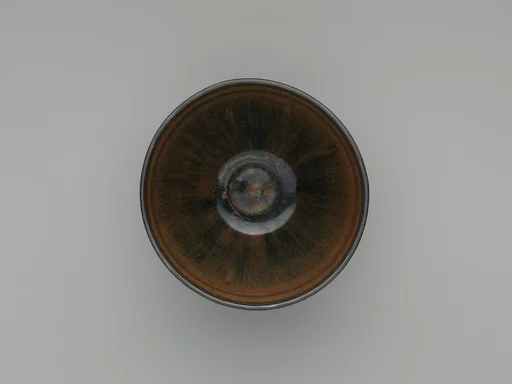
七代宗像亮一 鉢|Bowl (Hachi)
Munakata Ryoichi VII
1986 · Stoneware with iron brown, blue, and white glaze · Asian Art
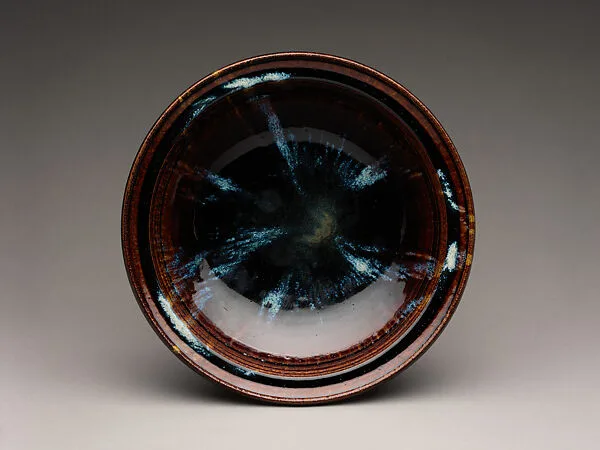
This large, deep, Mingei-style bowl has a deep brown namako glaze, white accents, and light indigo highlights with generous drips on the underside. Motivated by the Mingei ("folk art") movement, Munakata adhered steadfastly to his family’s tradition of using local clay from Mt. Hongo. In 1767, Munakata Izumonokami Shikibu, the ancestor of the artist, moved to Aizu Province and established the Munakata Shinto shrine. After that the family’s priority shifted to religious work while pottery became merely one of the ways the family made its living. But in 1818, the sixth generation Munakata, whose skills were outstanding, resigned from the shrine and became a full-time potter. His son Ryōichi has continued to use the family’s seven-chamber climbing kiln (i.e., built on a slope). Constructed in the mid-Edo period (1615–1868), it is the oldest climbing kiln in the region.
- Artist
- Munakata Ryoichi VII
- Date
- 1986
- Medium
- Stoneware with iron brown, blue, and white glaze
- Culture
- Japan
- Department
- Asian Art
- Credit line
- Gift of Halsey and Alice North, 2017