Untitled
Unknown
Date unknown · Resist-dyed plain weave, probably hemp · Asian Art
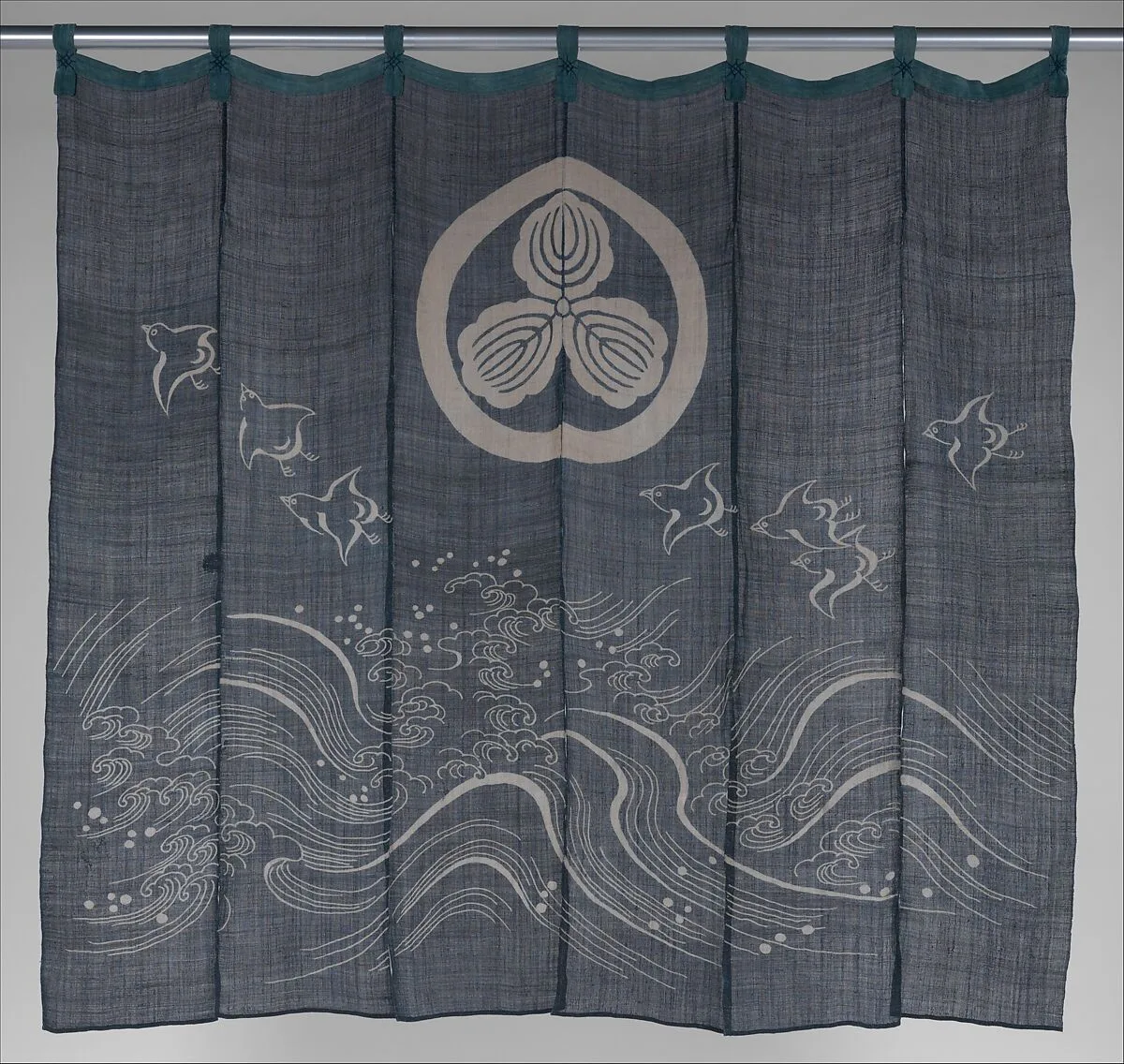
We can almost hear the cry of these plovers as they glide above the waves. Ubiquitous along Japan's shores and especially apparent in winter, plovers (chidori) inspired several poems that were included in early anthologies. In the Man'yōshū, Japan's first collection of classical poetry, the plover had melancholy associations. By the time of the tenth-century Kokinshū, the chirp of the plover was heard as chiyō "one thousand years"—giving it auspicious connotations of longevity and good fortune. The bold design on this noren (shop curtain) is an example of a technique called tsutsugaki (literally, "tube drawing"). In this paste-resist dyeing process, the design is drawn with an applicator consisting of a paper cone with a metal tip that trails rice paste onto the cloth. Areas covered with rice paste resist the blue indigo dye, resulting in a white pattern on a blue ground.
- Artist
- Unknown
- Date
- Date unknown
- Medium
- Resist-dyed plain weave, probably hemp
- Culture
- Japan
- Department
- Asian Art
- Credit line
- Funds from various donors, 1988