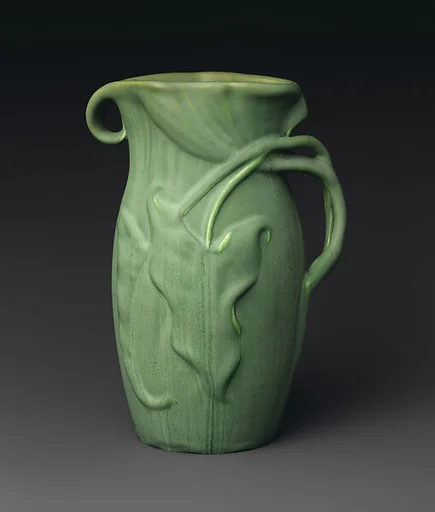
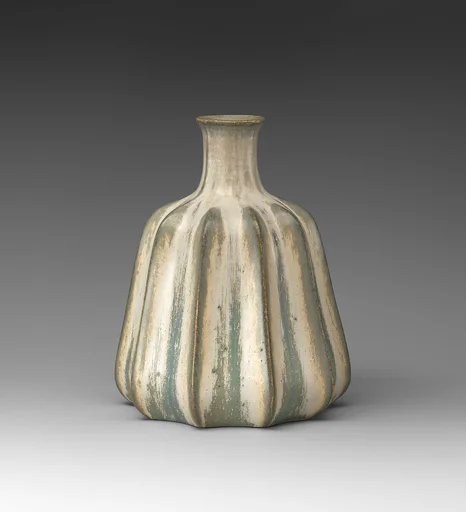
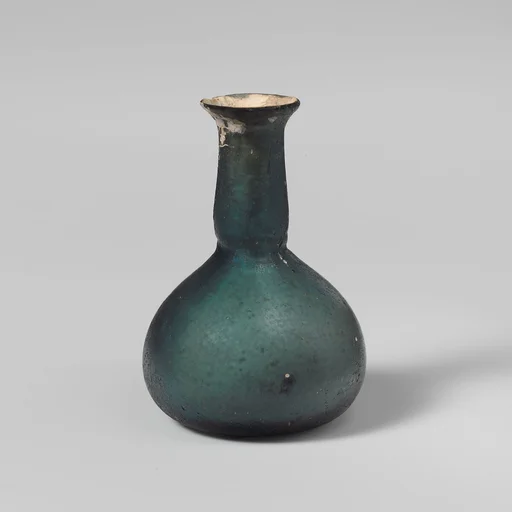
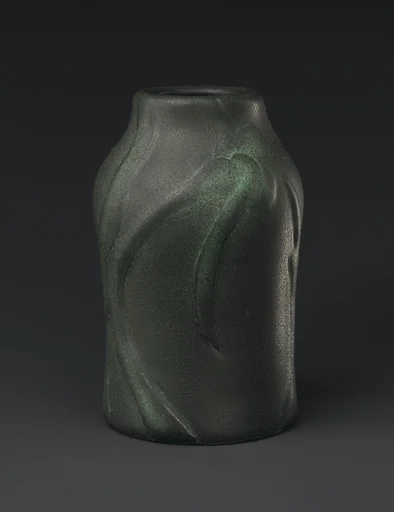
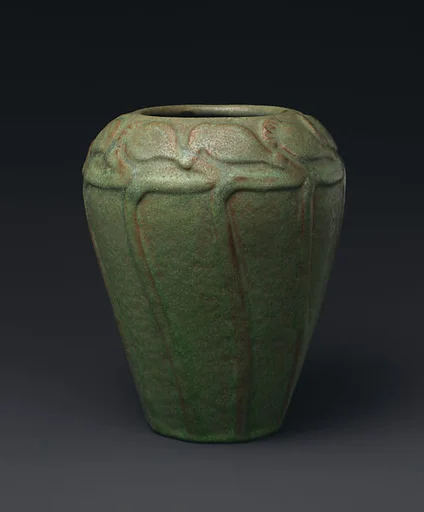
Vase
Grueby Faience Company
ca. 1898–1909 · Earthenware · The American Wing
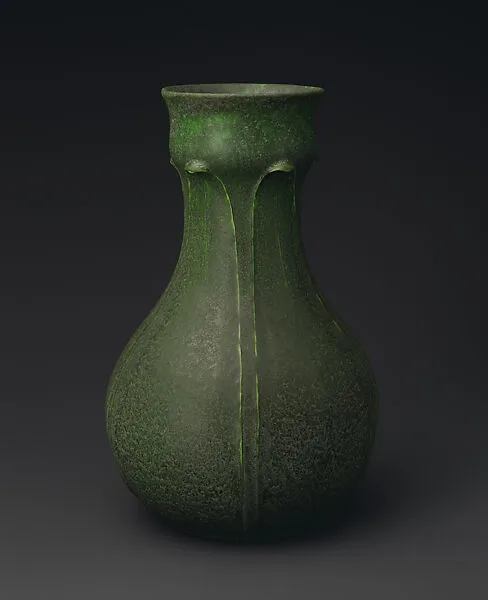
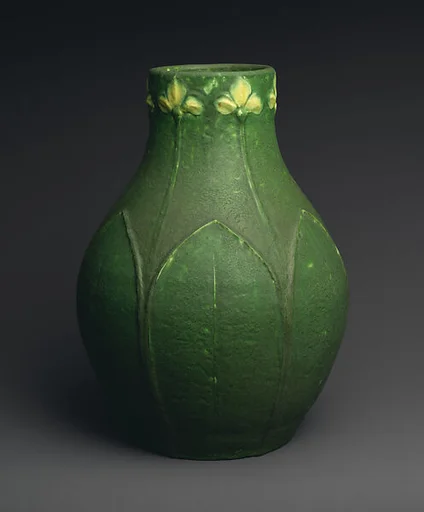
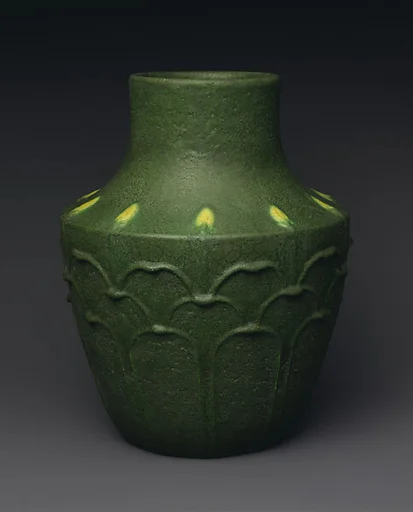
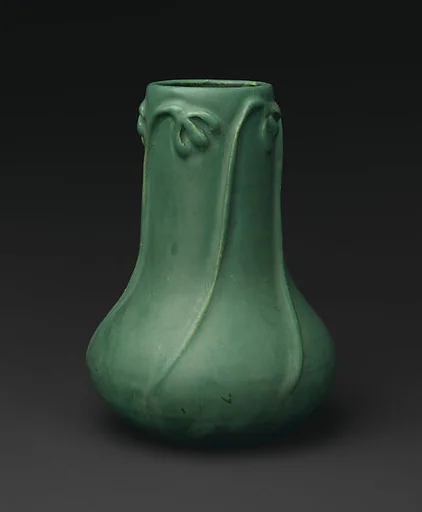
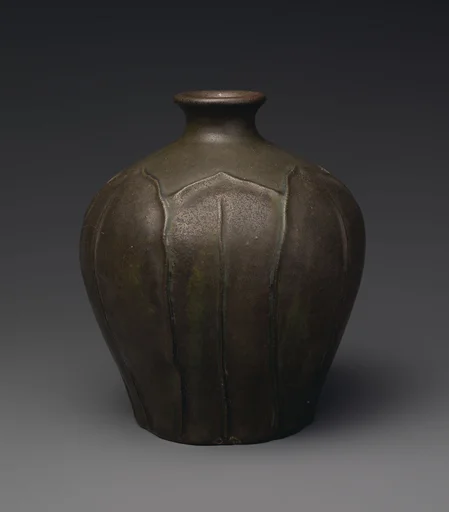
William H. Grueby founded his art pottery in Boston, Massachusetts, after first operating a successful tile works. His exposure to contemporary French ceramics at the 1893 World’s Columbian Exposition in Chicago marked a turning point in his career. He admired the novel matte glazes of the French studio potters, and was especially attracted to the relief designs he saw on the stoneware of August Delaherche. He developed his distinctive glazes, notably his dense, opaque matte green glaze, often with irregular veining that critics compared to the skin of a watermelon. Most of his vessels feature relatively simple modeled decoration of stylized broad leaves. Many of his designers were conceived by Boston architects, George Prentiss Kendrick and Addison Le Boutillier. In customary practice, the throwing, glazing, and firing was done by men, and the decoration was executed by a small staff of mainly women. They would roll out thin ropes of clay and apply them to the vase’s surface, further modeling, tooling, and carving them to finish the designs.
- Artist
- Grueby Faience Company
- Date
- ca. 1898–1909
- Medium
- Earthenware
- Culture
- American
- Department
- The American Wing
- Credit line
- Gift of Martin Eidelberg, 2020