花鳥獣蒔絵螺鈿洋櫃|Nanban Coffer with Animals and Landscapes
Unknown
late 16th–early 17th century · Lacquered wood with gold and silver hiramaki-e and mother-of-pearl inlay · Asian Art
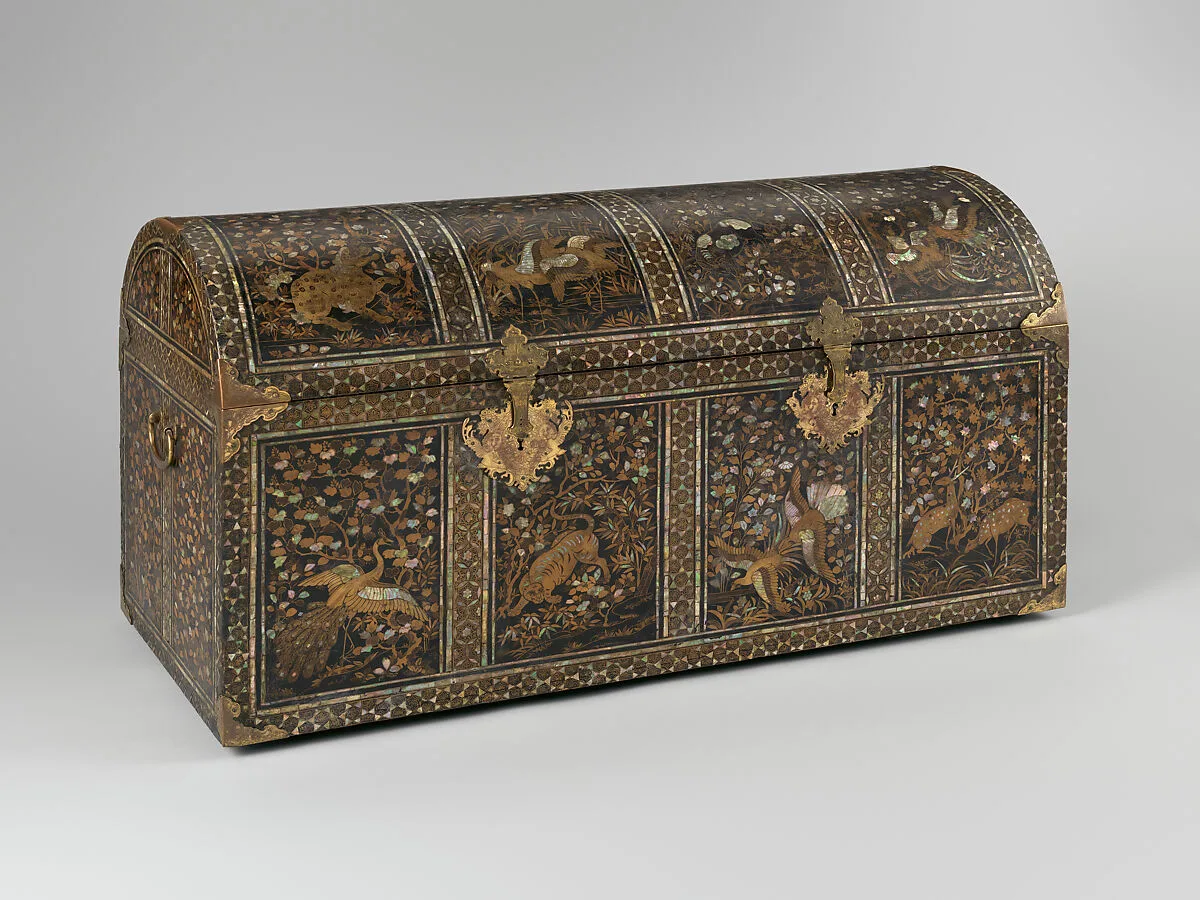
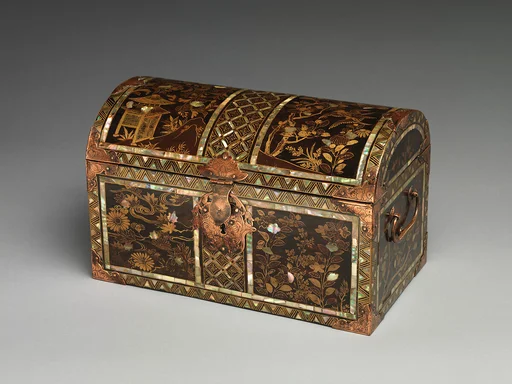
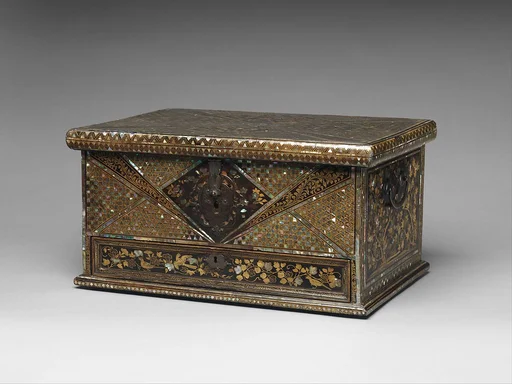
The coffer—a rectangular, deep box with a half-cylindrical lid hinged at the back—is one of the earliest shapes of Japanese lacquer to have been exported to Europe in the second half of the sixteenth century. They vary considerably in size; the present example is one of the largest. Many were made in Kyoto using production techniques closely related to the Kōdaiji maki-e style. The maki-e and mother-of-pearl decoration of the front and on the lid consist of rectangular panels that each contain an “animal in a landscape.” These panels are divided by strips that appear to imitate the metal bands of European coffers but are filled with geometric patterns inspired by textile designs. The plants, trees, and flowers depicted are all Japanese, but the tiger, peacock, and cattle are exotic animals that the lacquer craftsmen had never seen alive. Probably, the inclusion of “foreign” animals seemed appropriate for the export market. At the same time, the elaborate gilt-bronze locks on the front are decorated with European-style angels.
- Artist
- Unknown
- Date
- late 16th–early 17th century
- Medium
- Lacquered wood with gold and silver hiramaki-e and mother-of-pearl inlay
- Culture
- Japan
- Department
- Asian Art
- Credit line
- Purchase, John and Pauline Gandel Gift and Mary Livingston Griggs and Mary Griggs Burke Foundation Fund, 2016