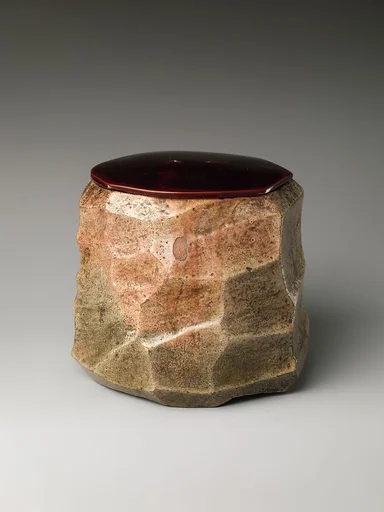
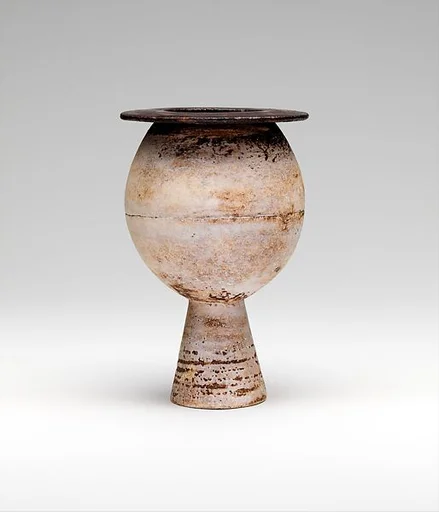
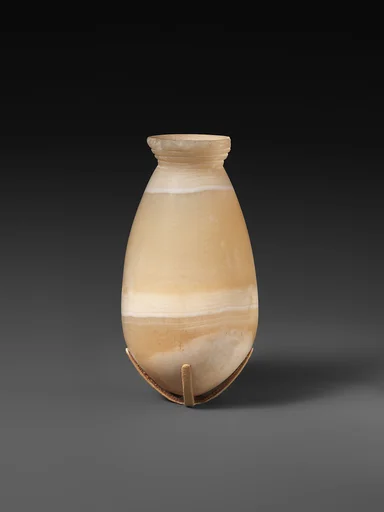
三輪休和(十代休雪)作 白萩水指|White Hagi Water Jar (Mizusashi)
Miwa Kyūwa (Miwa Kyūsetsu X)
1970–79 · Stoneware with feldspar glaze mixed with ash (Hagi ware) · Asian Art
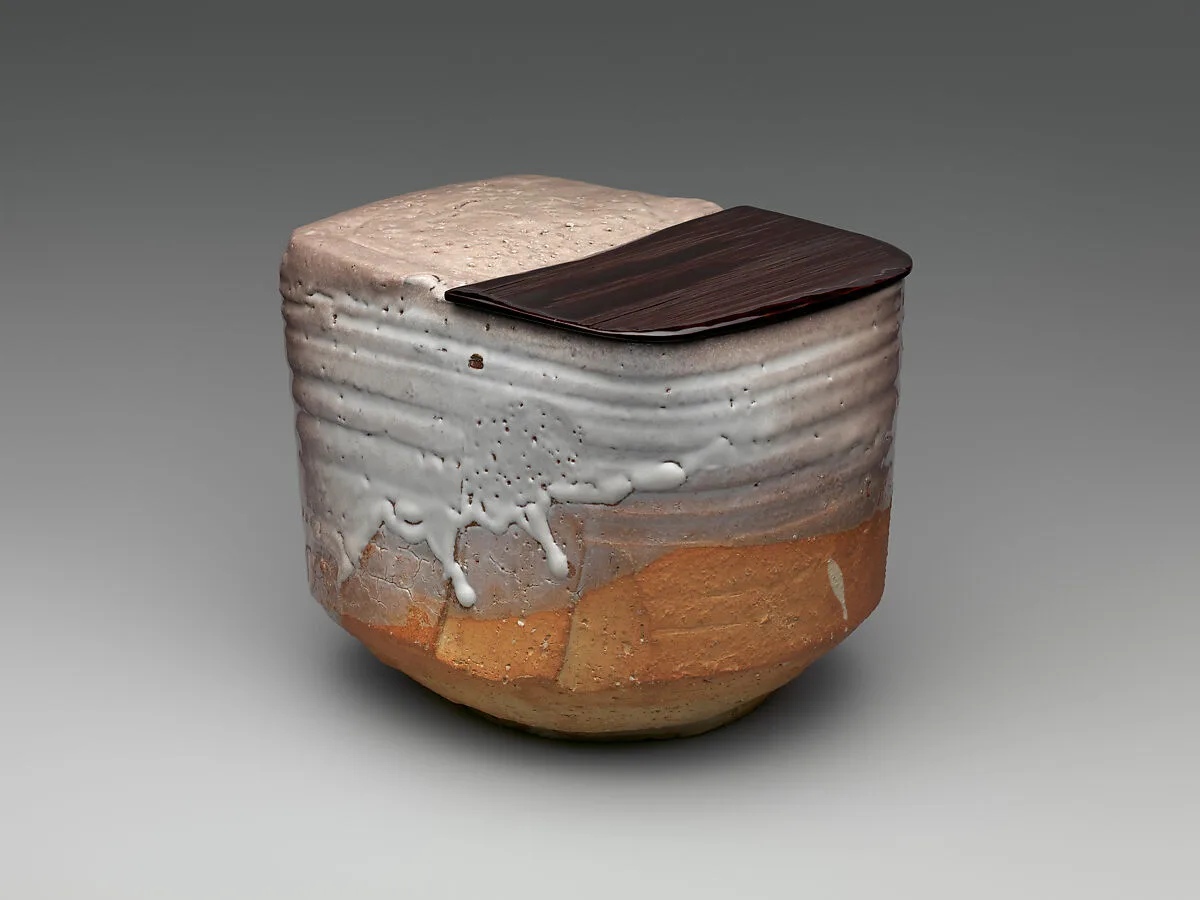
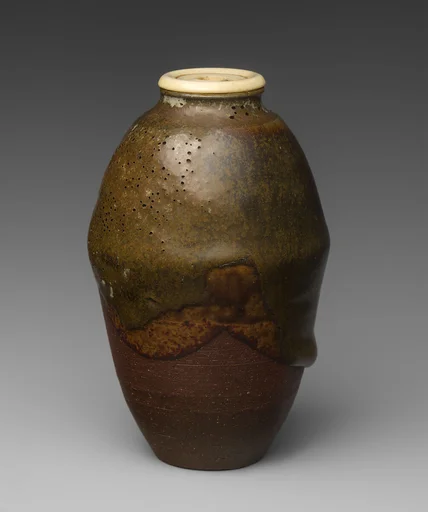
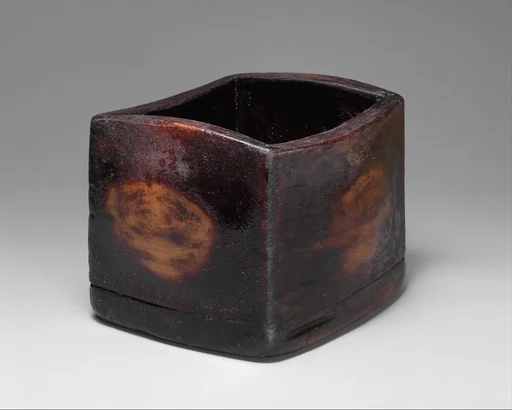
This rather unusually shaped water jar was formed on a potter’s wheel, but then reshaped in a rectangular form. It is a fascinating experiment in textures, using the opaque glaze “Kyūsetsu White,” the potter became famous for, along with thinly glazed and unglazed sections, revealing white inclusions. The lacquered lid adds a smooth wooden counterpoint to the variegated ceramic surfaces. The base retains evidence that it was wheel-thrown, and the artist placed his signature in the clay while it was still soft. Miwa Kyūwa, the tenth potter in a lineage of the Miwa family to hold the name Kyūsetsu, created teaware that evoked the Momoyama period (late 16th and early 17th centuries), an age when tea aesthetics flourished and took a new turn. He was able to take traditional Hagi ware—a style that evolved from the Korean ceramic tradition—and imbue it with a distinctive Japanese sensibility. He created a distinctive glaze, “Kyūsetsu White,” which became one of his trademarks. Miwa Kyūwa was designated an Intangible Cultural Property (sometimes translated as Living National Treasure) in 1956. In 1967, he retired and relinquished the title of Kyūsetsu X, and took the name Kyūwa.
- Artist
- Miwa Kyūwa (Miwa Kyūsetsu X)
- Date
- 1970–79
- Medium
- Stoneware with feldspar glaze mixed with ash (Hagi ware)
- Culture
- Japan
- Department
- Asian Art
- Credit line
- Purchase, Michael and Tamara Root Gift, 2016