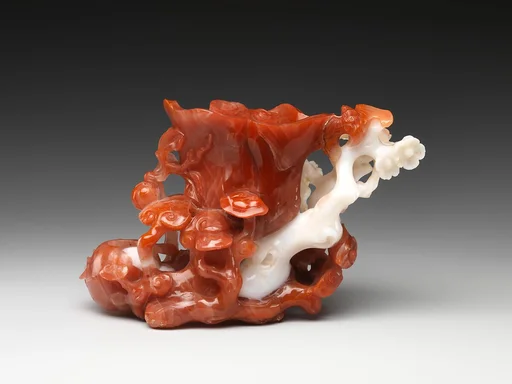
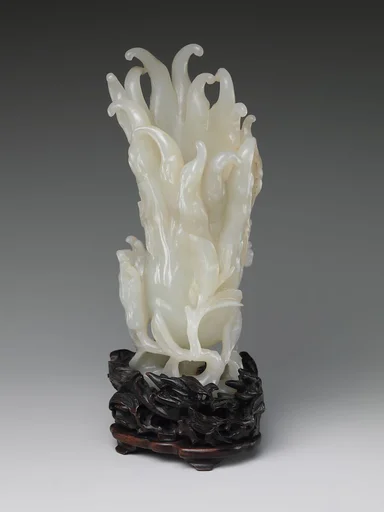
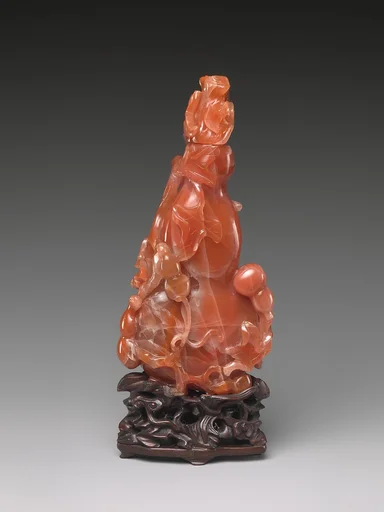
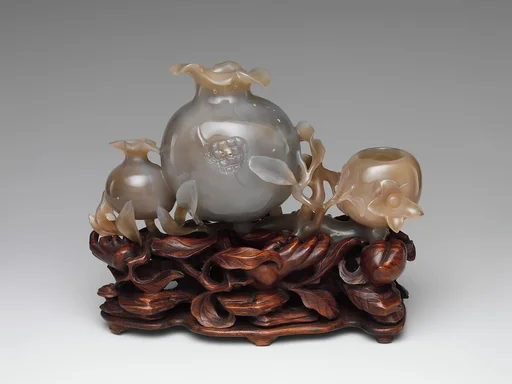
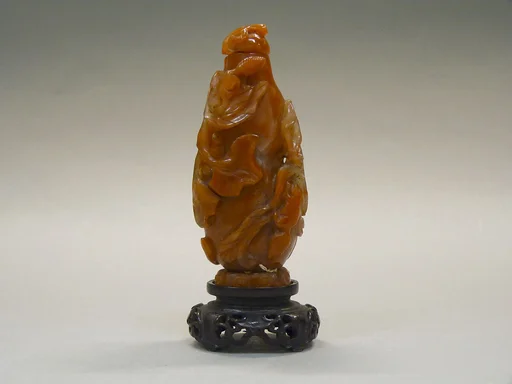
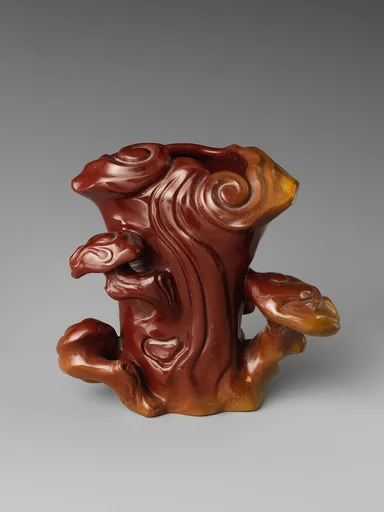
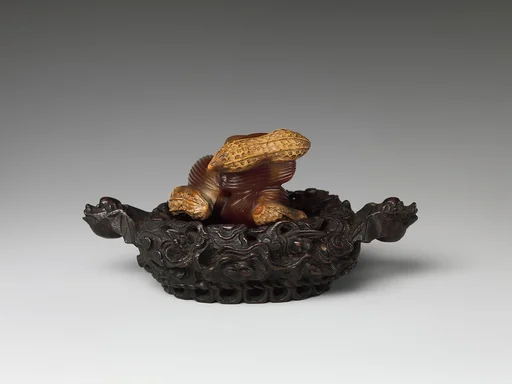
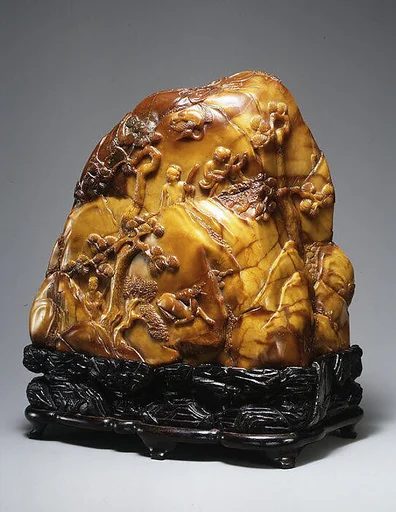
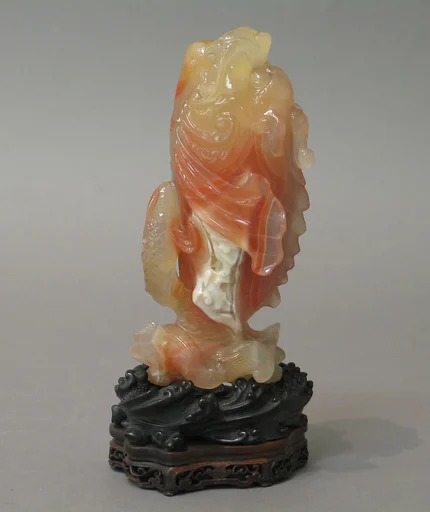
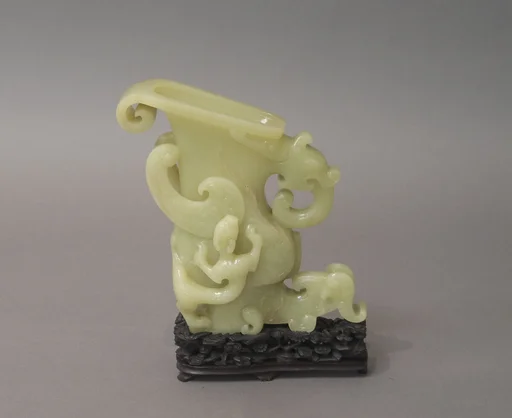
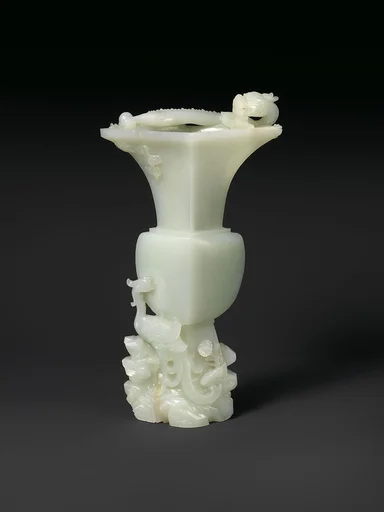
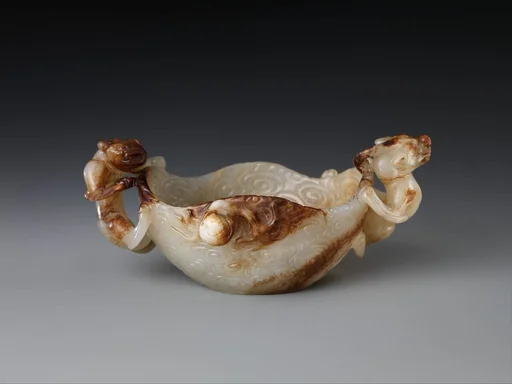
清 瑪瑙佛手擺件|Buddha’s hand
Unknown
18th century · Carnelian · Asian Art
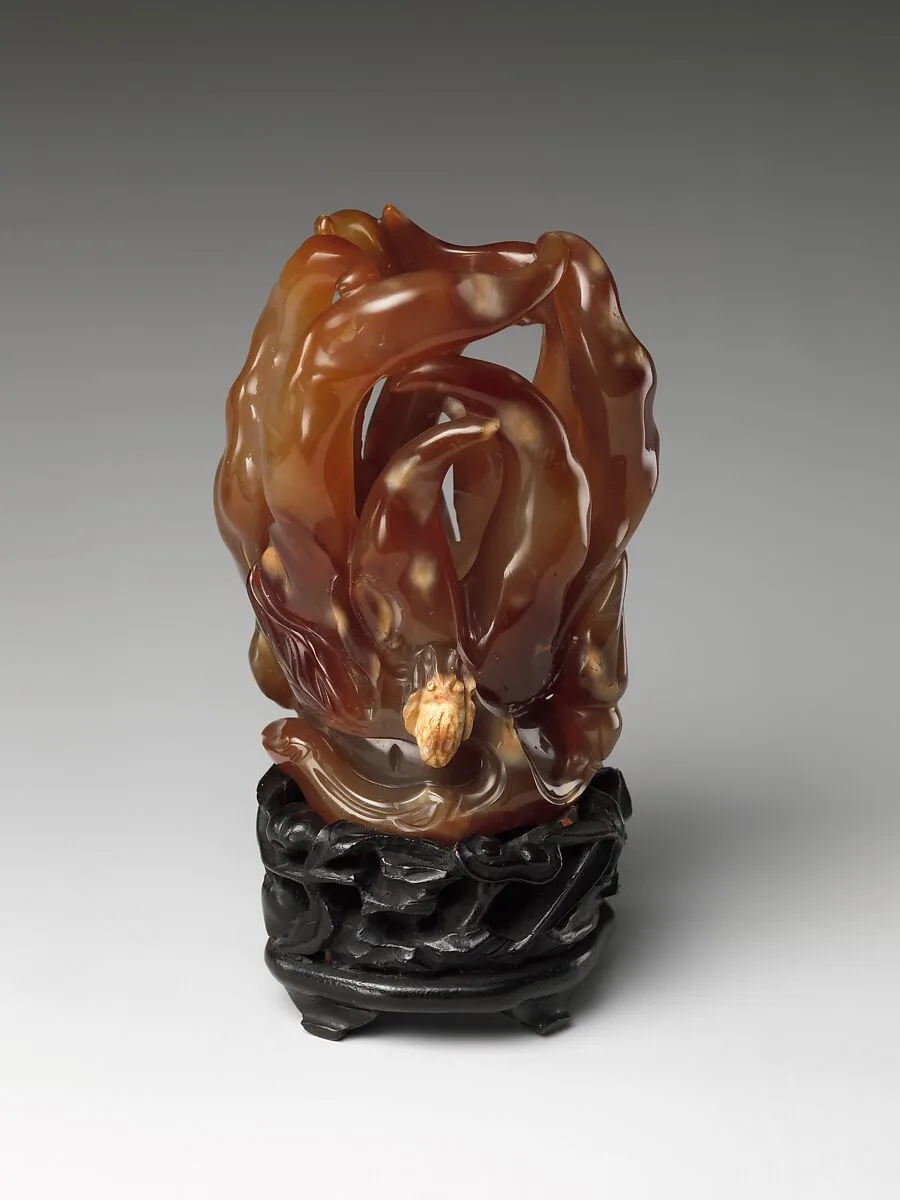
The Buddha’s-hand citron takes its common name from the shape of its fruit, which resembles the idealized fingers of the Buddha. Although the fruit is not edible, it has a strong fragrance and is used as an offering at the altar. Its name in Chinese, foshou, has almost the same sound as the words for “fortune” (fo) and “longevity” (shou), adding another layer of good wishes.
- Artist
- Unknown
- Date
- 18th century
- Medium
- Carnelian
- Culture
- China
- Department
- Asian Art
- Credit line
- Gift of Heber R. Bishop, 1902