木喰上人造 不動明王像|Fudō Myōō (Achala Vidyaraja), The Immovable Wisdom King
Mokujiki Shōnin
1805 · Chisel-carved (natabori) wood · Asian Art
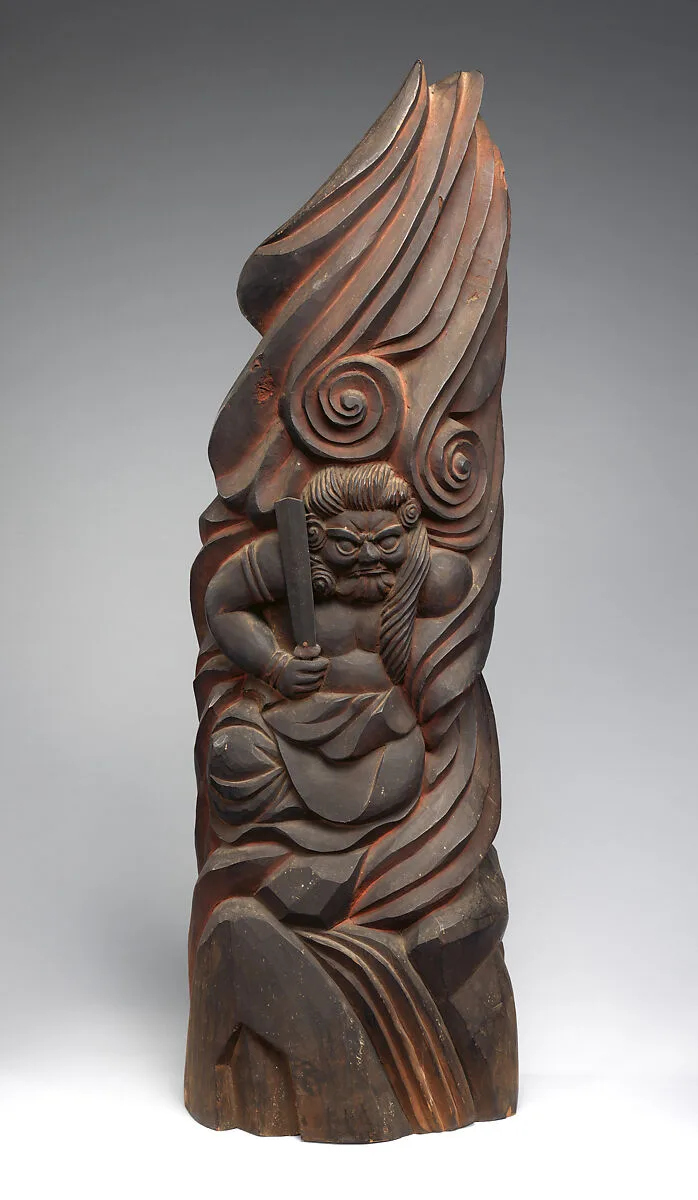
Statues of the Buddhist protective deity Fudō Myōō, the “immovable wisdom king,” are a familiar sight at temples in Japan. In contrast to meticulously carved works by professionals, this type of roughly hewn sculpture is the creation of an amateur monk-sculptor, Mokujiki, who was motivated by religious enthusiasm to make thousands of sculptures of Buddhist deities and popular gods of good fortune. His sculptures were rediscovered in the early twentieth century by art critic Yanagi Sōetsu (1889–1961), an advocate of the of Mingei, or “people’s art.” Yanagi admired the direct, unaffected power of Mokujiki’s sculpture, which he saw as representing the ideal of an indigenous, popular Japanese art. While Mokujiki’s technique is referred to as natabori (“hatchet-carved”), the artist actually used round-headed chisels.
- Artist
- Mokujiki Shōnin
- Date
- 1805
- Medium
- Chisel-carved (natabori) wood
- Culture
- Japan
- Department
- Asian Art
- Credit line
- Purchase, Friends of Asian Art Gifts, 2016