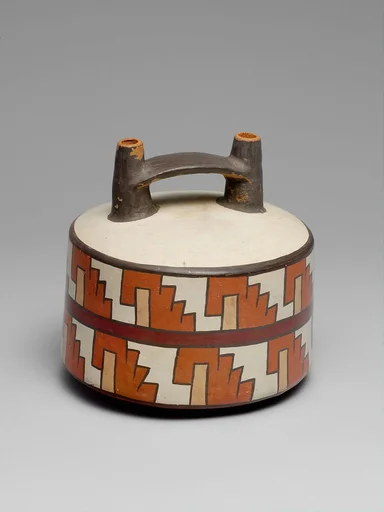
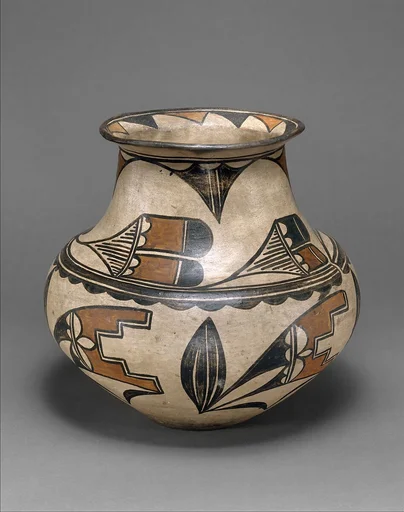
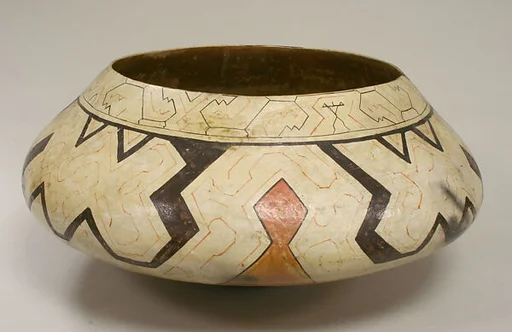
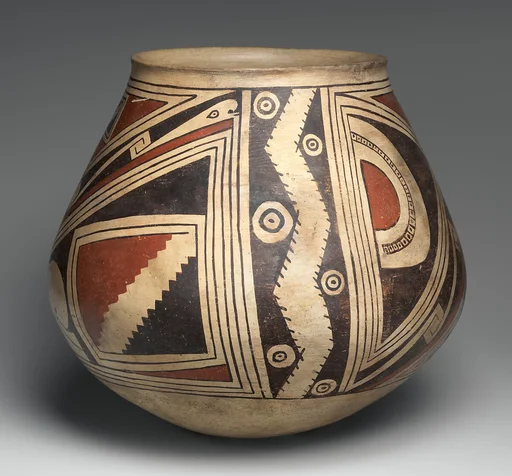
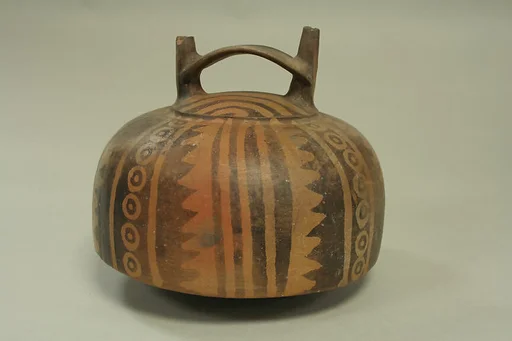
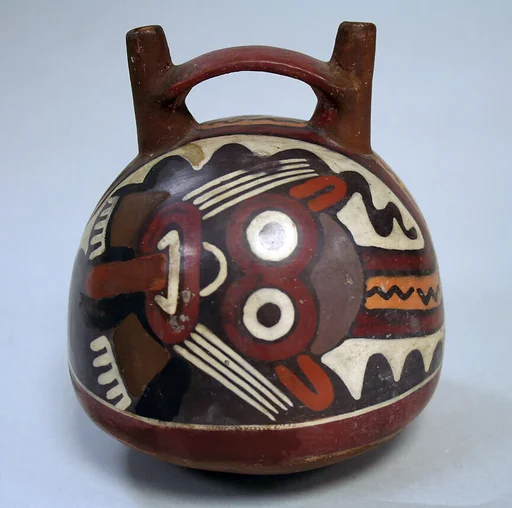
Spout-and-bridge bottles with stepped design
Nasca artist(s)
1–400 CE · Ceramic, slip · Arts of Africa, Oceania, and the Americas
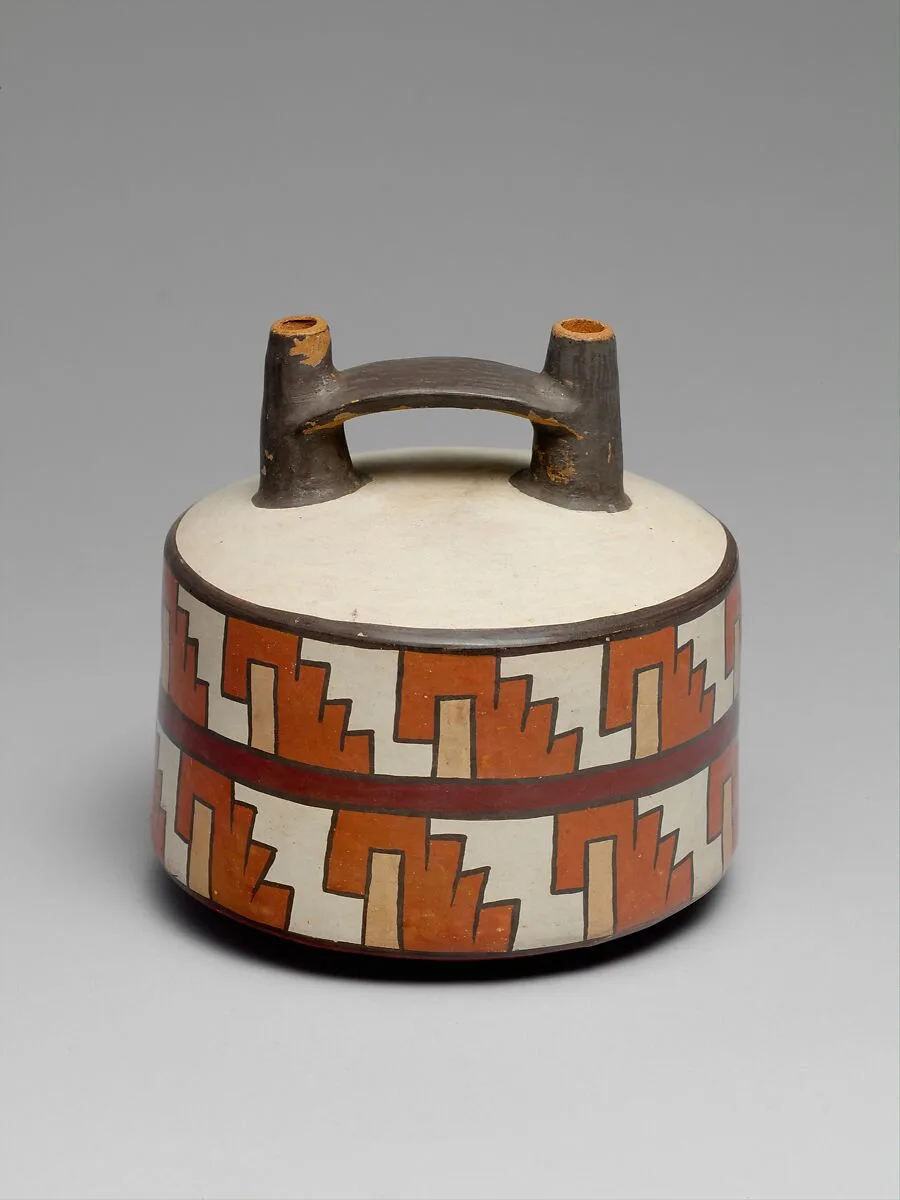
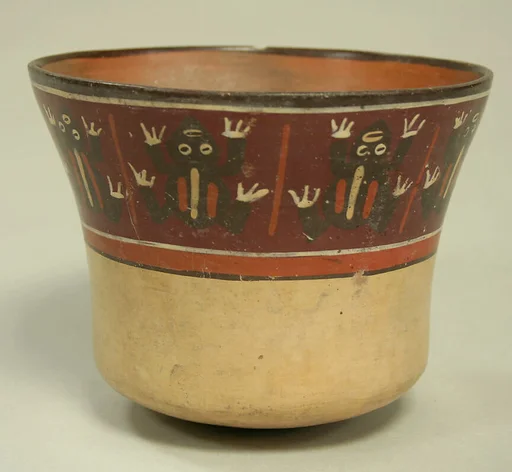
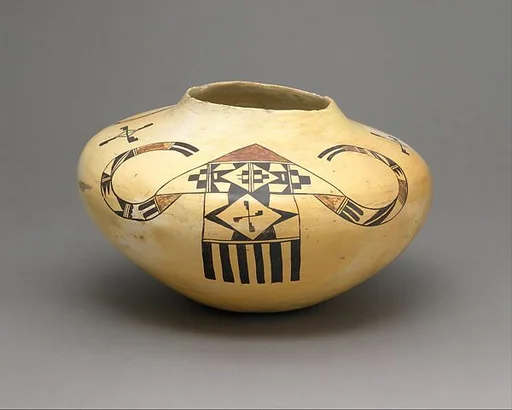
Nazca potters were the first to master the technique of polychrome slip painting. Slips were made of clay particles and mineral pigments suspended in water; they were applied onto the surface of the vessels before the firing process, when the clay was still moist. Whereas solid areas of colored slip may have been applied with smooth cotton fiber, intricate designs and delicate outlines were made with fine brushes. Nazca geometric decorative designs include steps, step frets, stepped pyramids, checkerboards, stars, and zigzag lines, among others. These two vessels are decorated with two rows of stylized step motifs. Kaolin was used as a white pigment; reds and yellows were obtained with iron oxides and black areas were probably made with manganese minerals. The surface of the vessels was burnished with a smooth stone or bone before the clay was completely dry. Repeated step motifs were used in the decoration of Andean ceramics from the Cupisnique period (1800–400 B.C.) and were interpreted as stylized representations of mountains, temples, or thrones.
- Artist
- Nasca artist(s)
- Date
- 1–400 CE
- Medium
- Ceramic, slip
- Culture
- Nasca
- Department
- Arts of Africa, Oceania, and the Americas
- Credit line
- Gift of Conny and Fred Landmann, 1992