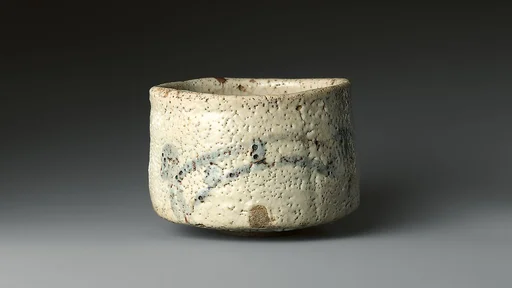
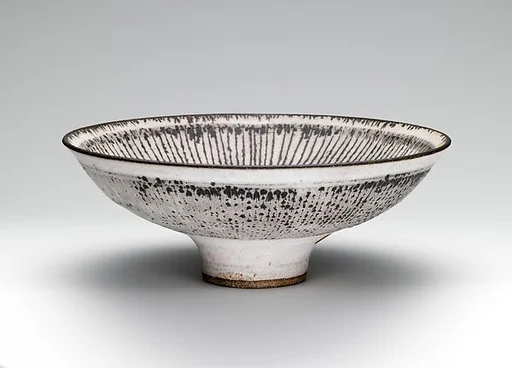
十一代三輪休雪作 鬼萩茶碗|Oni (Devil) Hagi Teabowl
Miwa Kyūsetsu XI
1988–89 · Stoneware with feldspar glaze mixed with ash (Hagi ware) · Asian Art
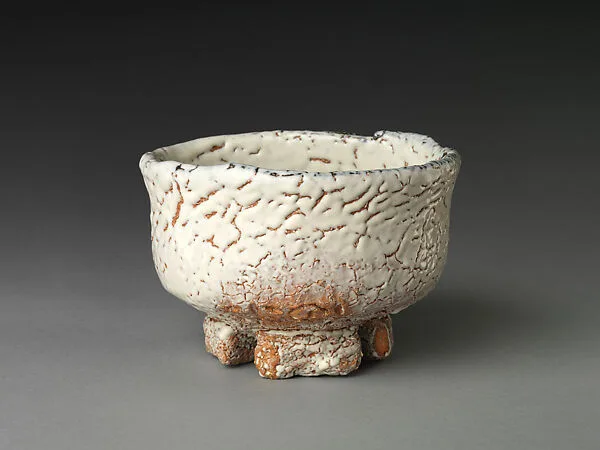
The celebrated ceramic artist Miwa Kyūsetsu, who died just three years ago, is the eleventh-generation head of a family of potters that traces its roots back over 350 years. Both he and his brother, Miwa Kyūwa (1895–1981), were recognized as Living National Treasures. Kyūsetsu is particularly renowned for his use of clay mixed with sand to give a coarse and earthy feel to his bowls and vessels, and for the application of thick white ash glazes that he refers to as oni Hagi (devil Hagi), which he developed in the 1980s. The artist intentionally applied thick and frosty glazes to his porous and sandy clays in order to conspicuously distinguish them from hime Hagi (princess Hagi) glazes, which feature smooth, thin glazes on finely processed clay wares. This particular teabowl also features his signature warikōdai (split-cross foot ring), which allowed for bowls to be tied and carried in premodern times. Kyūsetsu’s bowls are admired for their organic and robust qualities but also sought after for their pleasing feel when handled during a formal tea ceremony. Upon graduating from high school, Kyūsetsu started studying the traditional techniques of Hagi wares, following in the footsteps of his brother Kyūwa. He lived in the coastal town of Hagi where he was known to go on long bicycle rides to watch the rough waters of the Sea of Japan, which inspired him to create new, more dynamic textures for his works. The work is accompanied by a fabric bag (shifuku) and a cypress box which is signed: Oni Hagi chawan/wari kōdai/jūichi Kyūsetsu (Devil Hagi tea bowl/split cross foot ring/eleventh generation Kyūsetsu.)
- Artist
- Miwa Kyūsetsu XI
- Date
- 1988–89
- Medium
- Stoneware with feldspar glaze mixed with ash (Hagi ware)
- Culture
- Japan
- Department
- Asian Art
- Credit line
- William R. Appleby Fund, 2015