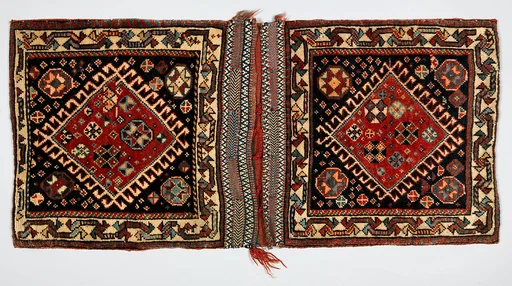
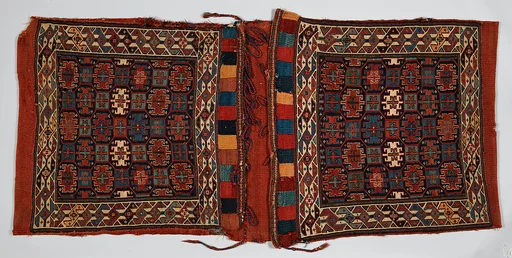
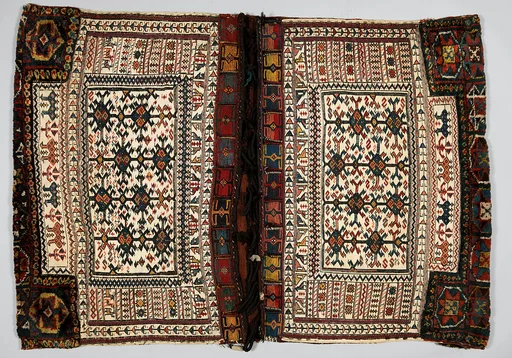
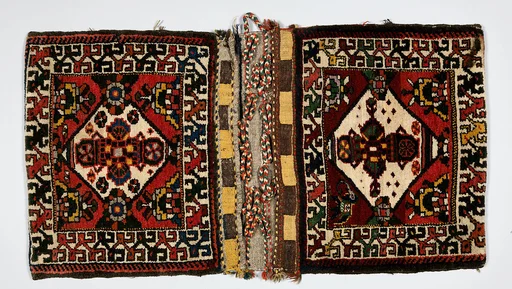
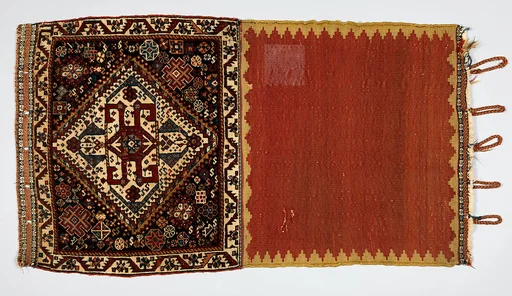
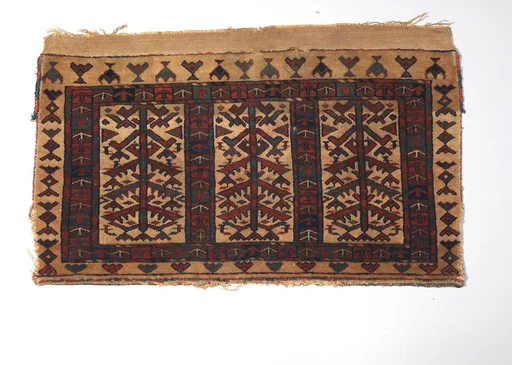
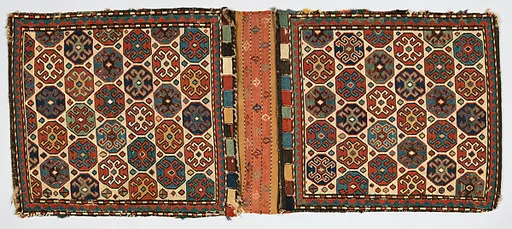
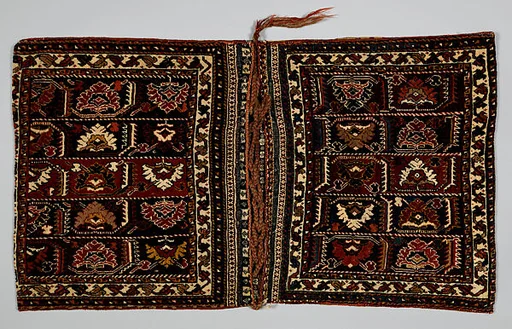
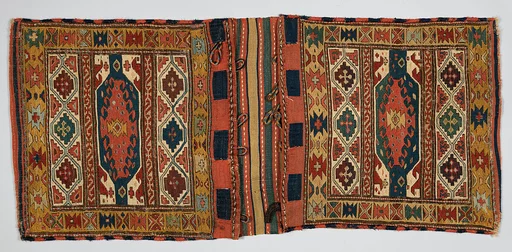
Double Flour Bag
Unknown
ca. 1900 · Wool (warp, ground weft, sumak weft, and pile) and goat(?) hair (braided loops); sumak extra-weft wrapping, tapestry (kilim) with dovetailing, and border pattern in complementary weft weave (front); symmetrically knotted pile (top and bottom edges); weft-faced plain weave with two areas of pattern in sumak extra-weft wrapping with twined and braided loop closures (back) · Islamic Art
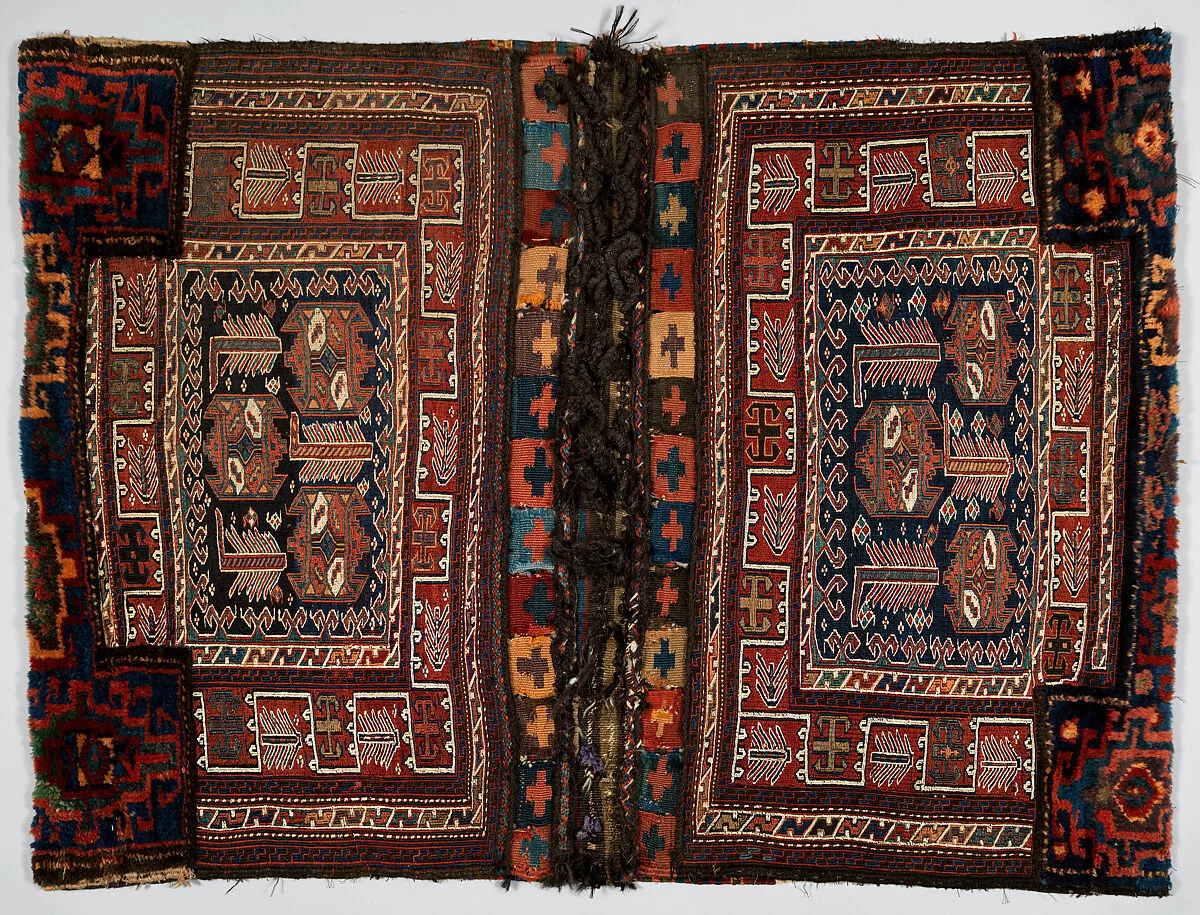
Double flour bags, which were carried on the backs of pack animals, are distinctive for their large size. Examples created by Bakhtiari weavers almost always include both tightly woven sumak extra-weft wrapping and reinforcement over points of extreme wear in the form of pile weave, typically with symmetrical knots. These methods would prevent flour from sifting through the bag. The closure of this bag was made with a tapestry (kilim) technique, with slits on one side and braided loops on the other. A band of twining, which extends into the three-dimensional loops, is worked into the plain-weave structure of the back of the bag, creating a stronger, more durable construction.
- Artist
- Unknown
- Date
- ca. 1900
- Medium
- Wool (warp, ground weft, sumak weft, and pile) and goat(?) hair (braided loops); sumak extra-weft wrapping, tapestry (kilim) with dovetailing, and border pattern in complementary weft weave (front); symmetrically knotted pile (top and bottom edges); weft-faced plain weave with two areas of pattern in sumak extra-weft wrapping with twined and braided loop closures (back)
- Department
- Islamic Art
- Credit line
- Gift of Inger G. and William B. Ginsberg, 2015