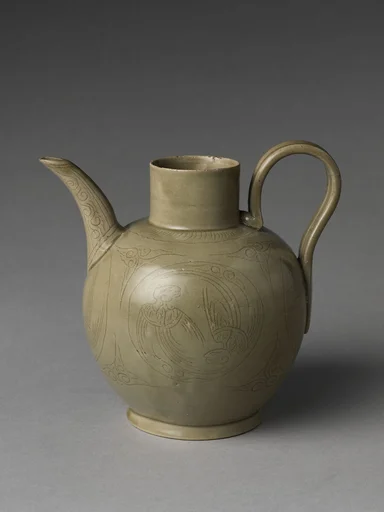
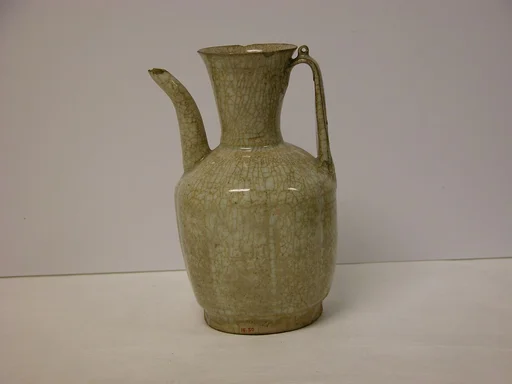
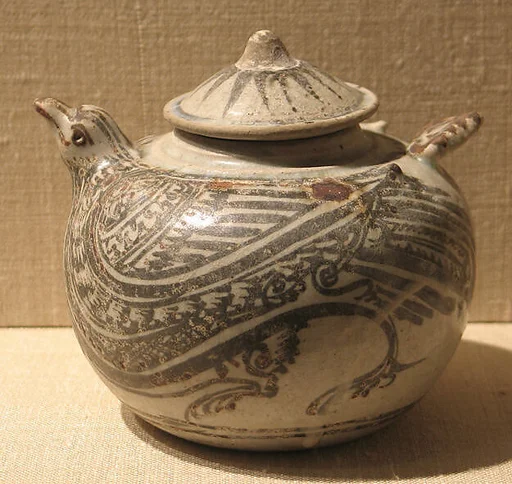
東晉 越窯青瓷雞首壺|Chicken-Headed Ewer
Unknown
4th–5th century · Stoneware with celadon glaze (Yue ware) · Asian Art
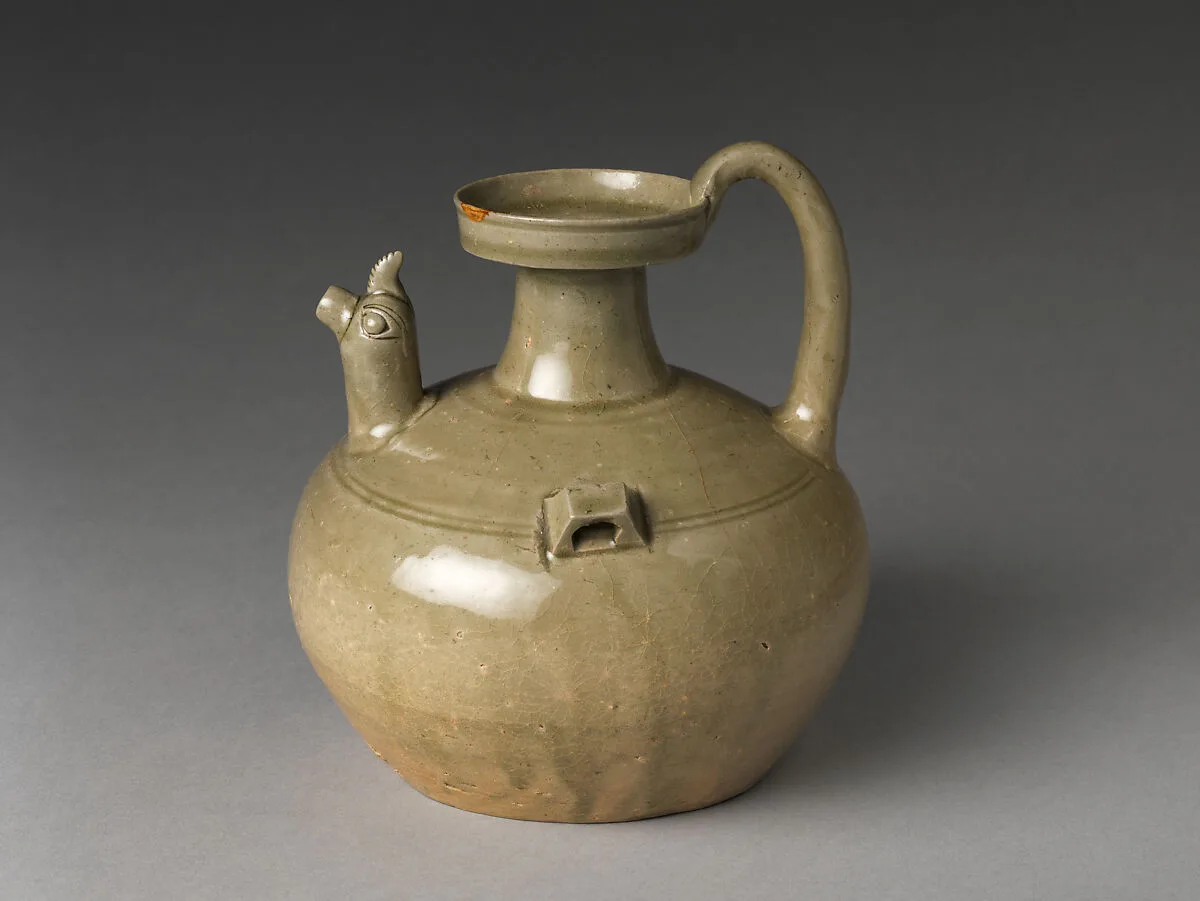
The beginnings of the Chinese celadon tradition can be traced to the Yue kilns (a term that comes from the ancient name for a region in Zhejiang Province), which in the fourth century began to produce highfired stoneware covered with gray-green glazes. Early examples such as this were produced as burial goods. The meaning of the chicken head on the spout remains obscure.
- Artist
- Unknown
- Date
- 4th–5th century
- Medium
- Stoneware with celadon glaze (Yue ware)
- Culture
- China
- Department
- Asian Art
- Credit line
- Gift of Mrs. Richard E. Linburn, 1979