"La Traviata"
House of Lanvin|Jeanne Lanvin
1928 · silk, metal, glass · Costume Institute
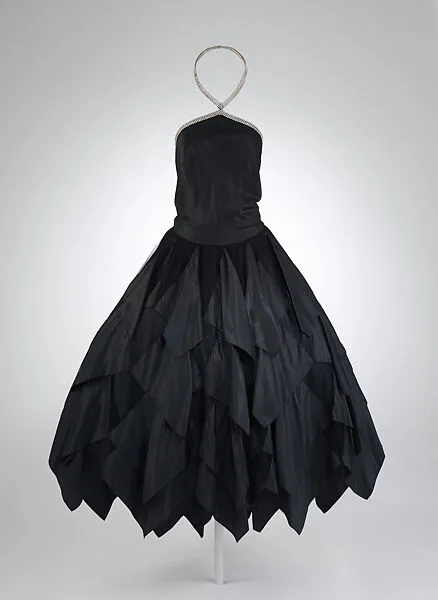
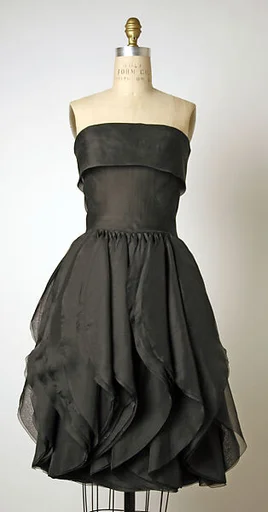
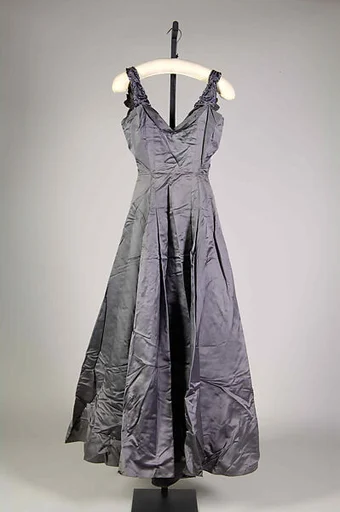
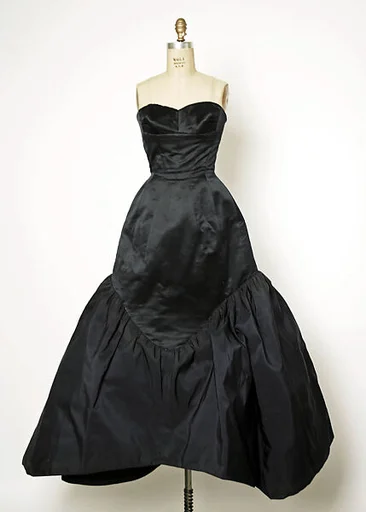
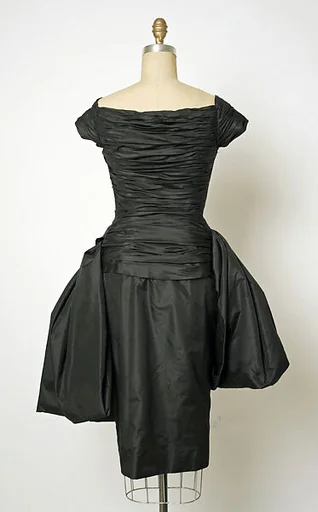
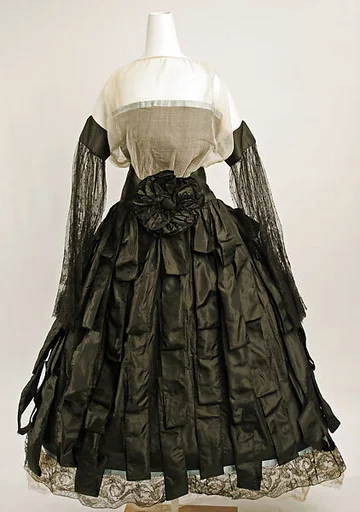
In the early 1910s, Jeanne Lanvin began designing full-skirted gowns that would come to be known in the 1920s as robes de style. She considered the look—with its panniered form that evokes eighteenth-century elegance—feminine, romantic, and universally becoming. Turning to delicate fabrics for a more modern effect, Lanvin showed variations of the robe de style in her collections through the 1930s. Like eighteenth-century marchandes de modes, fashion merchants who designed novel decorative trimmings for gowns whose form changed little from year to year, Lanvin offered the robe de style with an inventive array of embellishments. In this example, called “Traviata,” petals of taffeta are applied to a base of silk tulle, giving the skirt a light, ethereal appearance. The irregular, fluttering hemline and the finely applied rhinestone embroidery, which takes the form of a simple bowknot at the back, exemplify her distinctive design sensibility.
- Artist
- House of Lanvin|Jeanne Lanvin
- Date
- 1928
- Medium
- silk, metal, glass
- Culture
- French
- Department
- Costume Institute
- Credit line
- Purchase, Friends of The Costume Institute Gifts, 2015