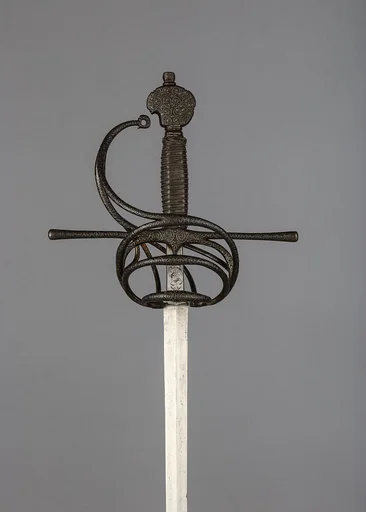
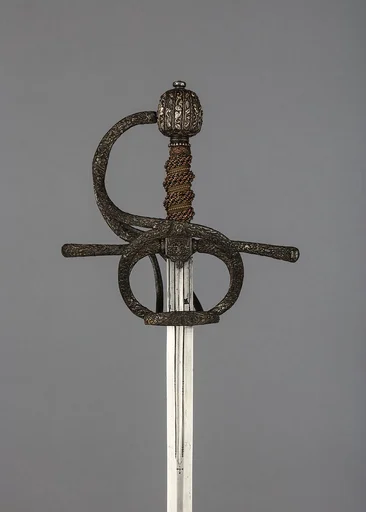
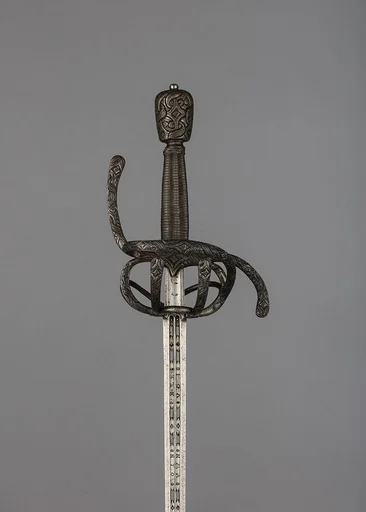
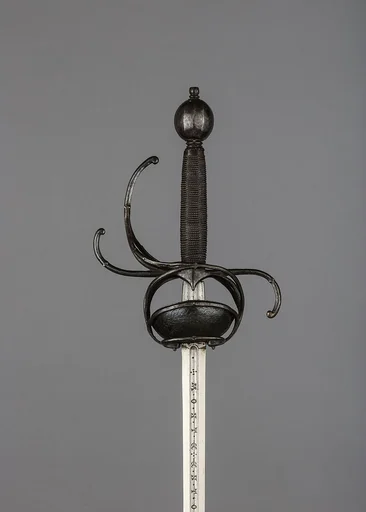
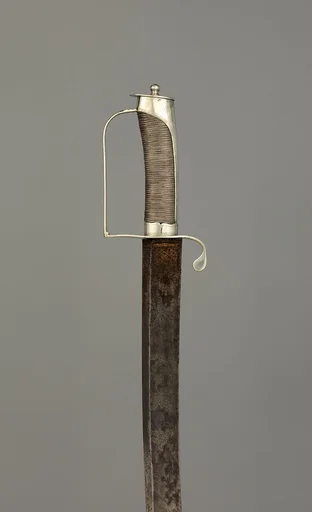
Cavalry Officer's Saber
Parry & Musgrave
ca. 1793–95 · Steel, silver, wood, textile, copper · Arms and Armor
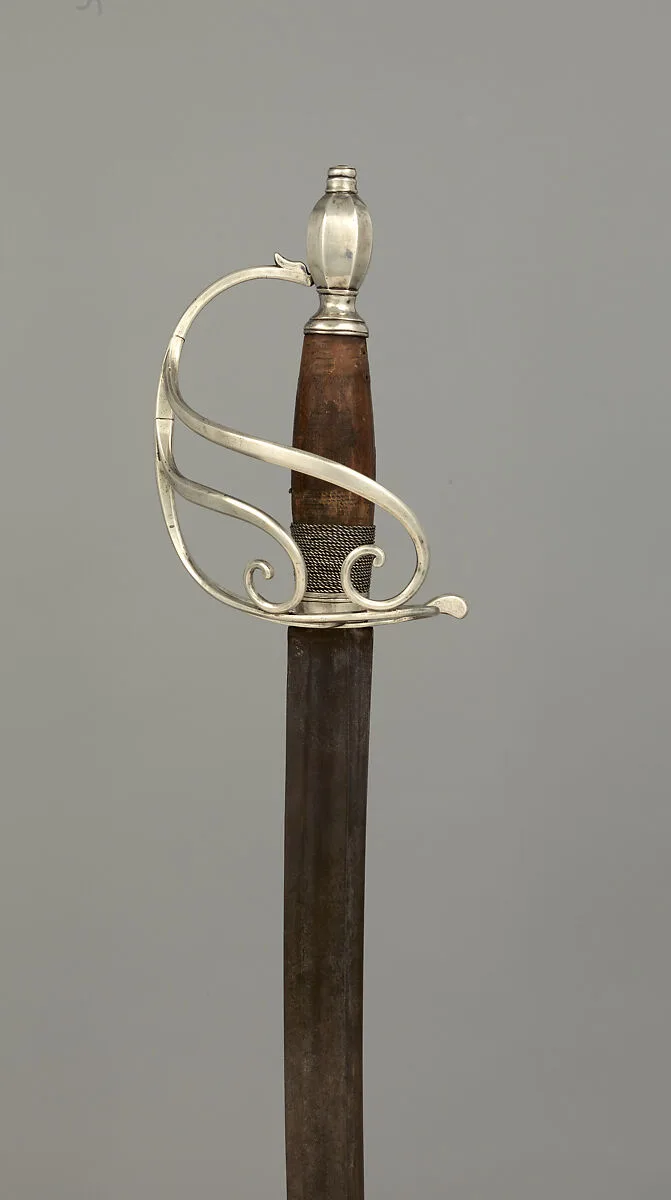
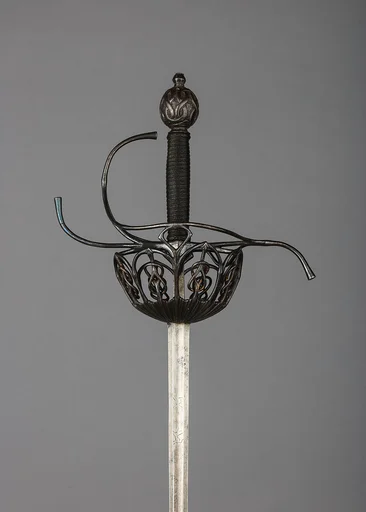
This saber is exceptional among eighteenth-century American silver-hilted examples for the fact that it is constructed with a basket-hilt. The design for the hilt is likely to have been derived from British prototypes as the knuckleguard with scrolled side-bars is related in conception to the hilts of some eighteenth-century British sabers, including a silver-hilted officer’s spadroon made in London ca. 1744–45, which is preserved in the Royal Armouries, Leeds (inv. IX.2187); a saber, of ca. 1775–85, in the Royal Collection at Windsor Castle; and a 1788 pattern Royal Regiment of Horse Guard saber, of ca. 1788, in Brown University, Rhode Island. The olive shape of the pommel is equally unconventional and may similarly reflect British influence although the comprable pommels of British sabers are never facetted. In addition to its typological singularities, the hilt of this saber is remarkable for the fact that it can be securely identified as a work by the Philadelphia silversmith firm of Parry & Musgrave thanks to the mark struck on the base-plate. The short existence of the firm, which was formed in 1793 in Philadelphia between James Musgrave (active by 1792, d. 1809) and Rowland Parry (d. 1796), and dissolved on November 10, 1795, provides dependable grounds for dating the hilt to sometime between 1793 and 1795.
- Artist
- Parry & Musgrave
- Date
- ca. 1793–95
- Medium
- Steel, silver, wood, textile, copper
- Culture
- American, Philadelphia
- Department
- Arms and Armor
- Credit line
- Purchase, Arthur Ochs Sulzberger Bequest, 2015