Untitled
Unknown
late 19th–early 20th century · Papier-mâché, polychrome, gilding, leather, and silk · Asian Art
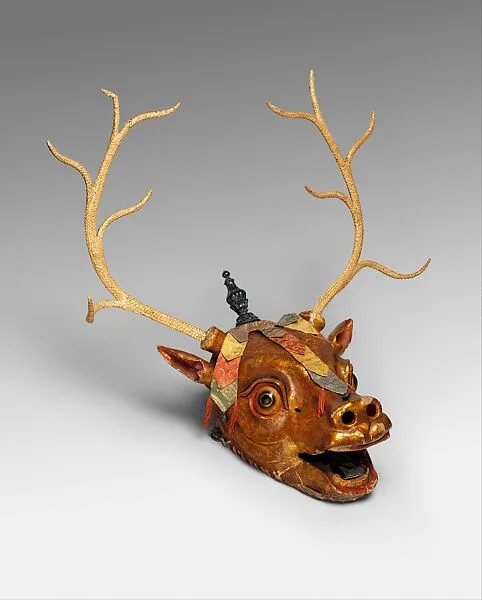
Ritual dances (cham) featuring music have always been an important part of Tibetan Buddhist practice. Stag dances are especially popular during the end-of-year Gu Tor Festival. These performances, dedicated to fierce deities, siphon malignant forces into a torma (a sculpted offering often made of butter and flour). A monk dressed as a stag cuts the torma into pieces, scattering them as he dances to rid the community of hostile forces. The large audiences that attended these dances had to see the stag costumes from afar, so they are deliberately exaggerated—the large eyes and antlers of this mask give the dancer greater stature. The elaborate Chinese silk robe, showing a dragon cavorting among clouds and waves, was likely a gift to a Tibetan monastery.
- Artist
- Unknown
- Date
- late 19th–early 20th century
- Medium
- Papier-mâché, polychrome, gilding, leather, and silk
- Culture
- Tibet
- Department
- Asian Art
- Credit line
- Gift of Mrs. Edward Nis, 1934