Mask
Condorhuasi-Alamito artist(s)
400 BCE–700 CE · Stone (lapis lazuli) · Arts of Africa, Oceania, and the Americas
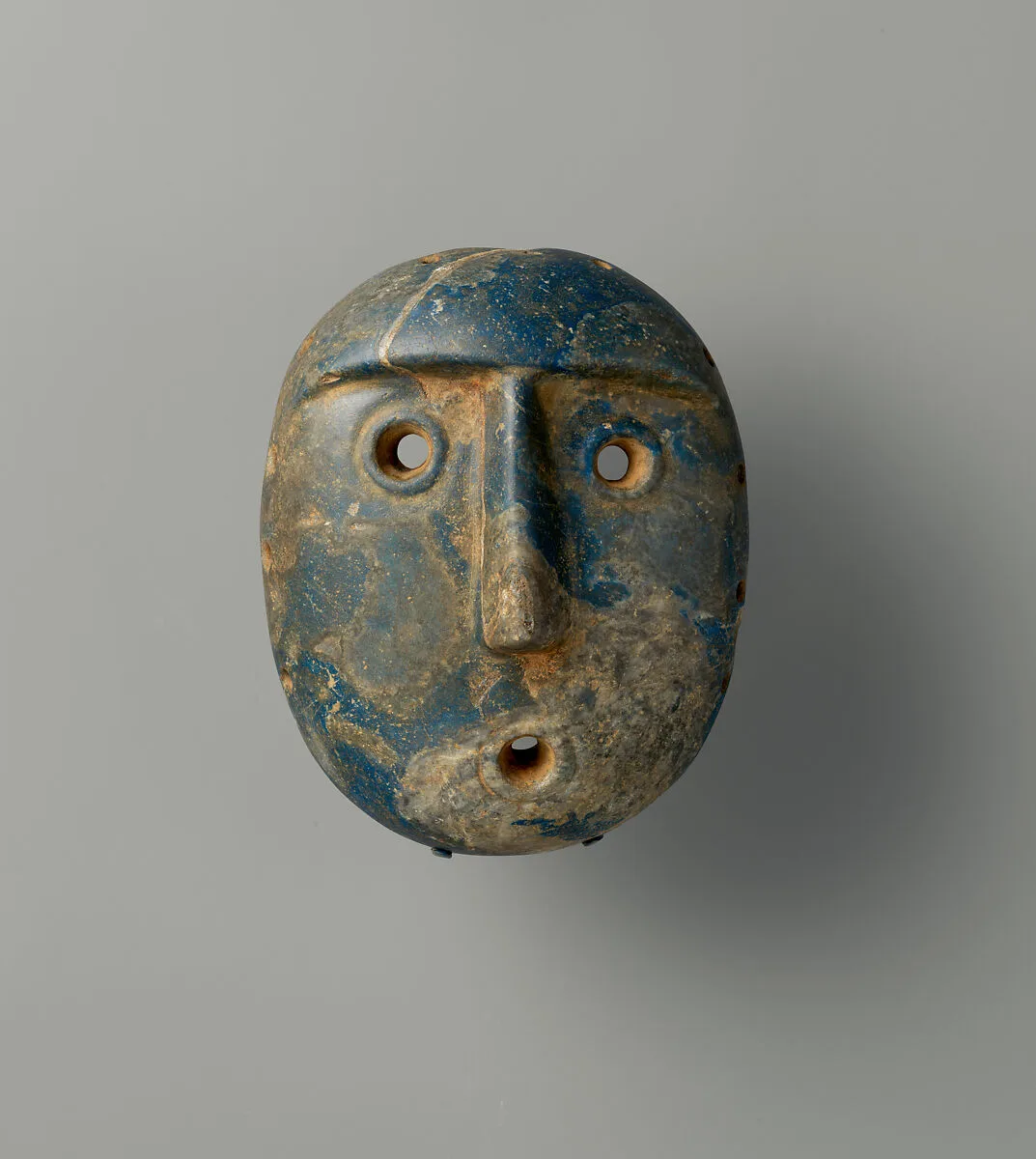
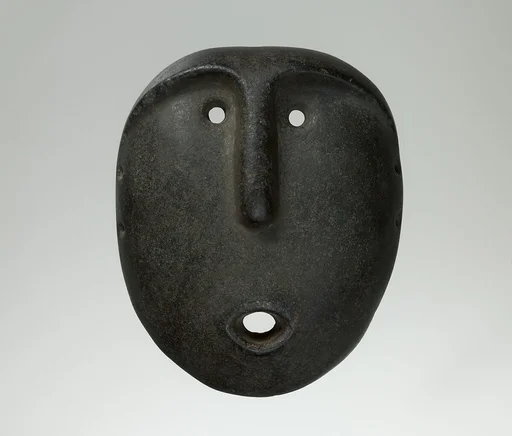
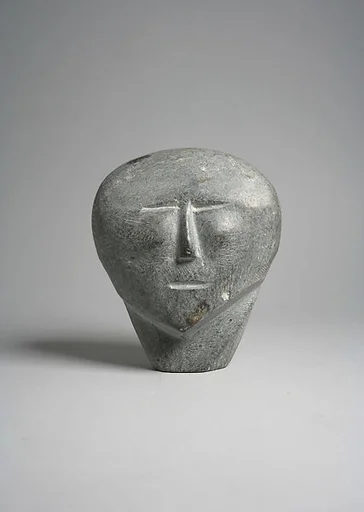
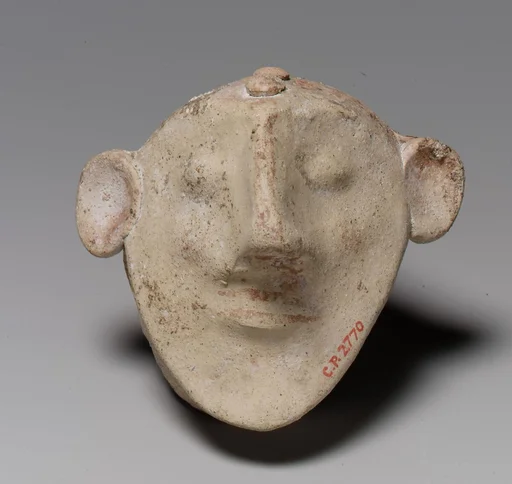
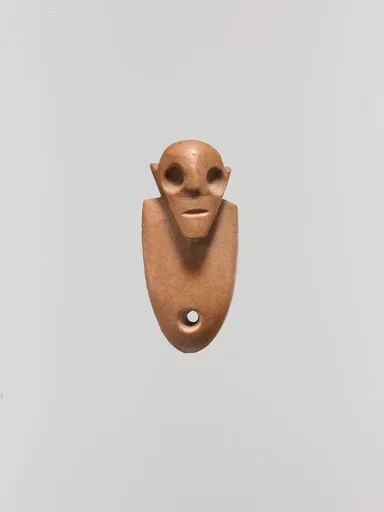
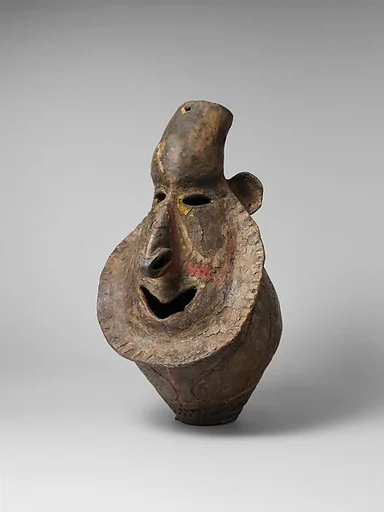
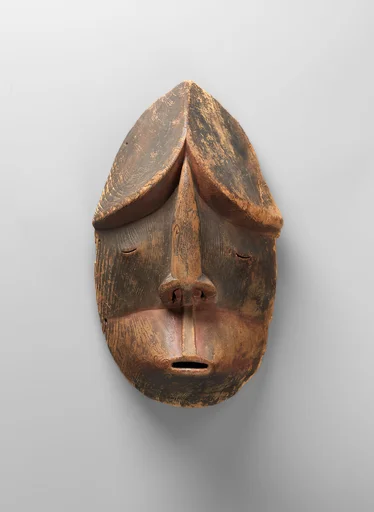
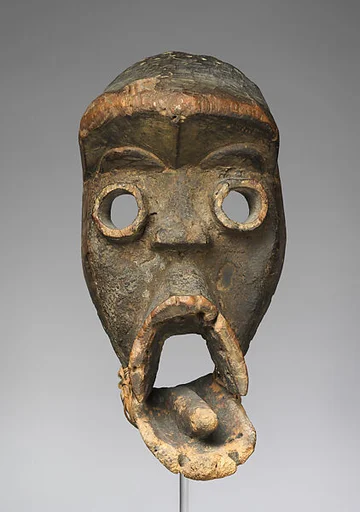
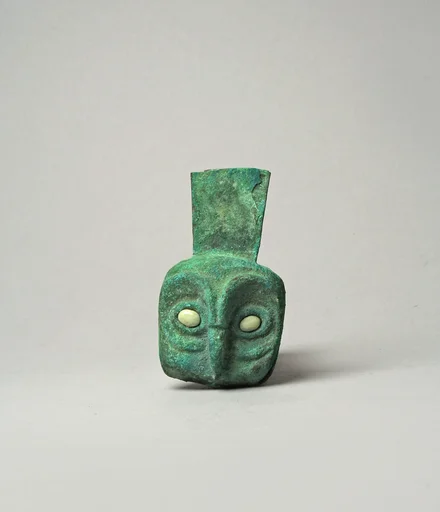
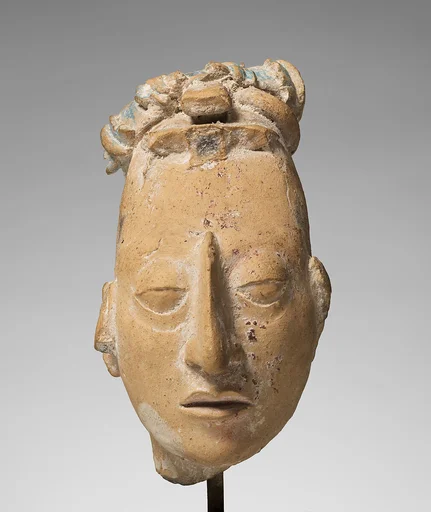
This mask carved in lapis lazuli features a stylized anthropomorphic face with a pronounced brow ridge, angular nose, and drilled perforations with raised carved ridges indicating the eyes and mouth. The presence of ten additional drill holes line the outer edges of the mask suggest that it was once affixed to something, perhaps a funerary bundle. The Condorhuasi-Alamito peoples were llama pastoralists in the area that is now the Catamarca province of Argentina. They were skilled artisans in a variety of media, including ceramic, metal, and stone. Archaeological evidence suggests that the Condorhuasi-Alamito peoples maintained extensive long-distance contacts with other regions, including the important site of Tiwanaku, near Lake Titicaca in what is now Bolivia. The generous use of lapis, a material probably originally obtained from the Coquimbo (Chile) region, also speaks to the reach of Condorhuasi-Alamito’s interaction sphere.
- Artist
- Condorhuasi-Alamito artist(s)
- Date
- 400 BCE–700 CE
- Medium
- Stone (lapis lazuli)
- Culture
- Condorhuasi-Alamito
- Department
- Arts of Africa, Oceania, and the Americas
- Credit line
- Gift of Claudia Quentin, 2015