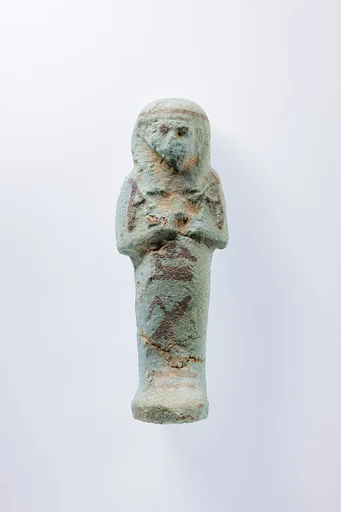
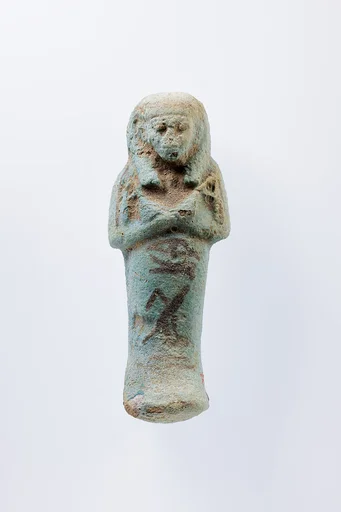
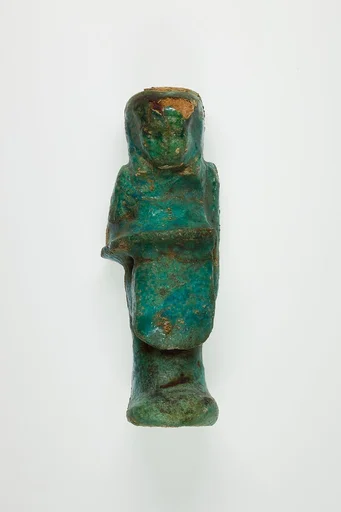
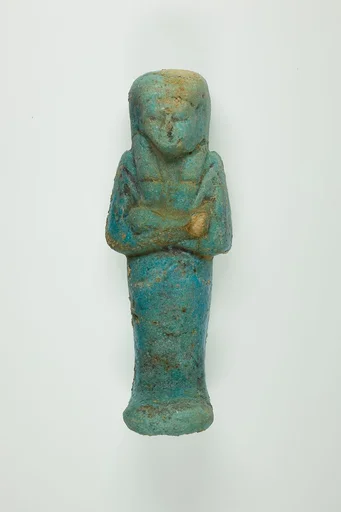
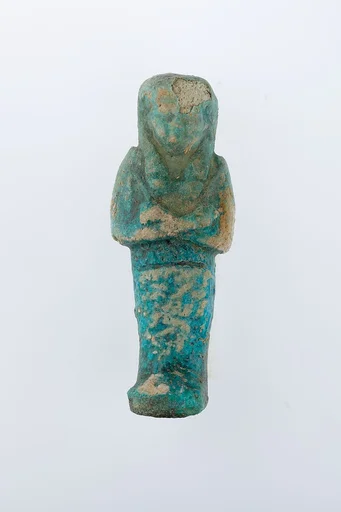
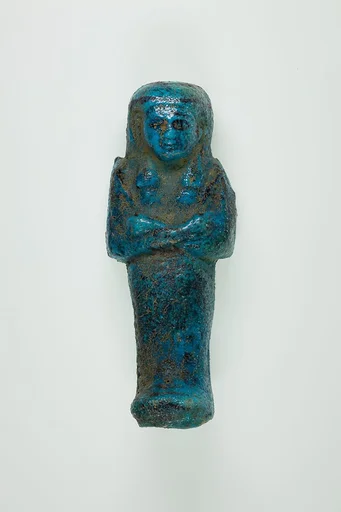
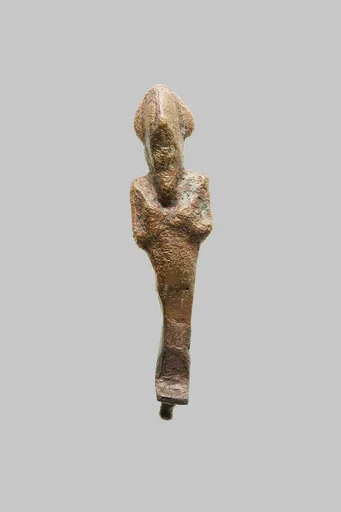
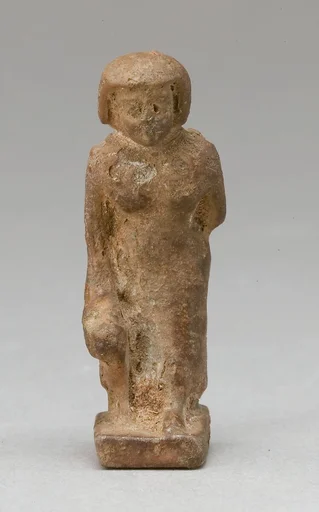
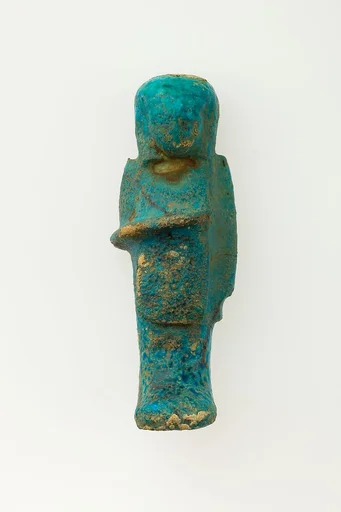
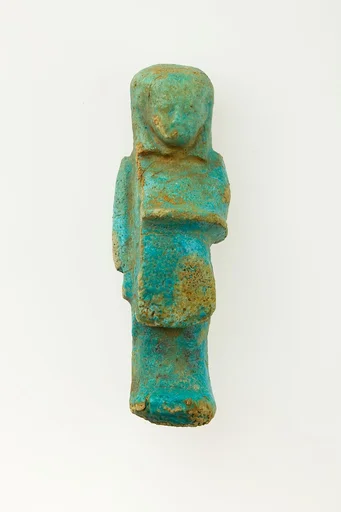
Shabti of Hor
Unknown
ca. 1070–950 B.C. · Faience · Egyptian Art
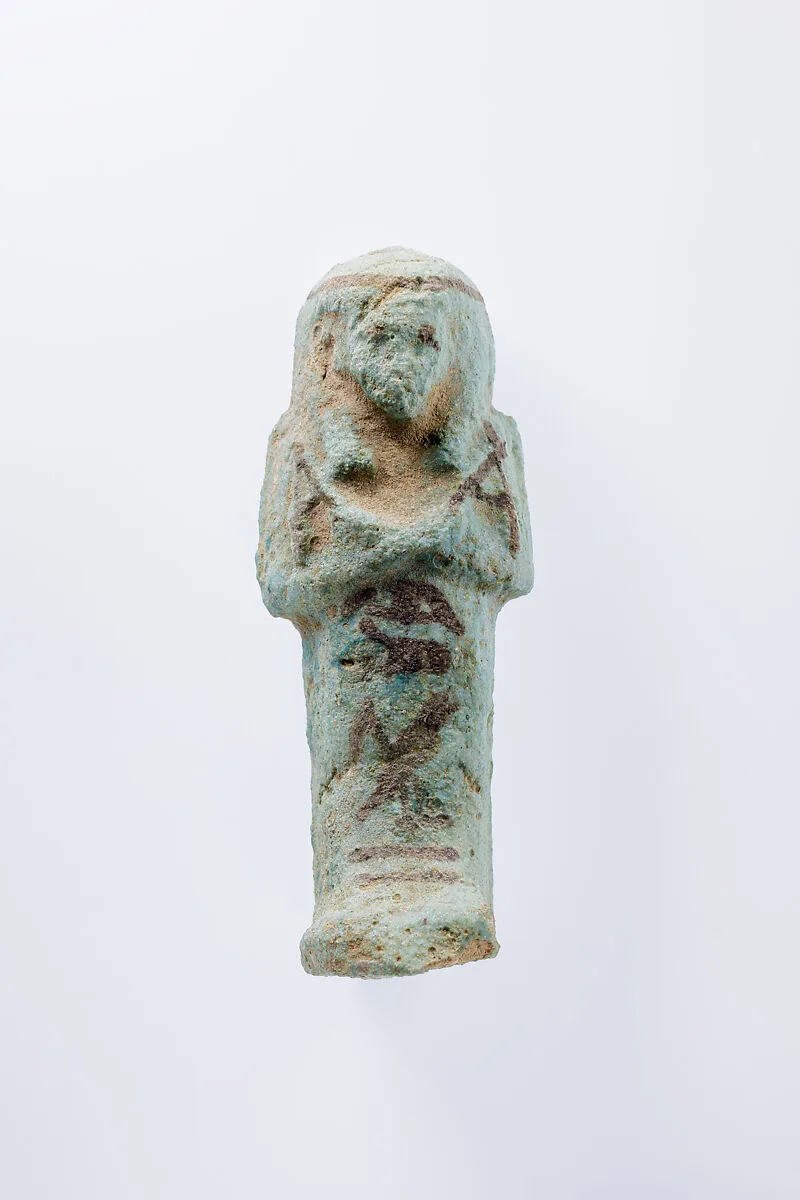
One of a group of eight funerary figures (shabtis) found in the debris of one of the ramps leading up to the Hatshepsut Temple at Deir el-Bahri. These are inscribed for a man named Hor, or Horus, who was likely part of an important family buried in the temple precinct. Shabtis were avatars of their owners, meant to do manual work on their behalf in the afterlife. Hor would originally have had over 400 shabtis, one worker for each day of the year and one supervisor for each ten-day week.
- Artist
- Unknown
- Date
- ca. 1070–950 B.C.
- Medium
- Faience
- Department
- Egyptian Art
- Credit line
- Rogers Fund, 1925