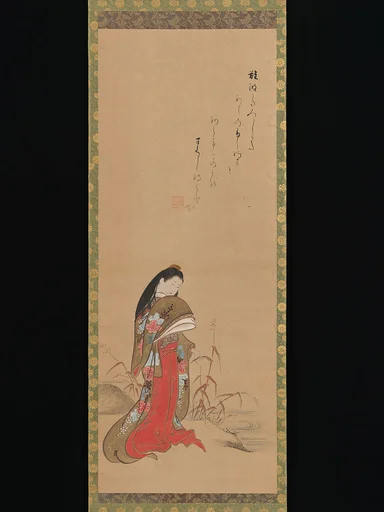
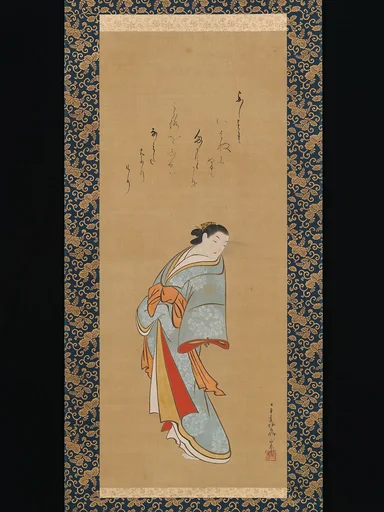
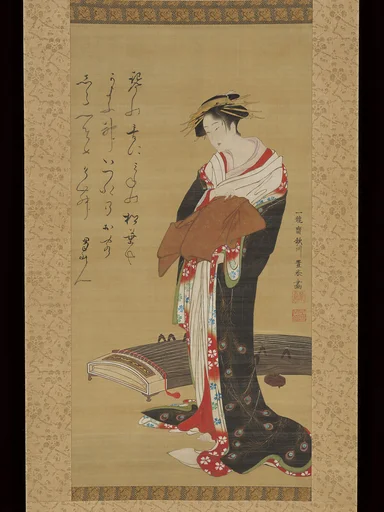
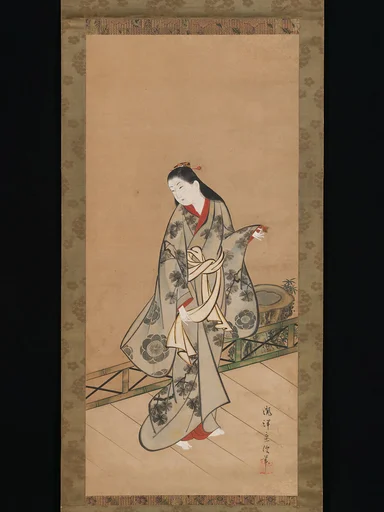
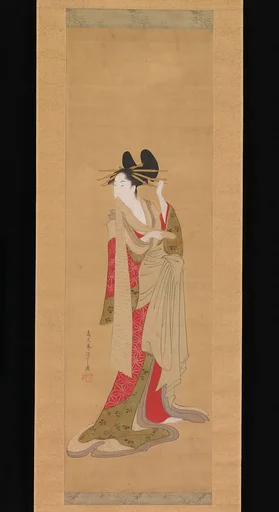
東川堂里風筆 立美人図|Standing Courtesan
Kamo no Suketame|Tōsendō Rifū
ca. 1720 · Hanging scroll; ink and color on silk · Asian Art
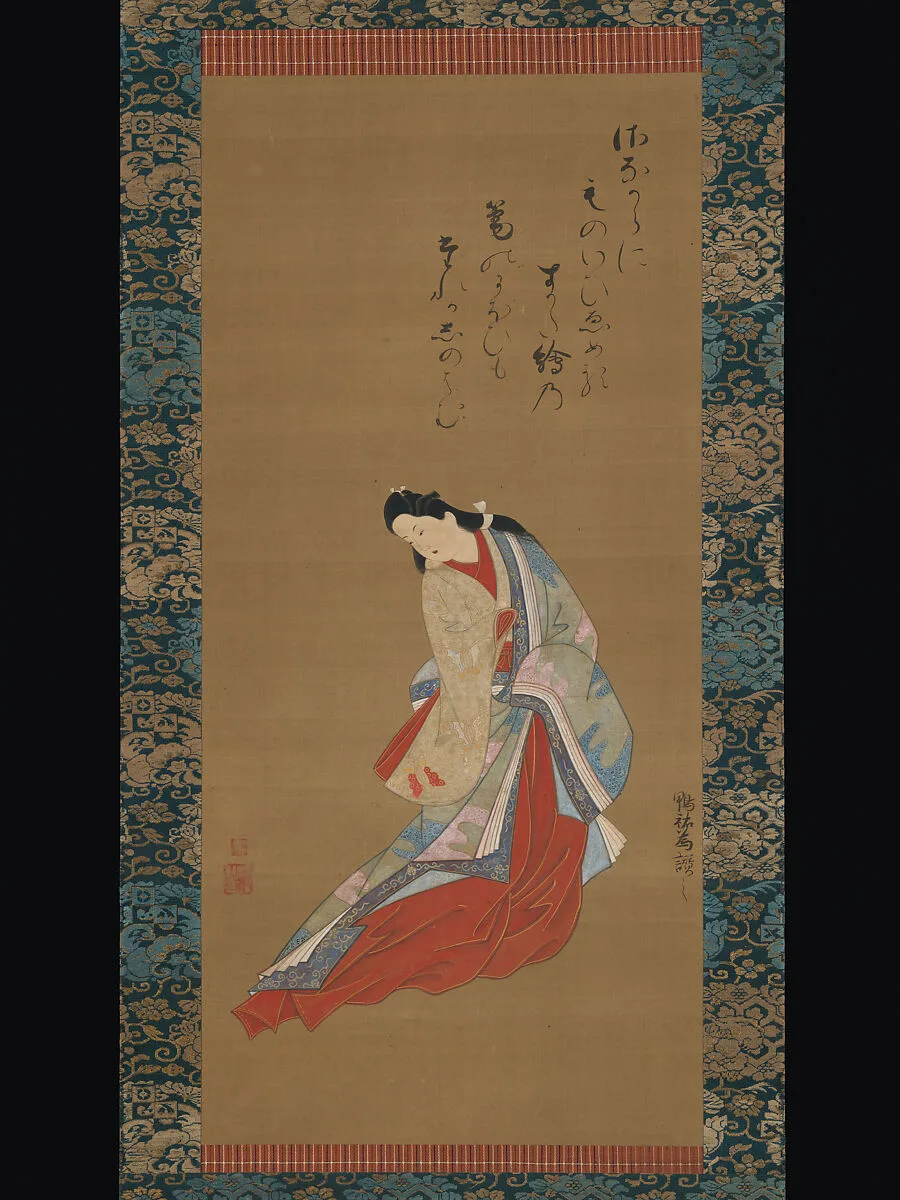
The artist has captured the elegant appearance of a woman, probably a high-ranked courtesan, in elegant robes and long, flowing hair tied with paper ribbons. Tōsendō Rifu was among the specialist ukiyo-e painters who emerged from the Kaigetsudō studio and emulated its style of rendering beauties of the pleasure quarter. The painting has an inscription, added after the painting was created, by Kamo no Suketame, a Shinto priest and noted poet of a generation or two after the artist was active. His gentle, curvilinear calligraphy reflects the influence of the prevalent Reizei courtly style of the Edo period. It was a common practice for owners of paintings to ask prominent literati of their day to inscribe a painting in a distinctive hand in order to add another level of enjoyment to the work. Here the inscription reads: Sanagara ni mono ii emeru sugata-e no fude no nioi mo tare ka shinobamu The flavor and fragrance of the brush that created this portrait, seeming so real, as if she can speak and smile, makes me long to know her. —Poem by Kamo no Suketame (Trans. John T. Carpenter)
- Artist
- Kamo no Suketame|Tōsendō Rifū
- Date
- ca. 1720
- Medium
- Hanging scroll; ink and color on silk
- Culture
- Japan
- Department
- Asian Art
- Credit line
- Mary Griggs Burke Collection, Gift of the Mary and Jackson Burke Foundation, 2015