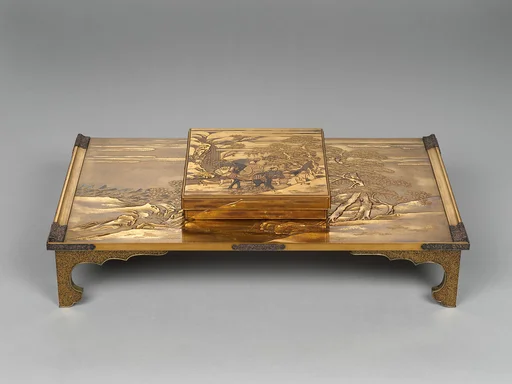
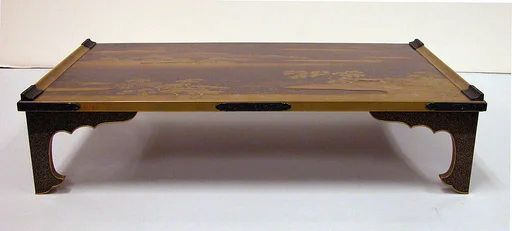
栗鼠瓜蒔絵文台|Writing Table (Bundai) with Melons and Squirrels
Unknown
first half of the 17th century · Lacquered wood with gold hiramaki-e and e-nashiji (“pear-skin picture”) · Asian Art
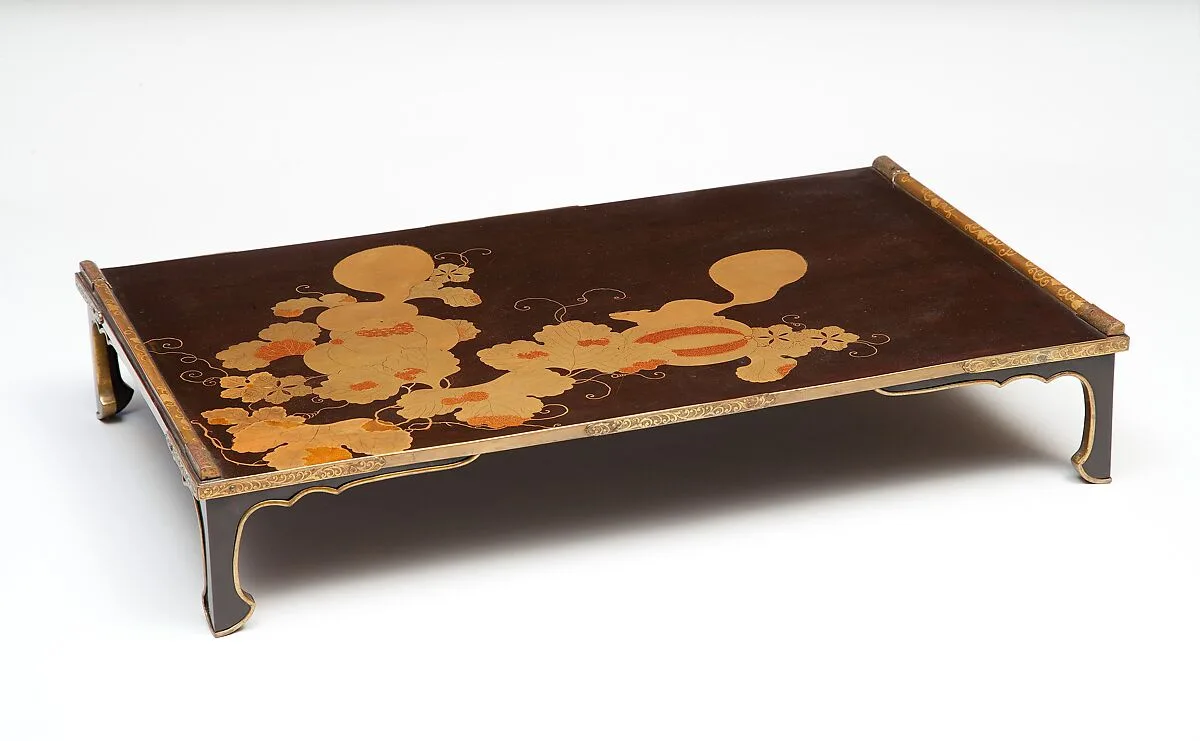
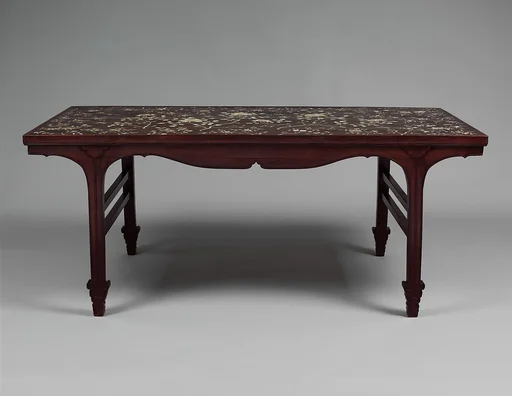
This writing table, which was probably originally made as a set with a matching writing box, is decorated with designs of melons and squirrels, auspicious symbols representing good fortune and fertility. This painterly subject originates from Chinese compositions depicting nature, including birds and flowers, grasses, vegetables, and insects, popular in the arts of the Ming dynasty. Painters in Japan during the Muromachi period (1392–1573) incorporated these subjects into their repertory. The maki-e artist depicted the squirrels in a dynamic, playful composition, while some of the leaves are designed as if partially eaten by insects. The application of the flat maki-e and the e-nashiji (“pearskin picture”) sprinkling follows the Momoyama-period traditions (1573–1615) of Kōdaiji lacquers.
- Artist
- Unknown
- Date
- first half of the 17th century
- Medium
- Lacquered wood with gold hiramaki-e and e-nashiji (“pear-skin picture”)
- Culture
- Japan
- Department
- Asian Art
- Credit line
- Mary Griggs Burke Collection, Gift of the Mary and Jackson Burke Foundation, 2015