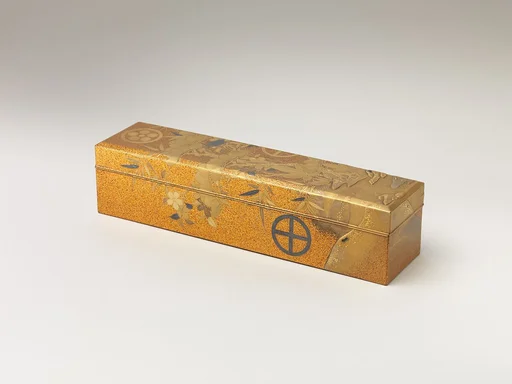
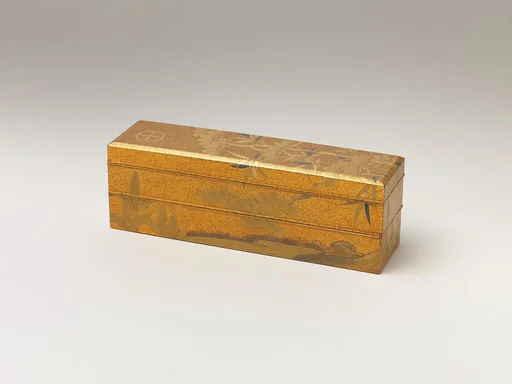
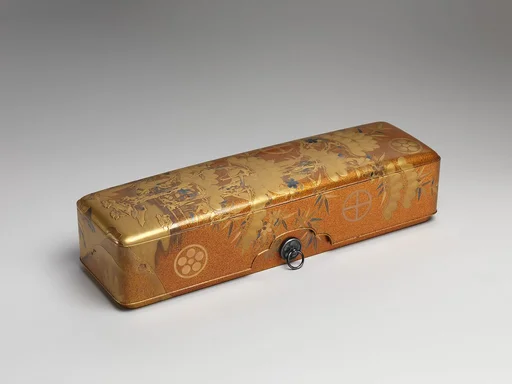
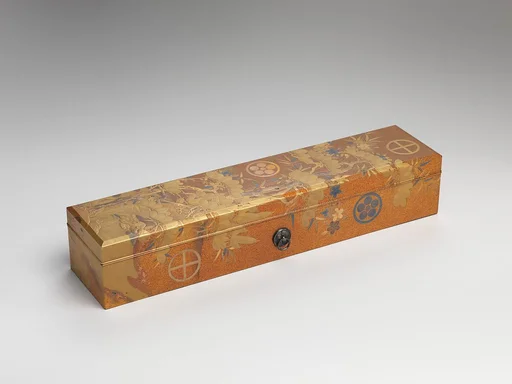
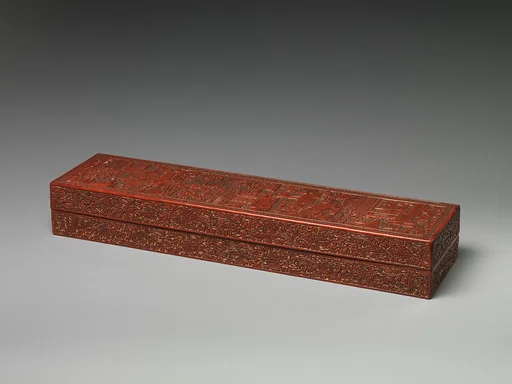
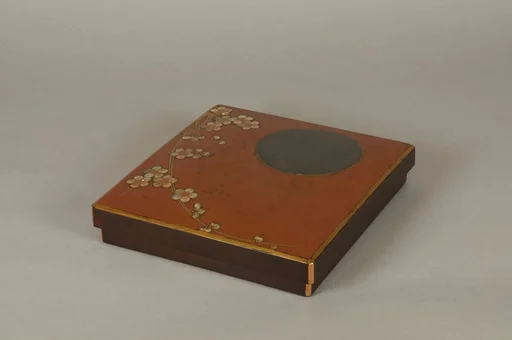
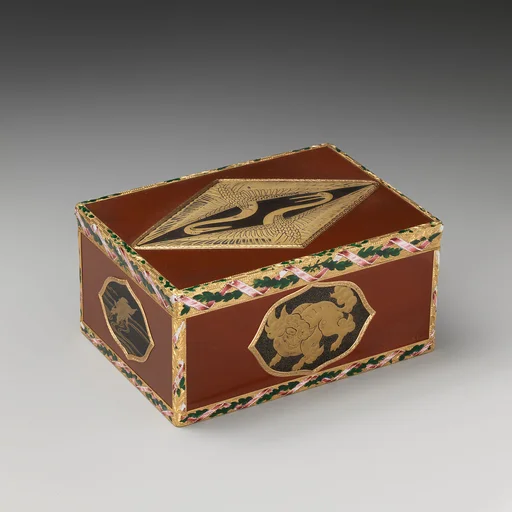
桐秋草蒔絵軸物箱|Scroll Box (Jikumono-bako) with Paulownia and Autumn Grasses
Unknown
early 17th century · Lacquered wood with gold hiramaki-e and e-nashiji (“pear-skin picture”) · Asian Art
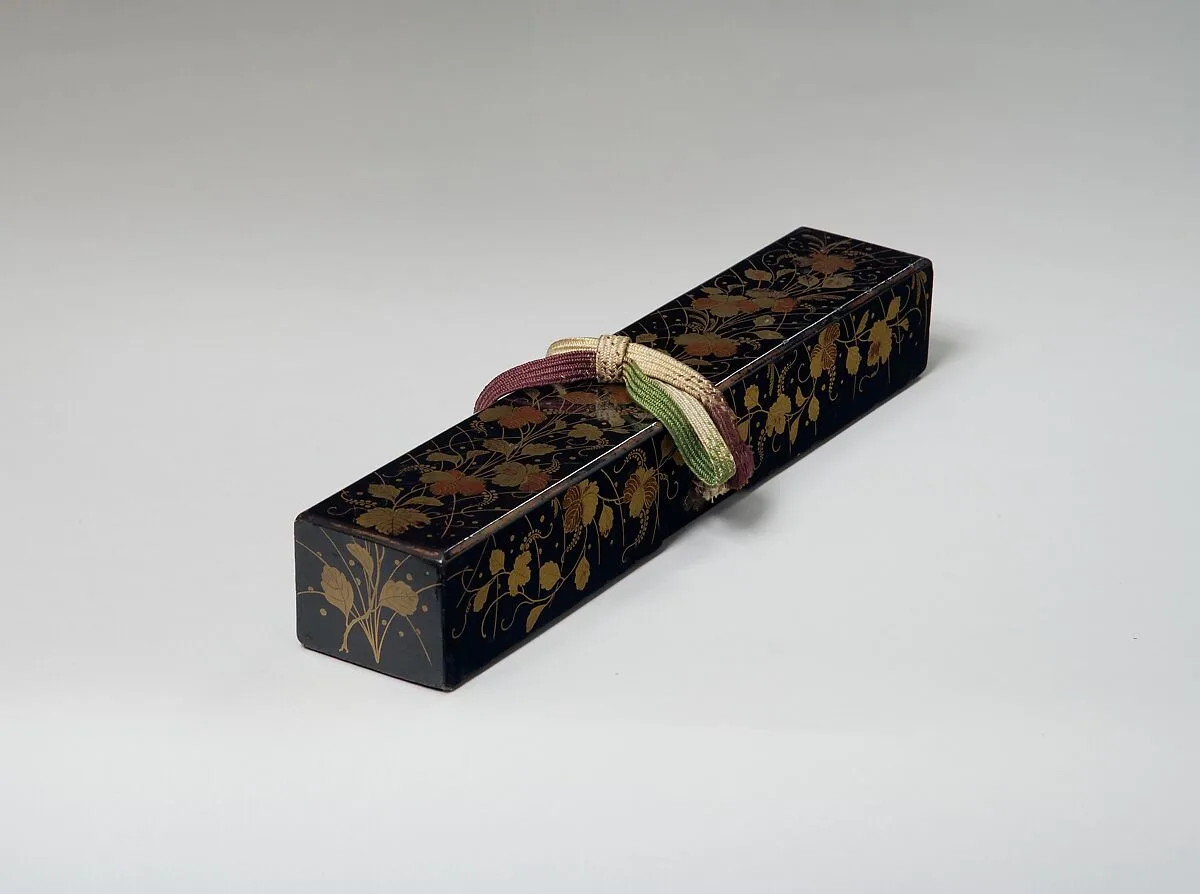
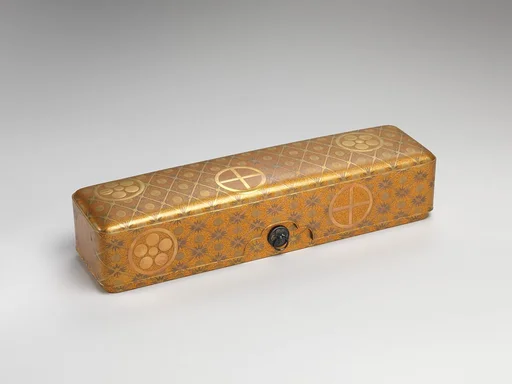
In the Momoyama period (1573–1615), a new style of lacquer decoration developed in Kyoto. Named after the Kōdaiji Temple, it catered to the tastes of the warlord Toyotomi Hideyoshi (1537–1598) for flamboyant furniture and household items decorated in gold. Using several relatively simple techniques, craftsmen conceived innovative, bold designs that did not require complicated underdrawings and allowed them to cover large surfaces in short amounts of time. The designs on this scroll box are executed in flat gold hiramaki-e with darker “pear-skin” hues to create a striking contrast with the black lacquer background.
- Artist
- Unknown
- Date
- early 17th century
- Medium
- Lacquered wood with gold hiramaki-e and e-nashiji (“pear-skin picture”)
- Culture
- Japan
- Department
- Asian Art
- Credit line
- Mary Griggs Burke Collection, Gift of the Mary and Jackson Burke Foundation, 2015