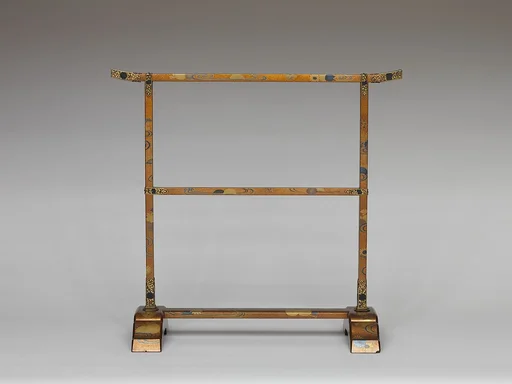
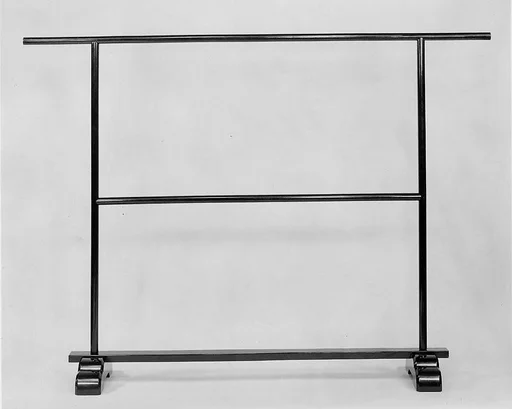
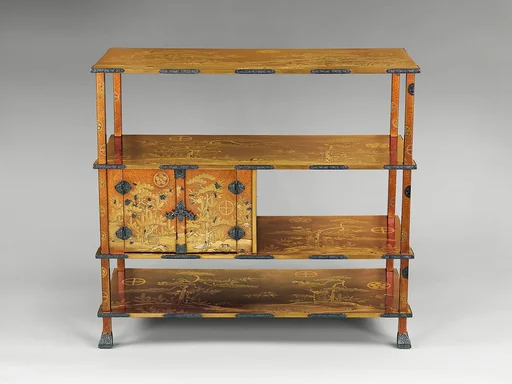
唐草葵紋蒔絵衣桁|Kimono Rack (Ikō) with Scrolling Foliage and Tokugawa Family Crest
Unknown
18th century · Lacquered wood with gold hiramaki-e on nashiji (“pear-skin” ground); gilt bronze fittings · Asian Art
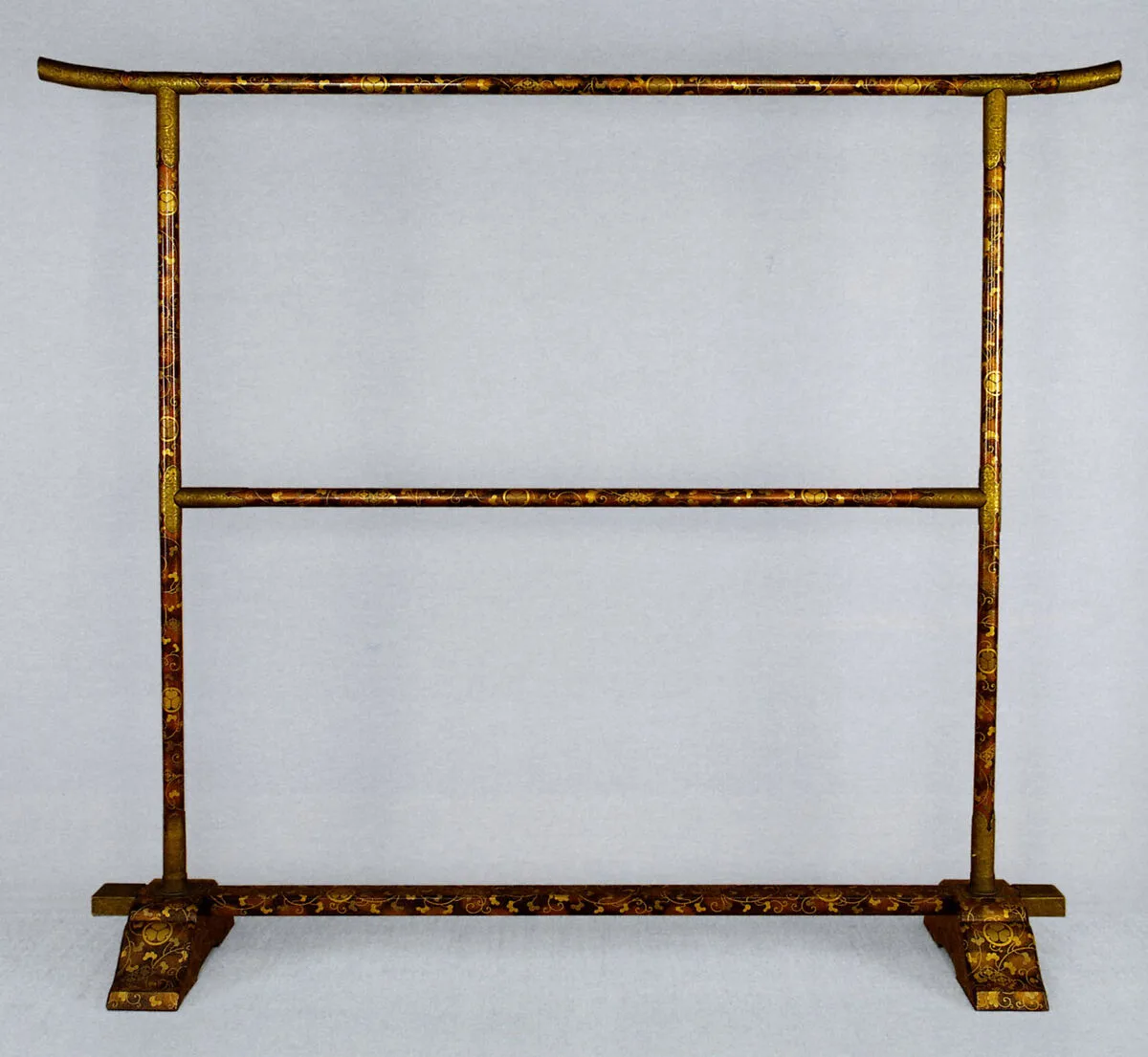
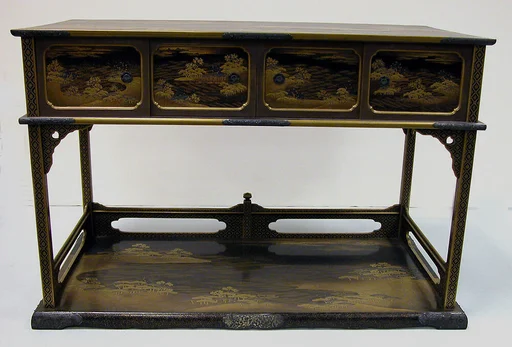
As numerous extant examples demonstrate, in the Momoyama (1573–1615) and early Edo periods artisans from various painting schools depicted on folding screens an array of sumptuously patterned garments, including Noh robes casually draped over kimono racks. These compositions of garments on lacquer clothing stands appeared in paintings as “advertisements” for kimono makers as well as in paintings of both brothel scenes and the interiors of military residences. In fact, a twelfth-century document mentions the interior furnishings appropriate for a room in an aristocrat’s house, including a clothing stand draped with garments. By the thirteenth, fourteenth, and fifteenth centuries, lacquer clothing stands had become a conventional item included in the bridal trousseau of wealthy women. The kimono rack on view could have been part of the trousseau of a Tokugawa princess.
- Artist
- Unknown
- Date
- 18th century
- Medium
- Lacquered wood with gold hiramaki-e on nashiji (“pear-skin” ground); gilt bronze fittings
- Culture
- Japan
- Department
- Asian Art
- Credit line
- Mary Griggs Burke Collection, Gift of the Mary and Jackson Burke Foundation, 2015