松村景文筆 頼山陽書 梅図衝立屏風|Plum Blossoms
Matsumura Keibun 松村景文|Rai San’yō 頼山陽
ca. 1823 · Freestanding screen (tsuitate); ink on paper · Asian Art
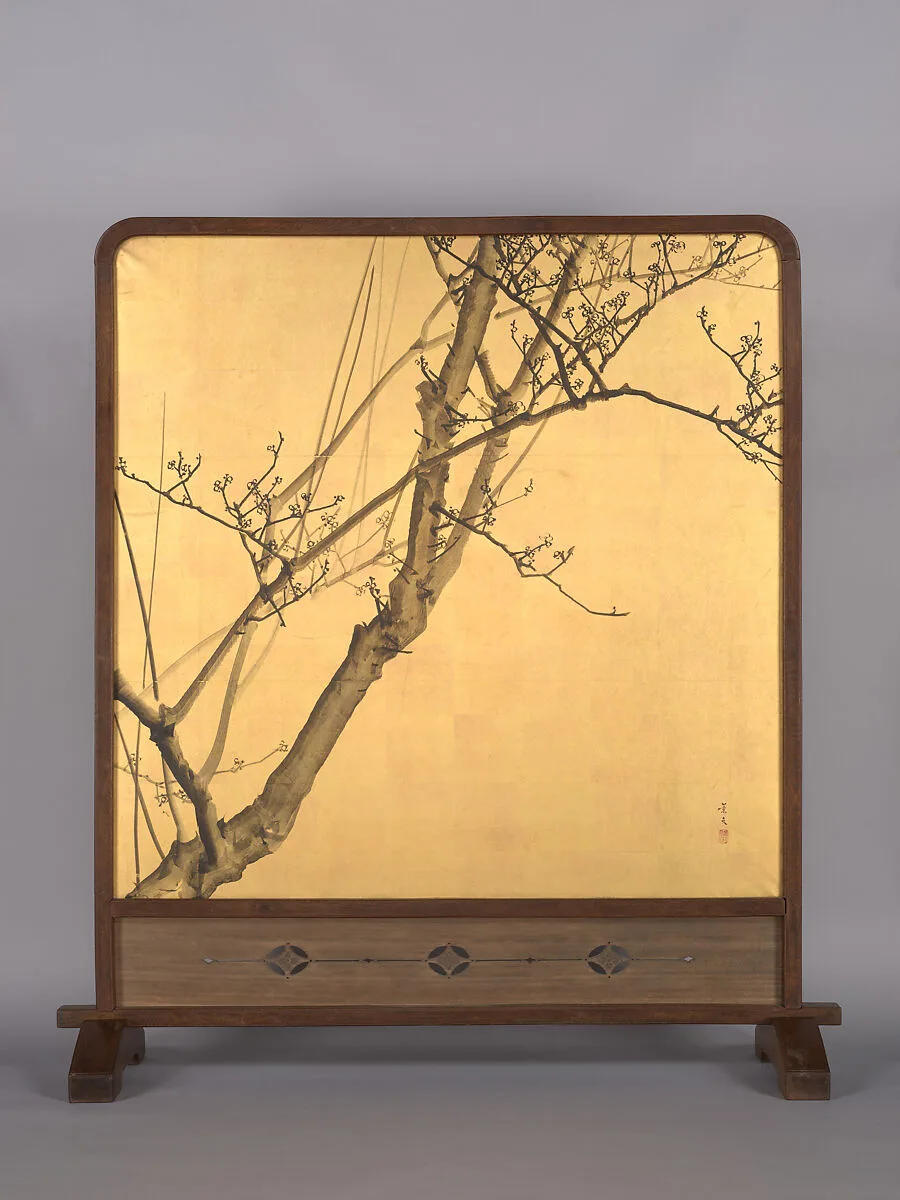
The blossoming of plum trees in the early spring—a symbol of resilience against winter’s oppressive cold—has long been a favorite subject for ink paintings by East Asian artists. Matsumura Keibun, one of the foremost painters of the Kyoto-based Shijō school, adhered to conventions from Chinese painting manuals for suggesting a sense of depth through the rendering of intertwined tree branches. The variegated grays against an expansive blank background create a boldly graphic composition, while the animated strokes of the new shoots impart dynamism. Keibun was well versed in Ming (1368–1644)- and Qing (1644–1912)-dynasty art theory, and had close ties to sinologists in Kyoto intellectual circles. Among these literati was Rai San’yō, the author and calligrapher of the Chinese poem on the theme of “Plum Blossoms Reflected in Water,” which is brushed on the reverse of this freestanding single screen.
- Artist
- Matsumura Keibun 松村景文|Rai San’yō 頼山陽
- Date
- ca. 1823
- Medium
- Freestanding screen (tsuitate); ink on paper
- Culture
- Japan
- Department
- Asian Art
- Credit line
- Gift of Florence and Herbert Irving, 2015
![蟹図[表] 牡丹図[裏]大衝立|Crabs and Peonies](https://d2pvxr3eb77vb4.cloudfront.net/assets/v1/3d/3ddc455ce668ae948125697e72c28fcea9901d21b8fd07b8d40fb8e4ff2a1be1/graph.webp)