Coat
Yohji Yamamoto
fall/winter 1986–87 · wool, silk, synthetic · Costume Institute
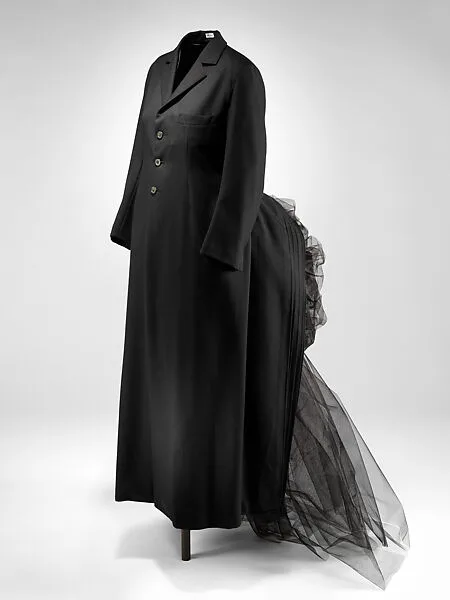
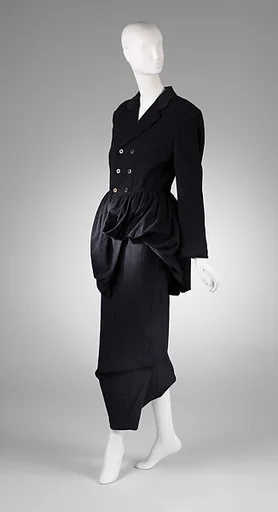
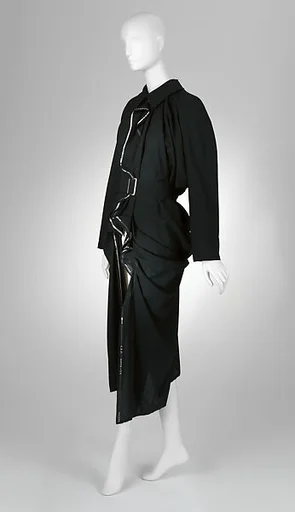
Japanese designer Yohji Yamamoto makes coats as an architecture for the body: he wanted the wearer to live in the garment and feel protected as in a house. His approach to fashion design is that of a dressmaker: he does not want to label his work as that of an artist. This humble attitude pervades the often-melancholic atmosphere of Yamamoto’s work, often characterized by a romantic, historicist spirit and intricate construction. For Yamamoto, creation is a way of looking towards the future with your face turned towards the past, as Walter Benjamin wrote about Paul Klee’s Angelus Novus. This woolen coat evokes the elegant long silhouette of nineteenth-century coats with bustles underneath. A tailored bodice wavers out into a multilayered drape and bustle, but the backside is open in the middle: a playful and subversive recoding of Victorian dress codes. This focuses the viewers’ gaze on the legs seen from the backside. The focus on the backside is typical for Eastern modes of dressing, which traditionally emphasize a woman’s elegance as ‘seen from the back’, like in the Japanese ukiyo-eprints.
- Artist
- Yohji Yamamoto
- Date
- fall/winter 1986–87
- Medium
- wool, silk, synthetic
- Culture
- Japanese
- Department
- Costume Institute
- Credit line
- Purchase, Gould Family Foundation Gift, in memory of Jo Copeland, 2014