Mater Dolorosa
Pedro de Mena
ca. 1674–85 · Partial-gilt polychrome wood · European Sculpture and Decorative Arts
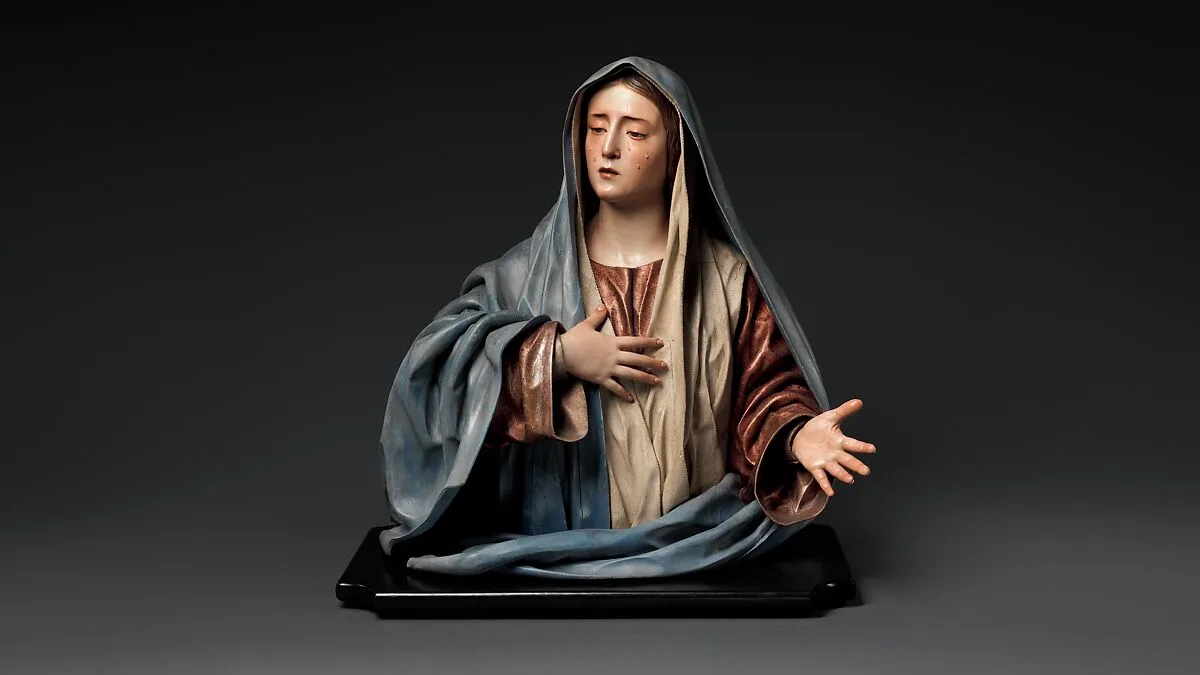
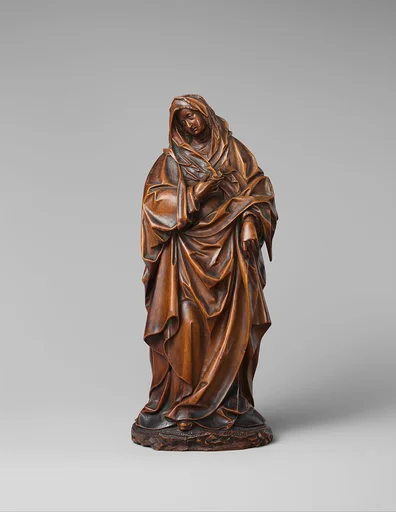
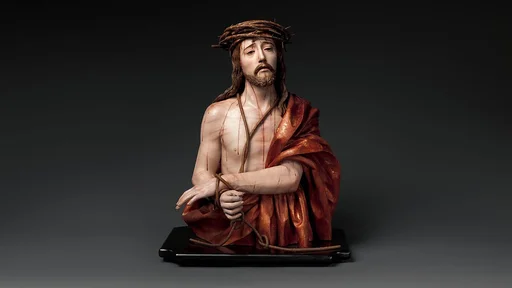
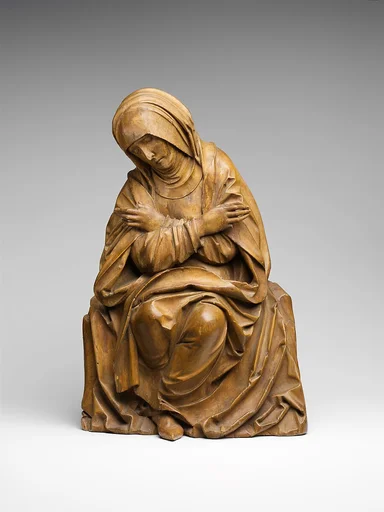
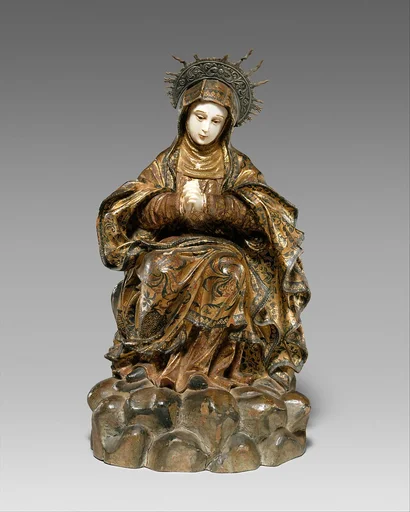
Carved wood sculpture, enhanced by paint and other media, including glass eyes and hair, reached a pinnacle of naturalism and expressive force in 17th-century Spain. Pedro de Mena’s virtuoso manipulation of these materials created startling likenesses of bodies and clothing. They encourage in the beholder an empathetic response to the suffering of mother and son, who appear as exemplars of worldly forbearance in the face of tragedy. Carved details such as the twisted and knotted rope binding Christ’s hands or the Virgin’s thin, deeply undercut drapery are joined by the subtle and descriptive painting in thin glazes of the silver and red brocade of the Virgin’s tunic and the bruises that cover Christ’s flesh. Mena’s desire was to make the figures seem physically present before the viewer. At the same time, they have a dignity and reserve that made them ideal works for contemplation.
- Artist
- Pedro de Mena
- Date
- ca. 1674–85
- Medium
- Partial-gilt polychrome wood
- Culture
- Spanish, probably Málaga
- Department
- European Sculpture and Decorative Arts
- Credit line
- Purchase, Lila Acheson Wallace Gift, Mary Trumbull Adams Fund, and Gift of Dr. Mortimer D. Sackler, Theresa Sackler and Family, 2014