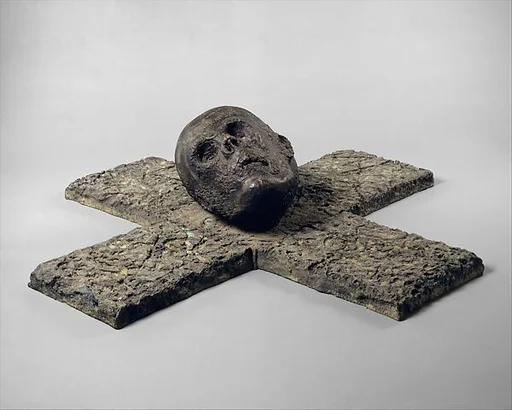
Skull and crossbones
Nymphenburg Porcelain Manufactory|Ignaz Günther
ca. 1755–60 · Hard-paste porcelain, wood, mirror glass, metal pins · European Sculpture and Decorative Arts
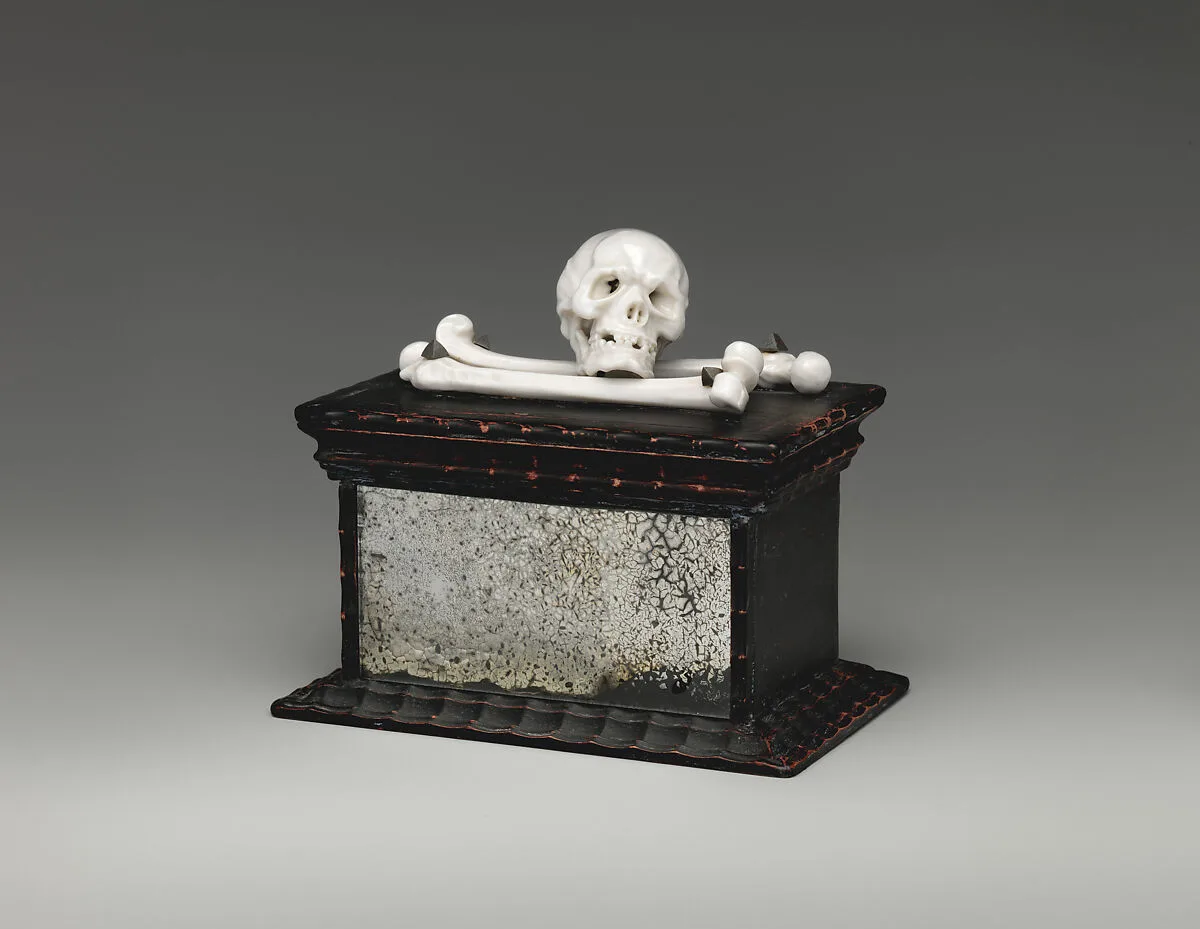
This model is related to a similar skull and crossbones modeled by Franz Anton Bustelli (1723–1763) that would have accompanied his figure of the Crucified Christ, an example of which is in the Museum's permanent collection (1977.216.56). It is likely that this skull and crossbones were modeled by Ignaz Günther (1725–1775), who created a porcelain crucifix for the Cecilia Chapel in the Munich Residenz that slightly predates the Bustelli version. These two objects, intended to form one compositional unit, reflect the increasingly ambitious and important role of porcelain in the production of sculpture in the middle decades of the eighteenth century. While they can only be attributed to Günther, the skull and crossbones almost certainly were modeled by either Günther or possibly by his fellow sculptor and teacher Johann Baptist Straub (1704–1784), two of the most prominent sculptors working in Munich in the mid-eighteenth century. Surviving examples of the skull and crossbones produced at the Nymphenburg porcelain factory are extremely rare. [Jeffrey H. Munger, 2014]
- Artist
- Nymphenburg Porcelain Manufactory|Ignaz Günther
- Date
- ca. 1755–60
- Medium
- Hard-paste porcelain, wood, mirror glass, metal pins
- Culture
- German, Nymphenburg
- Department
- European Sculpture and Decorative Arts
- Credit line
- Anonymous Gift, in memory of Bill Rieder, 2014