David and Goliath
Marcantonio Raimondi|Ugo da Carpi|Raphael (Raffaello Sanzio or Santi)
ca. 1520–27 · Chiaroscuro woodcut from three blocks in green · Drawings and Prints
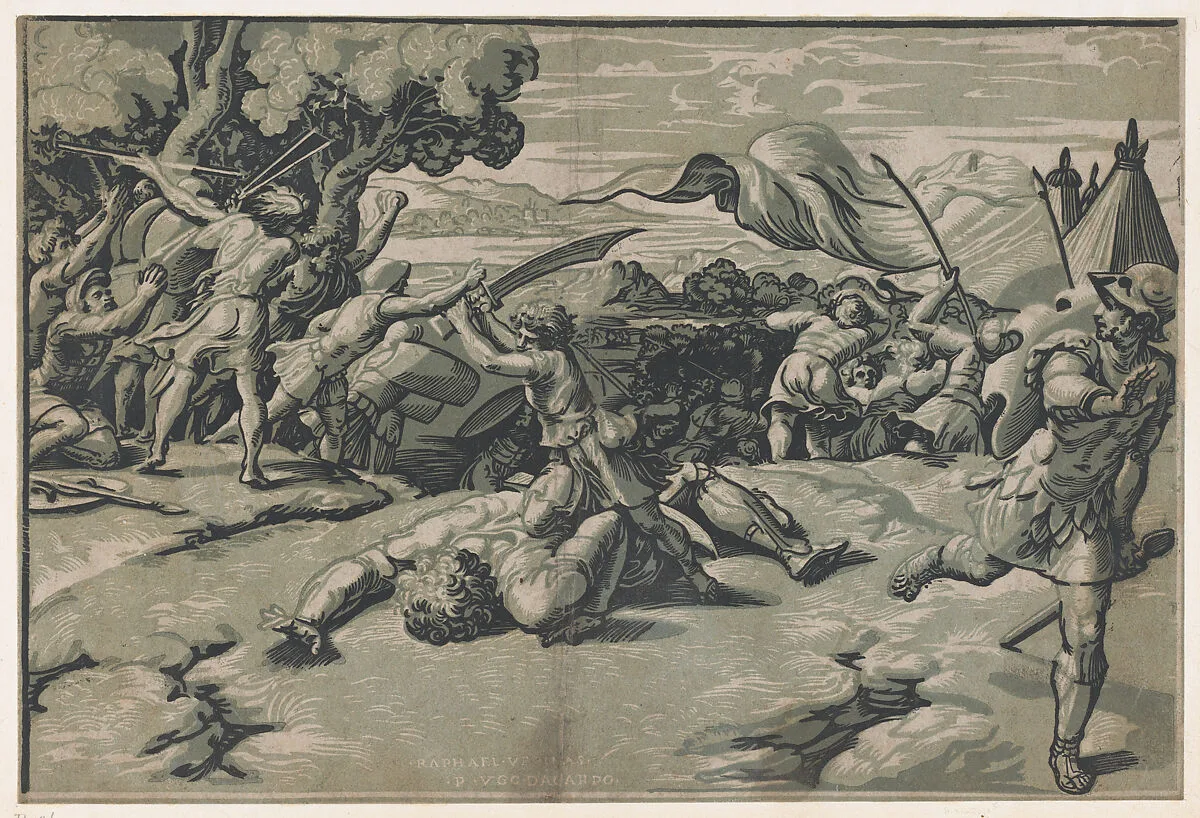
Early chiaroscuro woodcuts involved printing with two or more woodblocks, each in a different hue, to attain light and dark tonal values similar to those achieved in wash drawings. Ugo da Carpi was the first Italian artist to use this technique. He claimed to have invented a new way to print in "light and dark" (chiaro et scuro), though German artists had started experimenting with similar woodcuts several years prior. To protect his "invention," the Venetian Senate granted Ugo an exclusive privilege in 1516, and he also received a papal privilege in 1518. In this print, Ugo used three blocks—a keyblock inked in black for the outlines and two tone blocks inked in different shades of green. The subject is based on a design by Raphael, whose name appears alongside Ugo’s at the bottom of the woodcut.
- Artist
- Marcantonio Raimondi|Ugo da Carpi|Raphael (Raffaello Sanzio or Santi)
- Date
- ca. 1520–27
- Medium
- Chiaroscuro woodcut from three blocks in green
- Department
- Drawings and Prints
- Credit line
- Rogers Fund, 1922