Untitled
Unknown
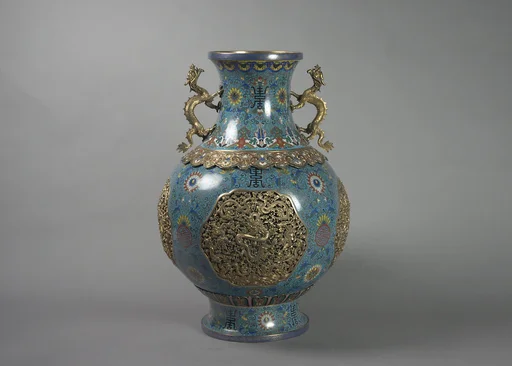
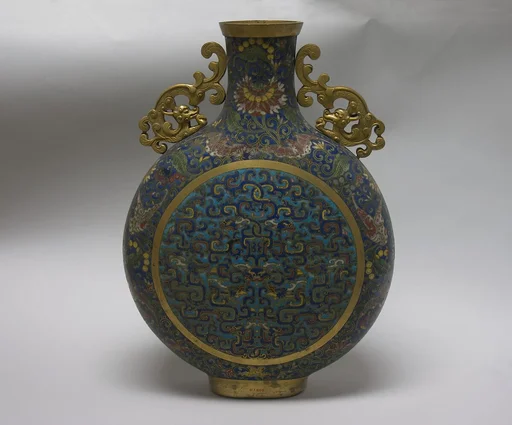
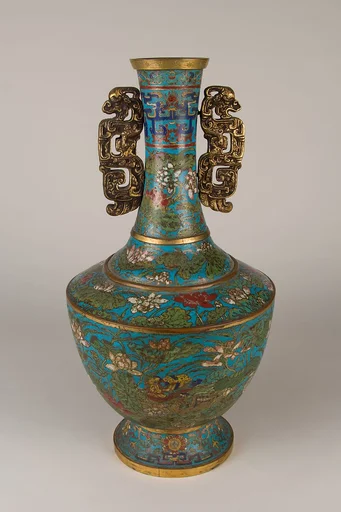
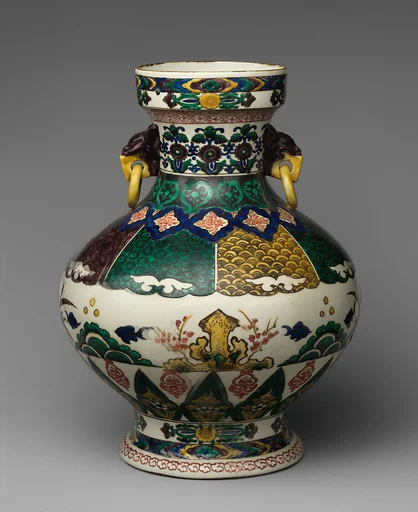
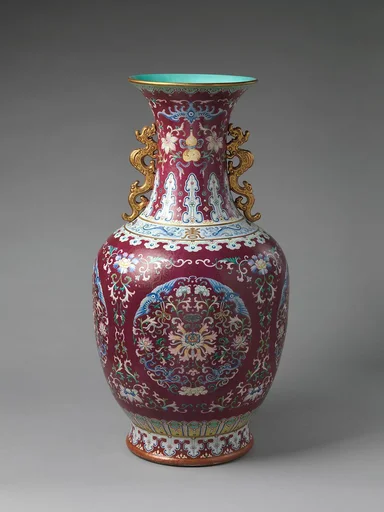
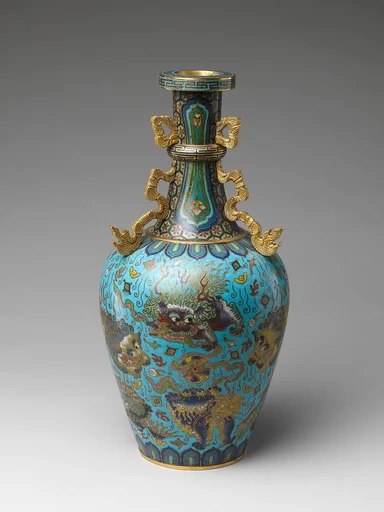
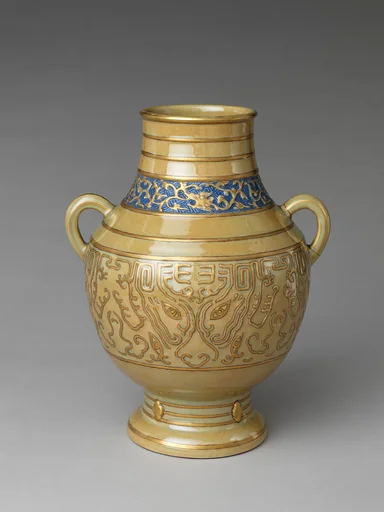
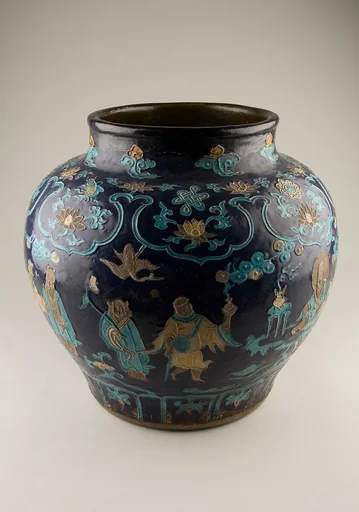
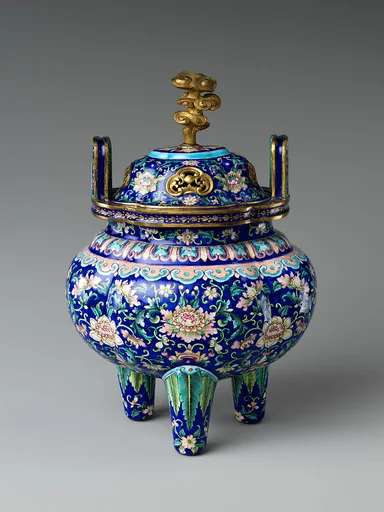
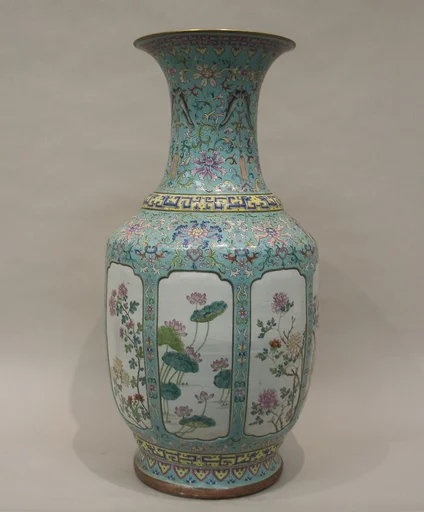
19th century · Cloisonné enamel with gilt bronze and champlevé · Asian Art
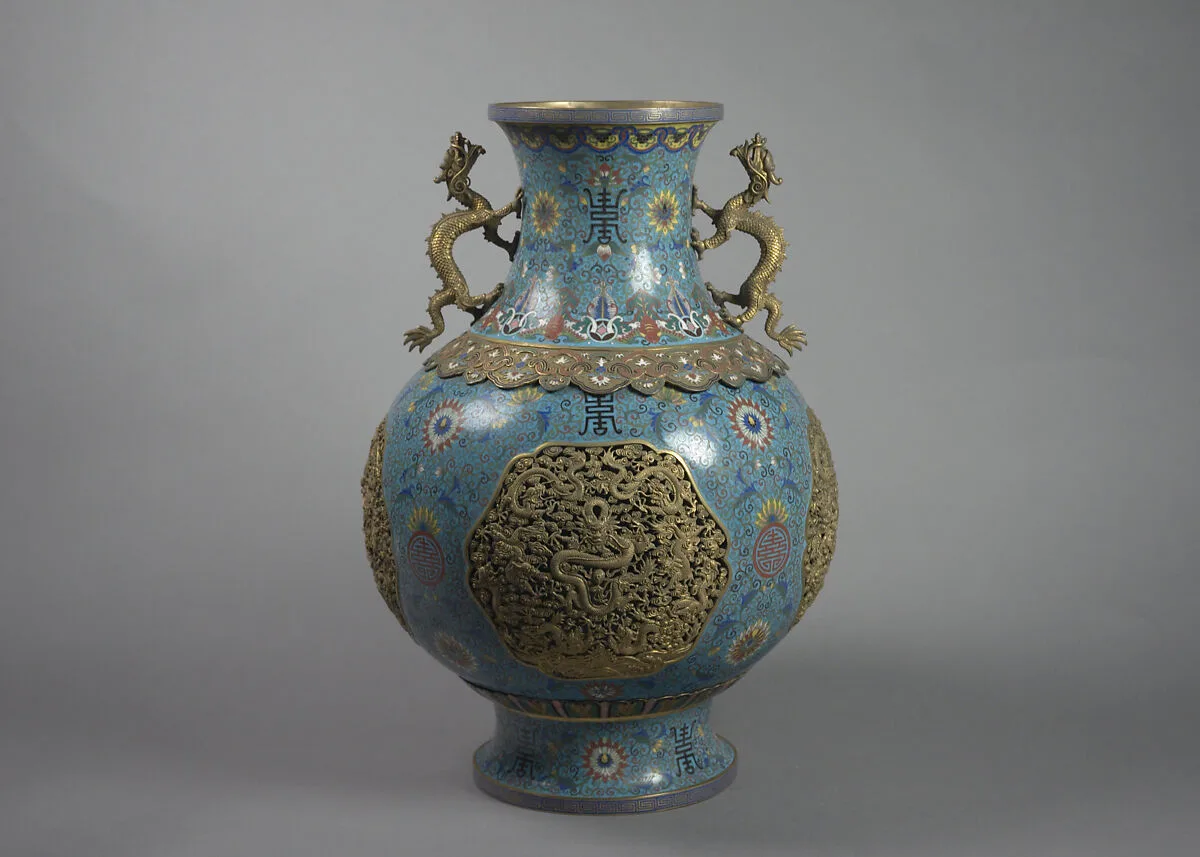
Cloisonné is a technique for creating designs on metal whereby enclosures made from copper or bronze wire that has been bent or hammered into a desired pattern are filled with colored glass paste. Known as cloisons (French for "partitions"), the enclosures are generally pasted or soldered onto the metal body. The glass paste, or enamel, is colored with metallic oxide and painted into the contained areas. The vessel is then fired, usually at a relatively low temperature, about 800 degrees centigrade. As enamels commonly shrink during firing, the process has to be repeated several times to fill the entire design. Once this process is completed, the surface of the vessel is burnished until the edges of the cloisons are visible.
- Artist
- Unknown
- Date
- 19th century
- Medium
- Cloisonné enamel with gilt bronze and champlevé
- Culture
- China
- Department
- Asian Art
- Credit line
- Gift of Edward G. Kennedy, 1929