Medal cabinet
George Bullock
ca. 1814–18 · Mahogany, oak, pine, holly; marquetry and veneer of figured oak and holly; ebony and ebonized wood; ivory; silk velvet · European Sculpture and Decorative Arts
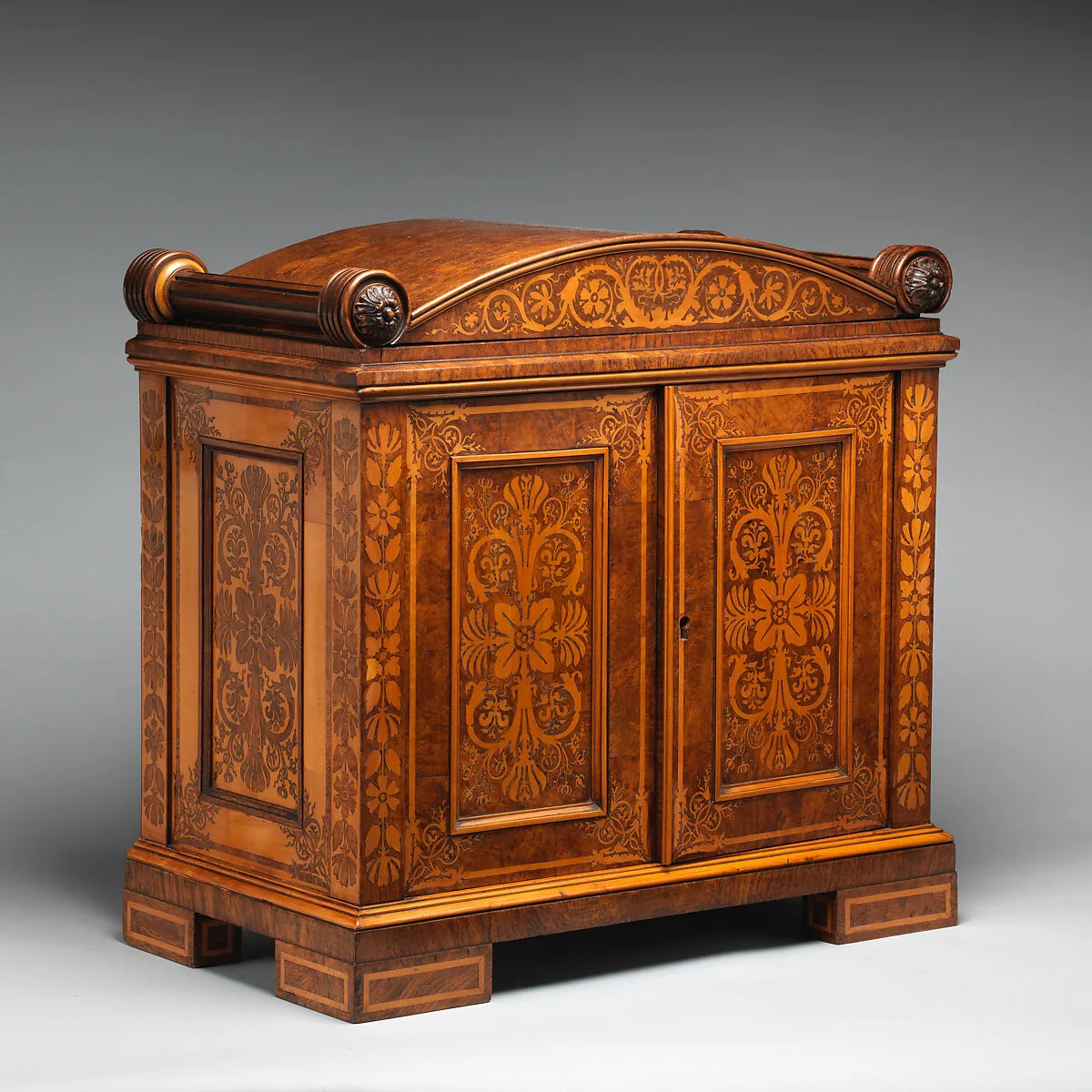
This cabinet was made during the Regency period in Britain (when the country was ruled by the future George IV, still then Prince of Wales and acting as regent for his father). During this period, English furniture remained much indebted to antiquity, though now rendered in a new bolder mode, translating ancient marble and bronze prototypes into wood and adapting them to modern usage. Though the most fashionable style for furniture created during this period was the Greek Revival Style, the shape of this cabinet is clearly derived from Roman marble cinerary chests. Rather than using the three-dimensional gilt-bronze or gilt-wood mounts favored by his contemporaries, Bullock decorated his furniture with flat marquetry or inlaid decoration, frequently (but not exclusively) choosing native woods as oak, holly, yew, larch and laburnum. The decoration of this cabinet is particularly rich with its première partie marquetry (on the front) and contre partie (on the sides), a system of decoration not usually seen on cabinets made by Bullock.
- Artist
- George Bullock
- Date
- ca. 1814–18
- Medium
- Mahogany, oak, pine, holly; marquetry and veneer of figured oak and holly; ebony and ebonized wood; ivory; silk velvet
- Culture
- British, London
- Department
- European Sculpture and Decorative Arts
- Credit line
- Purchase, Assunta Sommella Peluso, Ignazio Peluso, Ada Peluso and Romano I. Peluso Gift, 2014