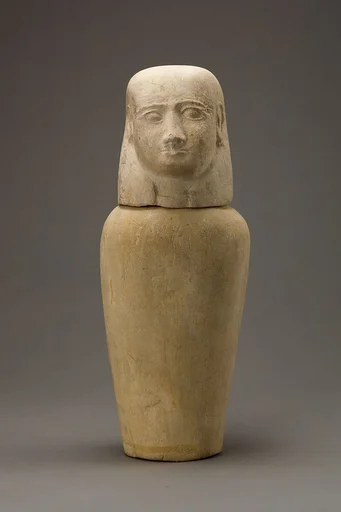
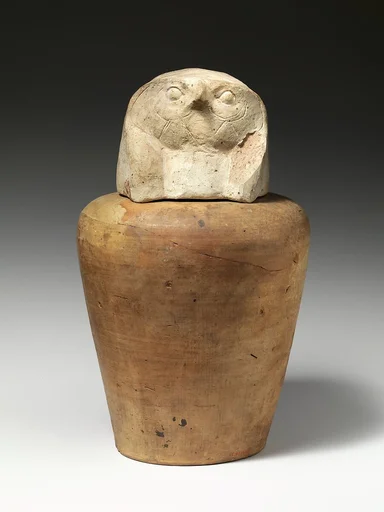
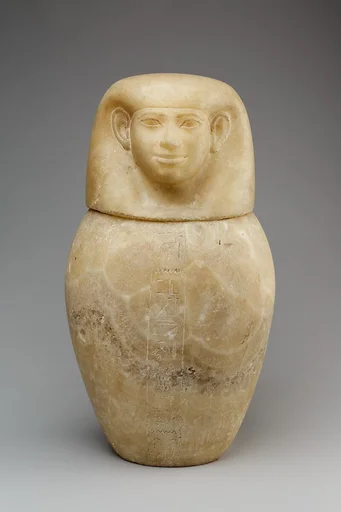
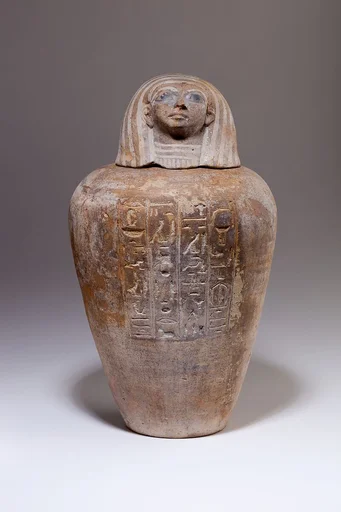
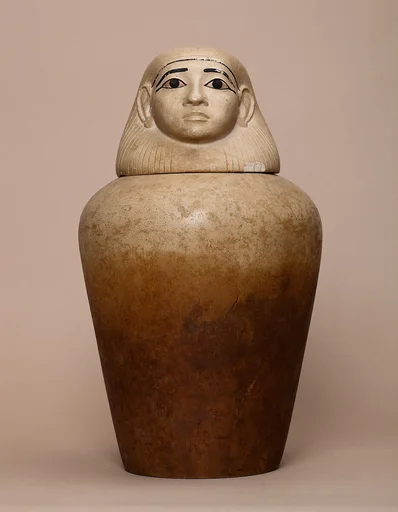
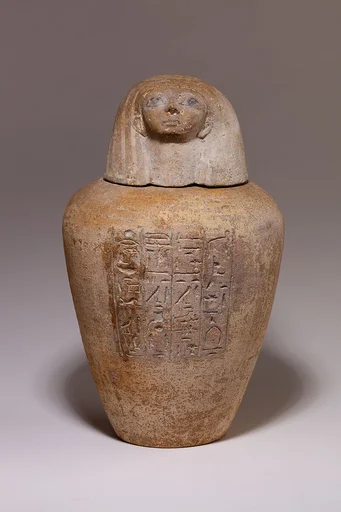
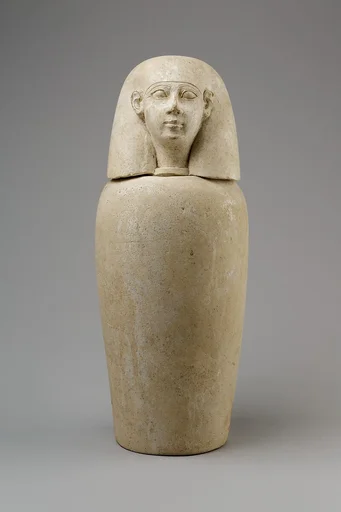
Canopic jar of Tetinakht: Imsety
Unknown
ca. 1550–1525 B.C. · Pottery, Marl A4 · Egyptian Art
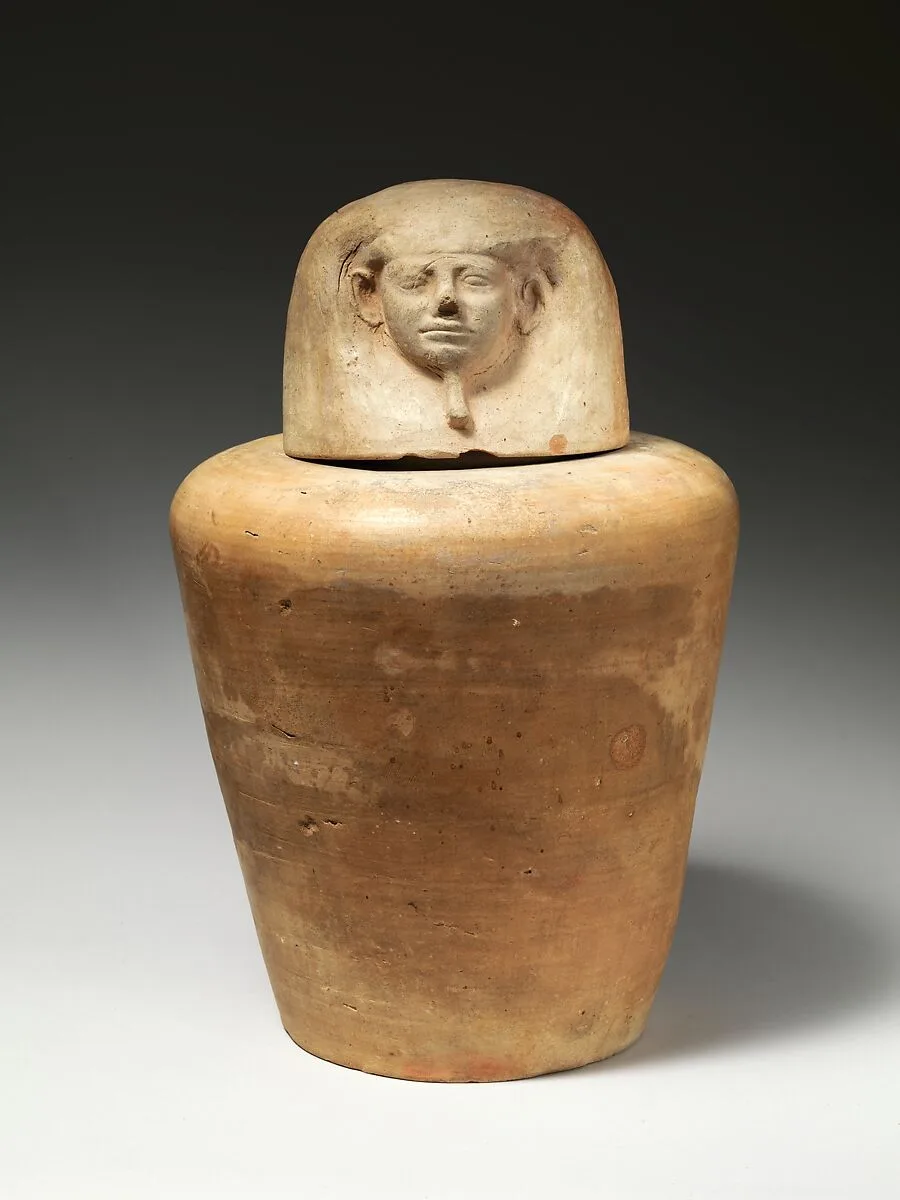
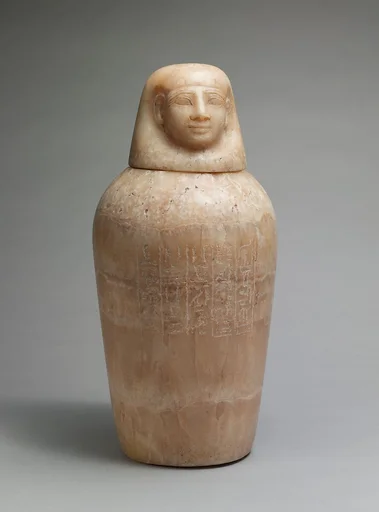
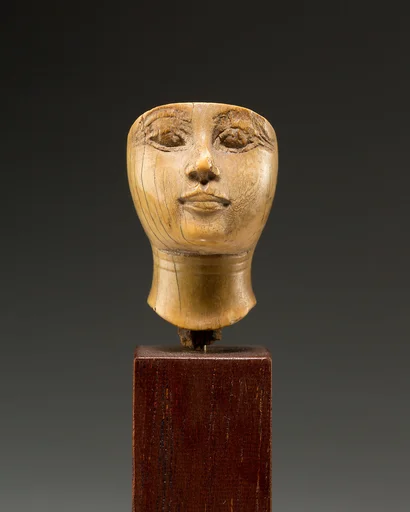
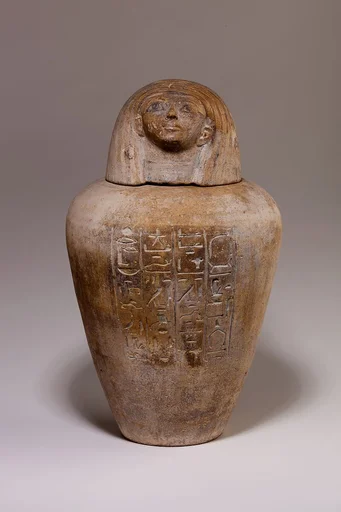
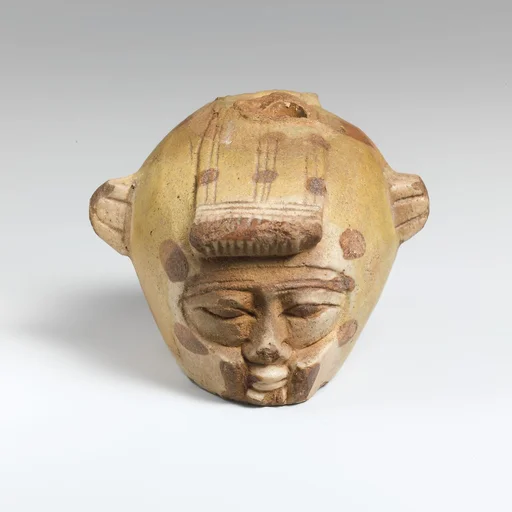
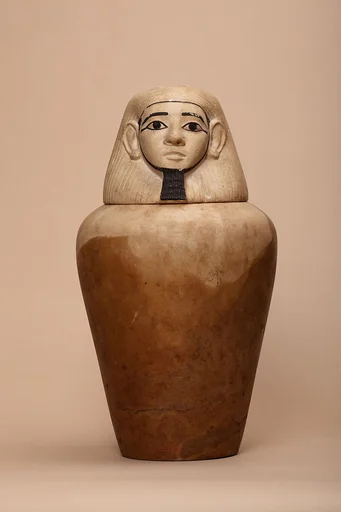
Three canopic jars (12.181.253a–c) were found in a tomb dating to the beginning of Dynasty 18. Two of the lids are shaped like animal heads, representing the jackal-headed deity Duamutef, protector of the stomach, and the falcon-headed deity Qebehsenuef, protector of the intestines. This jar, with the human-headed lid, represents the deity Imsety, protector of the liver. These are three of the Four Sons of Horus. Missing from the set is the fourth jar, which probably had a baboon-headed lid representing Hapy, protector of the lungs. These are the earliest datable examples of animal-headed lids on canopic jars, a style that did not become common until later in the New Kingdom. In earlier periods, the lids were different. Old Kingdom canopic jars were often covered with simple disk-shaped lids (see 14.7.16–.19), and from the Middle Kingdom into the early New Kingdom, they were usually covered with human-headed lids (see 11.150.17a–d). For a complete set of animal-headed canopic jars, see 12.183.1a–d.
- Artist
- Unknown
- Date
- ca. 1550–1525 B.C.
- Medium
- Pottery, Marl A4
- Department
- Egyptian Art
- Credit line
- Rogers Fund, 1912