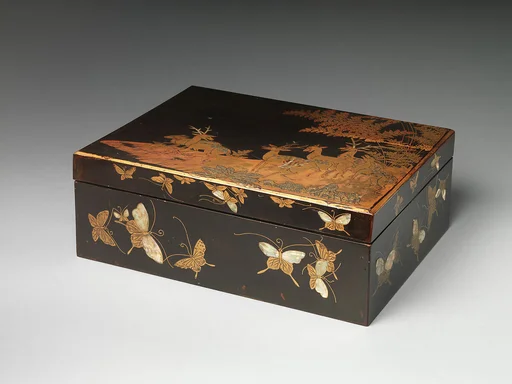
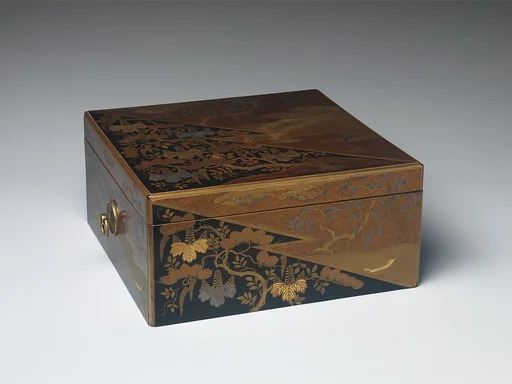
秋草桐蒔絵手箱|Box for Personal Accessories (Tebako) with Autumn Grasses
Unknown
early 17th century · Lacquered wood with gold and silver hiramaki‑e and e-nashiji (“pear-skin picture”) on black ground · Asian Art
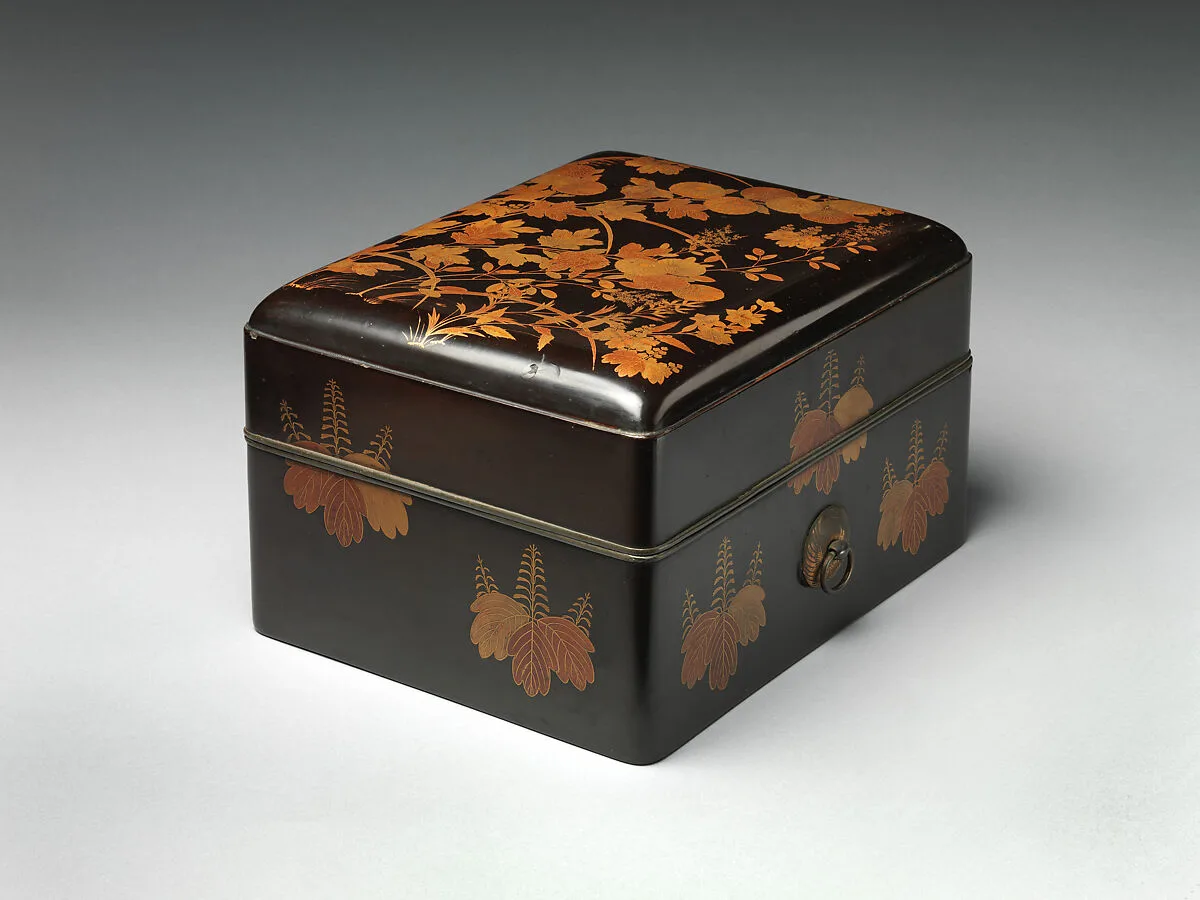
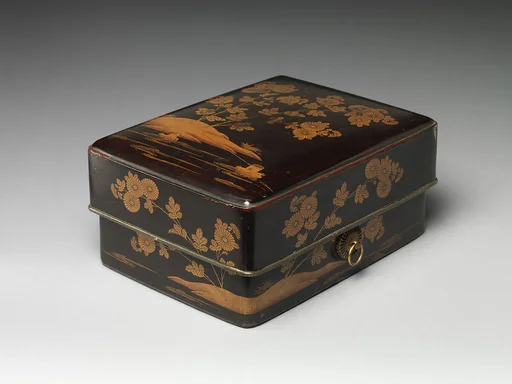
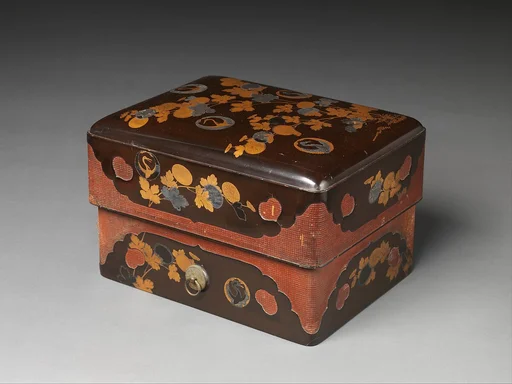
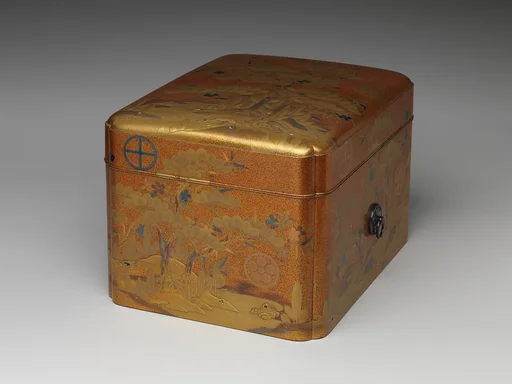
Autumn flowers and grasses, principally chrysanthemums, pampas grass, and bush clover, embellish the lid of this box. Scattered across these plants are five stylized paulownia crests that echo the larger ones adorning the box’s sides. By the late sixteenth century, Kyoto had become the most important center of Japanese lacquer art. It was at this moment that the military leader Toyotomi Hideyoshi (1537–1598) changed the way maki-e (“sprinkled picture”) decoration was used, ordering that it be applied to large furniture, household objects, and other objects not normally worthy of such luxurious treatment. Craftsmen created innovative, bold designs without complicated underdrawings and covered large surfaces in a comparatively short time. This flamboyant style was named Kōdaiji, after the temple in Kyoto dedicated to Hideyoshi and his wife, Nene.
- Artist
- Unknown
- Date
- early 17th century
- Medium
- Lacquered wood with gold and silver hiramaki‑e and e-nashiji (“pear-skin picture”) on black ground
- Culture
- Japan
- Department
- Asian Art
- Credit line
- Gift of Florence and Herbert Irving, 2015