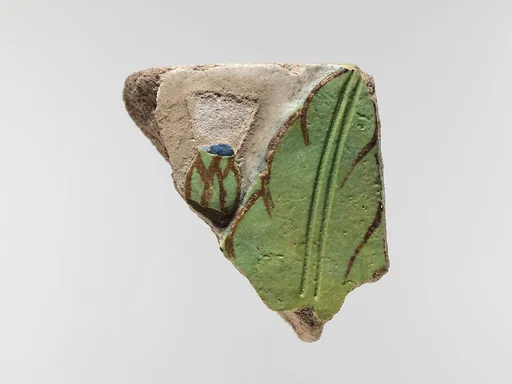
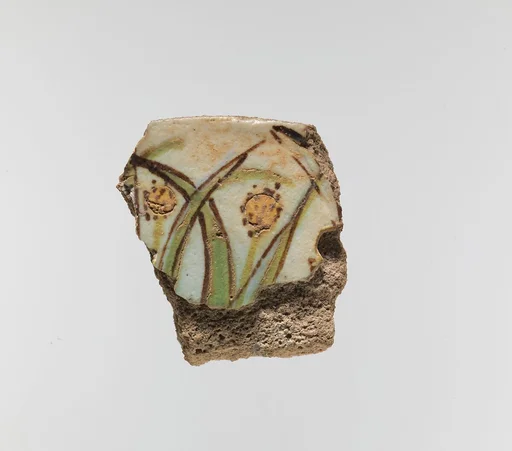
Tile with persea fruit and leaves
Unknown
ca. 1353–1336 B.C. · Polychrome faience · Egyptian Art
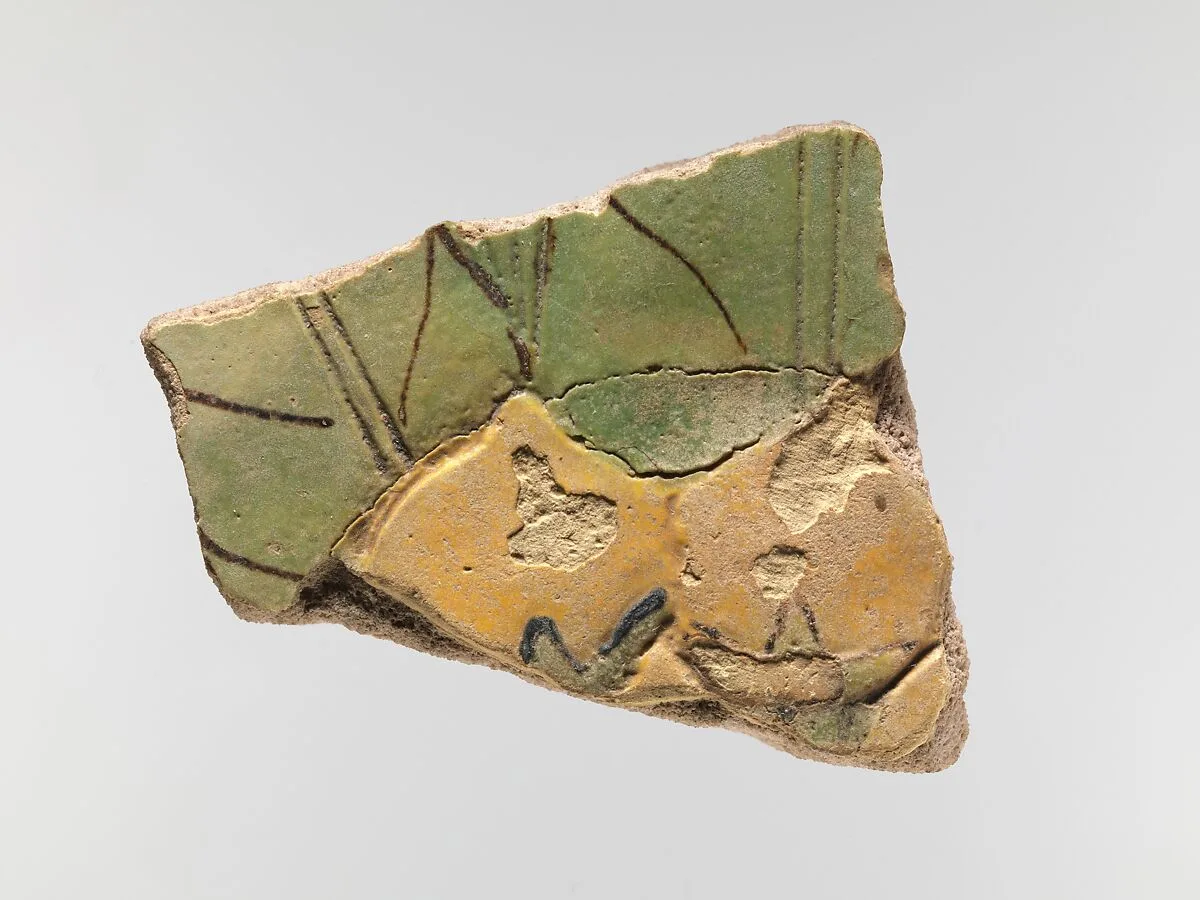
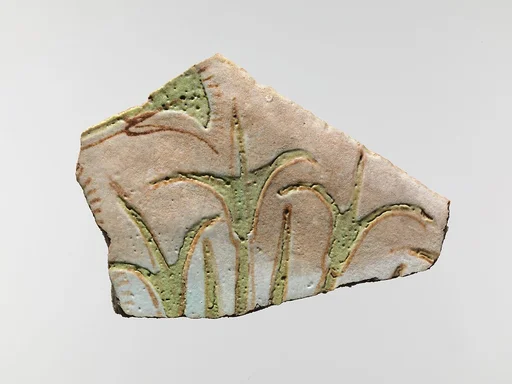
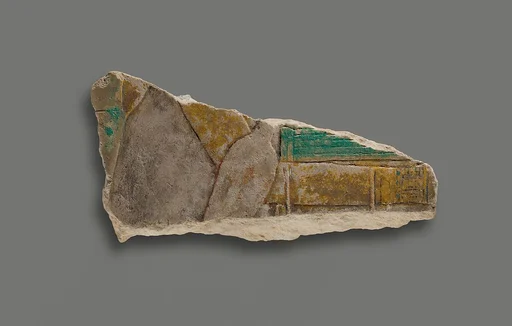
Among the faience figural tiles found in the area of the Great Palace, the ceremonial palace, was this one depicting yellow persea fruit and its leaves. Many other tiles are known depicting birds, flowers, and fish, among other subjects. The clear fine colors of the plants created in glaze would have mimicked plentiful gardens and marshes, frequent themes also in relief and wall paintings (see 30.4.136) created for royal surroundings. Elaborate decoration of columns and relief with inlaid materials is well-attested from Amarna, and indeed has a long tradition in Egypt. Faience tiles like this one, with an originally semi-round contour, may have been inlaid into stone wall reliefs. There are Amarna architectural reliefs that could accept the tiles, but no tiles have actually been found still attached.
- Artist
- Unknown
- Date
- ca. 1353–1336 B.C.
- Medium
- Polychrome faience
- Department
- Egyptian Art
- Credit line
- Purchase, Edward S. Harkness Gift, 1926