Untitled
Unknown
16th century · Red and black lacquer; Kamakurabori ware · Asian Art
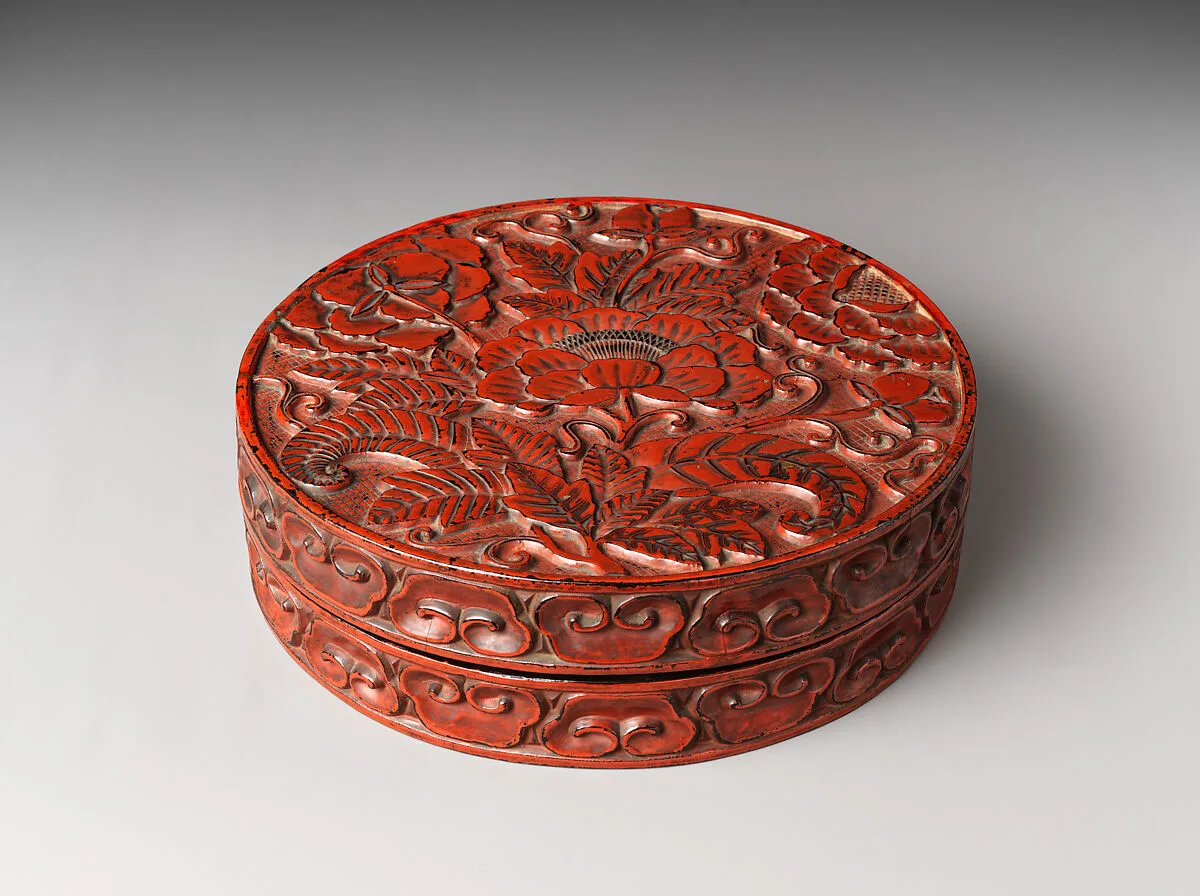
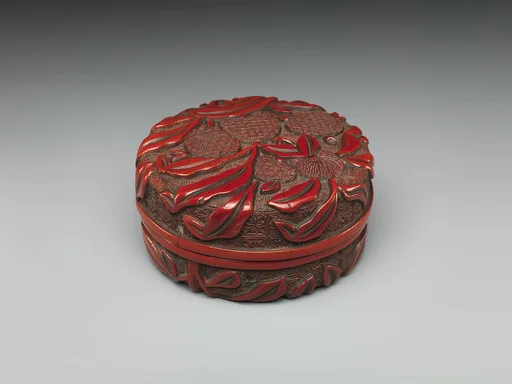
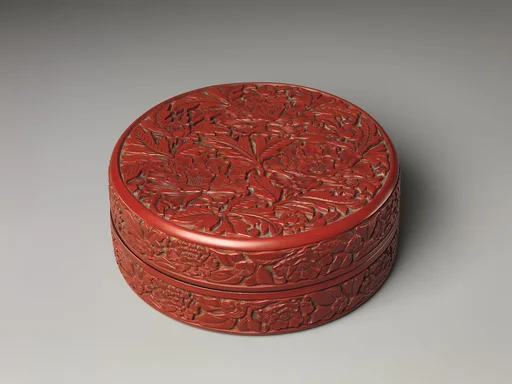
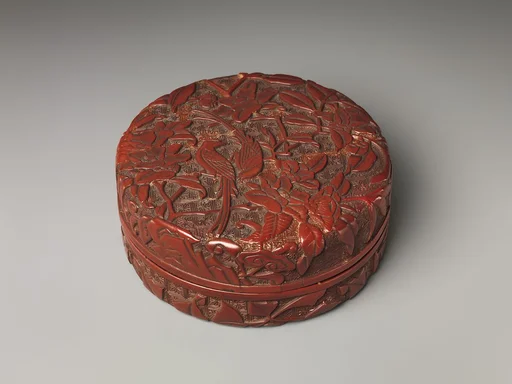
This box once held incense for use in Buddhist ceremonies. Its round form, with the cover meeting the base at the center of the sides, is derived from Chinese carved lacquers first brought to Japan by Chinese Zen masters welcomed by the shogunate leaders in Kamakura in the fourteenth and early fifteenth centuries. With its large central flower framed by the leafy stalk and branches of a tree peony that seems to burst the bounds of the circular rim, the sharply carved decoration of thsi box exhibits the bold designs that characterize Japanese adaptations of early Ming carved lacquer. Unlike the standard Chinese practice, in which a design was laboriously carved into a thick base of multilayered lacquer, the designs of Kamakura-bori "Kamakura carving" ware were carved directly into the wood base, which was then coated with red lacquer, often over black.
- Artist
- Unknown
- Date
- 16th century
- Medium
- Red and black lacquer; Kamakurabori ware
- Culture
- Japan
- Department
- Asian Art
- Credit line
- Gift of Florence and Herbert Irving, 2019