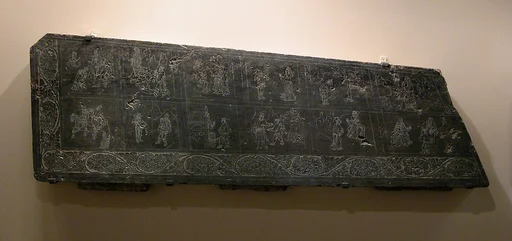
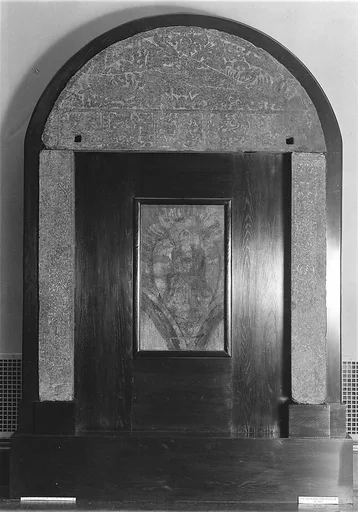
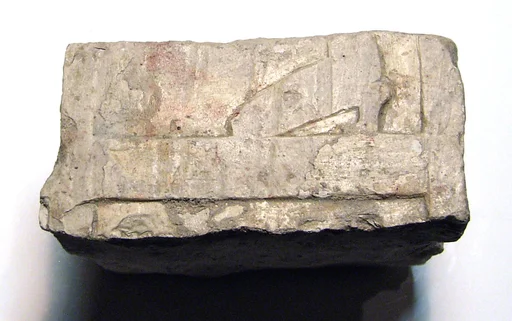
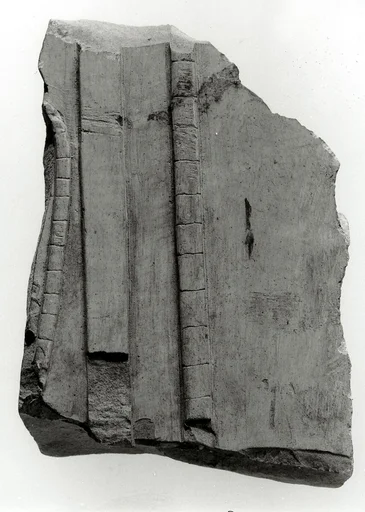
元 佚名 戲劇演員和二十四孝圖 石槨前端與側|Headstone from a Sarcophagus
Unknown
12th–13th century · Limestone · Asian Art
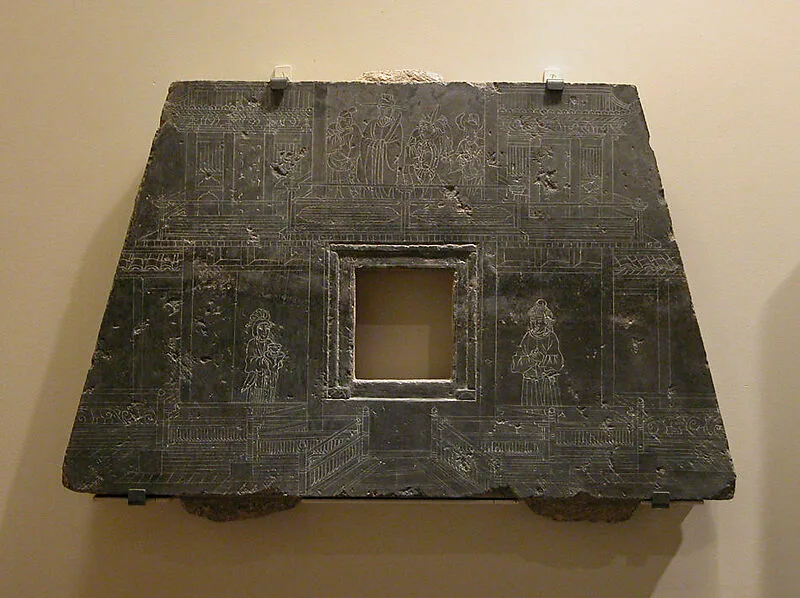
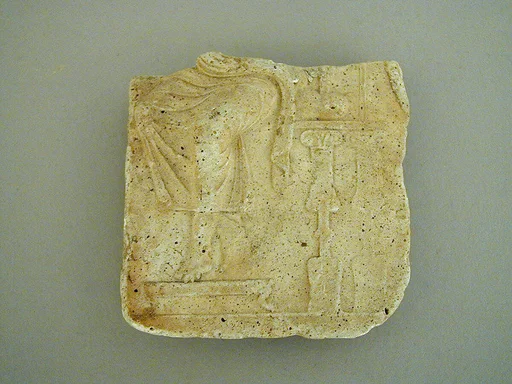
The headstone of this sarcophagus is embellished with an acting troupe poised to perform on the balcony of a two-story building. The side panels feature narrative scenes illustrating twenty-four stories of filial piety. A very similar set of engraved illustrations was discovered on the sarcophagus of Pan Dechong (1191–1256), who was buried in 1260 on the grounds of the Yongle Palace, a famous Daoist temple located in southwestern Shanxi Province. Pan was a leading member of the Quanzhen sect of northern Daoism, which advocated the importance of filial behavior, so it is not surprising that the Confucian theme of filial paragons was adopted to decorate his sarcophagus. The significance of the theatrical troupe is still unclear. These narrative scenes are a popular manifestation of the subject matter and fine-line drawing style of the scholar-artist Li Gonglin (ca. 1041–1106), particularly his Classic of Filial Piety of around 1085. Li's masterpiece gave contemporary relevance to this canonical Confucian subject through a new expressive style of calligraphic brushwork as well as through the creation of a new set of illustrations that offered subtle commentaries on contemporary political and moral questions. The sarcophagus, which may be dated roughly two hundred years later, shows the widespread impact of Li's thematic concerns and drawing style on popular art forms
- Artist
- Unknown
- Date
- 12th–13th century
- Medium
- Limestone
- Culture
- North China
- Department
- Asian Art
- Credit line
- Purchase, Seymour Fund and The Vincent Astor Foundation Gift, 1994