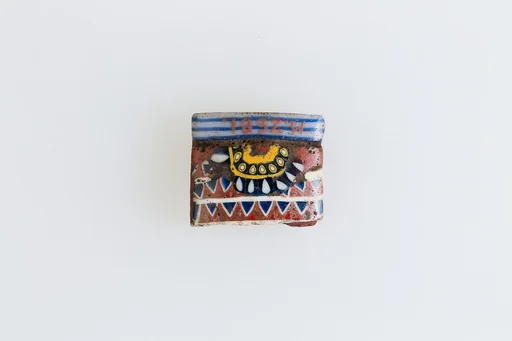
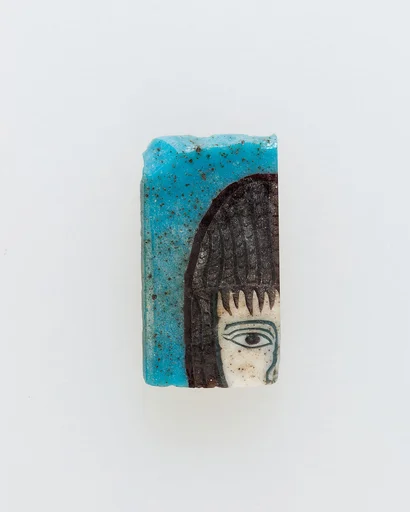
Inlay with a sema tawy design
Unknown
100 BC–100 AD · Glass · Egyptian Art
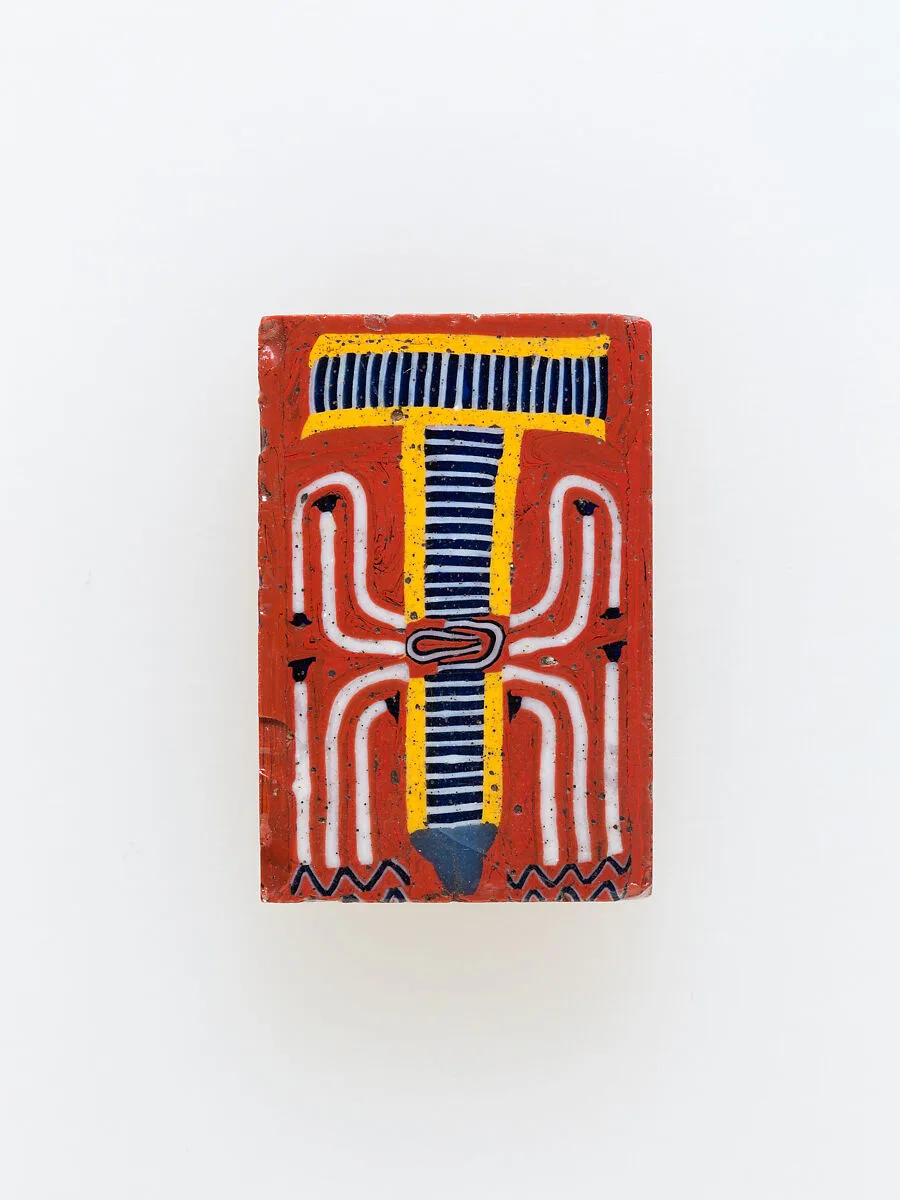
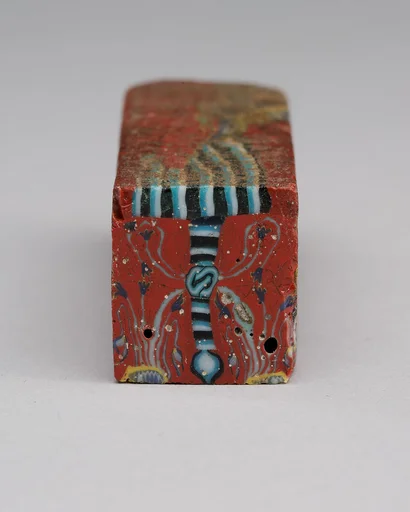
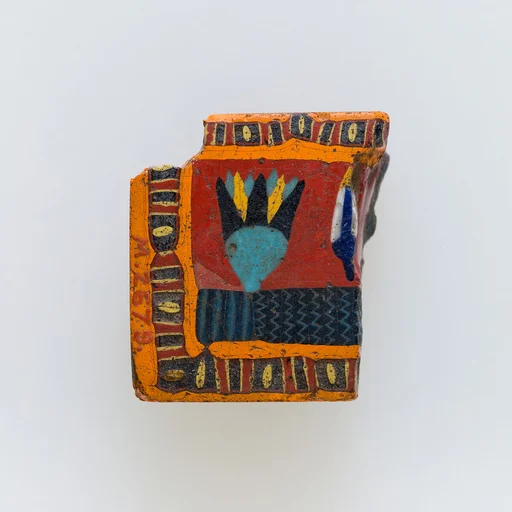
A mosaic glass technique allowed multiples of an image to be created: a figural or design composition was made by bundling colored glass canes, which were then drawn out into a long bar. The bar was then sectioned at right angles, probably by striking the bar with appropriate tools, to produce small inlay tiles. The tile would then be smoothed and polished on the face intended to appear outwards. This tile depicts the sema tawy or "unification of the two lands," a charged symbol from Egypt's earliest times: the heraldic plants of Upper and Lower Egypt, growing in their marshy environment, are entwined with the hieroglyph for unification.
- Artist
- Unknown
- Date
- 100 BC–100 AD
- Medium
- Glass
- Department
- Egyptian Art
- Credit line
- Gift of Helen Miller Gould, 1910