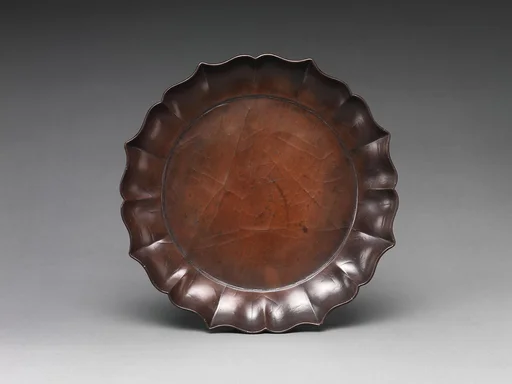
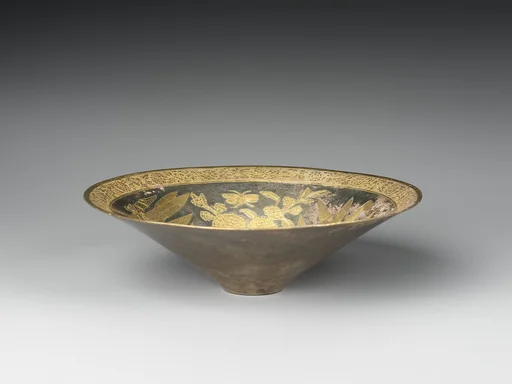
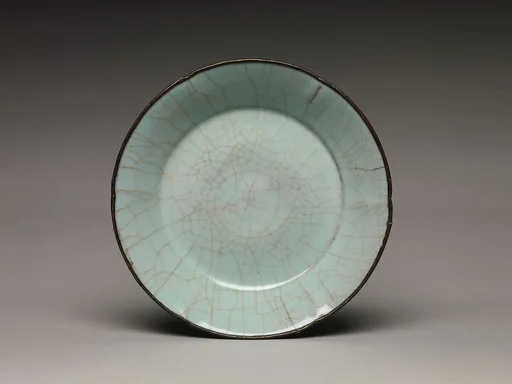
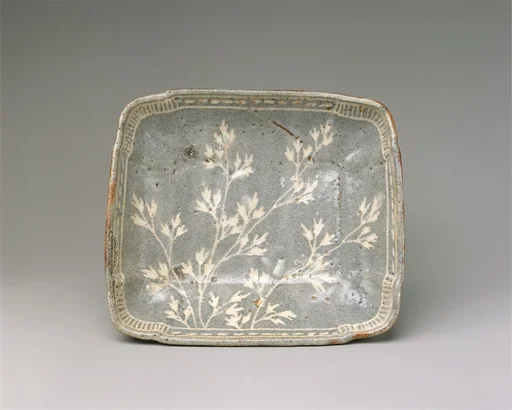
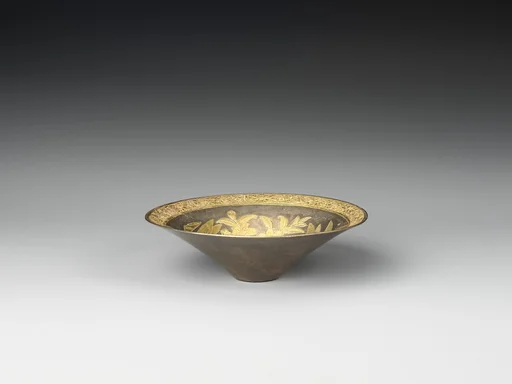
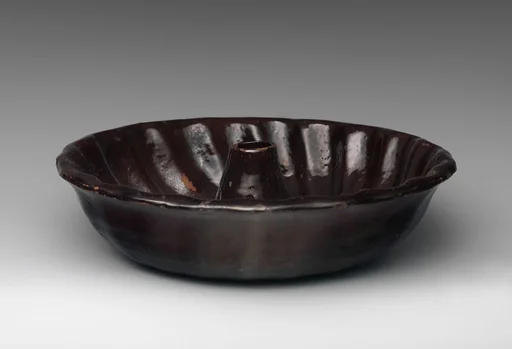
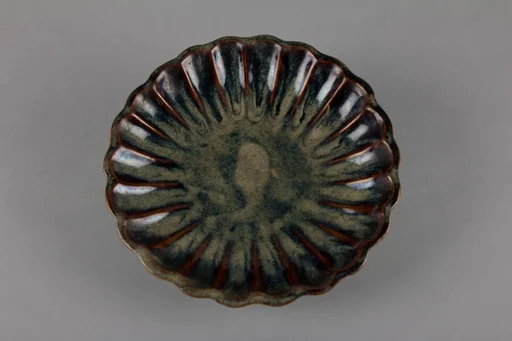
南宋 黑漆素面葵口盤|Dish with lobed rim
Unknown
13th century · Lacquer with gilding · Asian Art
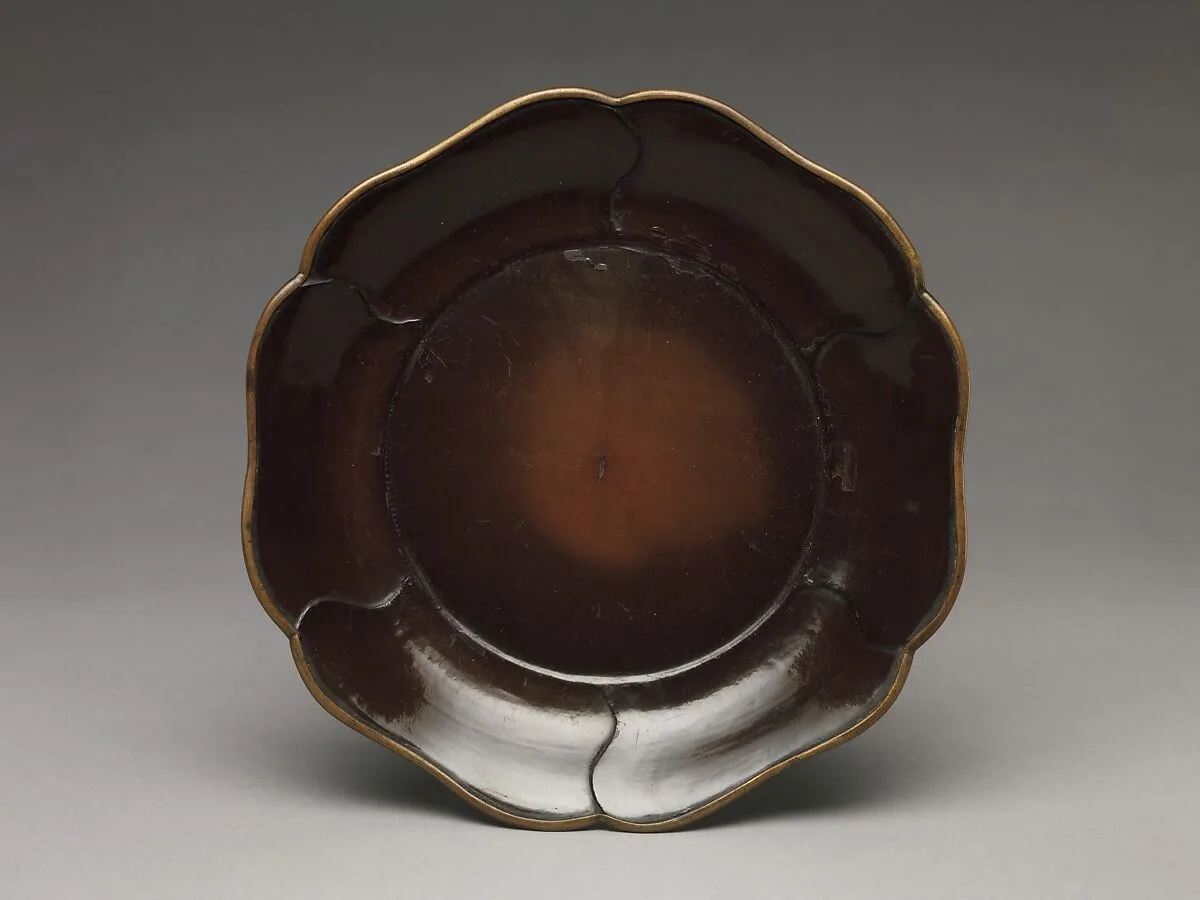
Found in ceramics, metalwork, and lacquer, dishes shaped with overlapping petals first appear in north China about the eleventh century, and the form later becomes a standard motif in the art of the Yuan dynasty (1271–1368). This dish, which has an inscription on the bottom giving the name of the maker or owner—a common practice during the Southern Song dynasty—was likely intended to represent a six-petal camellia, a flower often associated with joy and protection.
- Artist
- Unknown
- Date
- 13th century
- Medium
- Lacquer with gilding
- Culture
- China
- Department
- Asian Art
- Credit line
- Gift of Florence and Herbert Irving, 2015