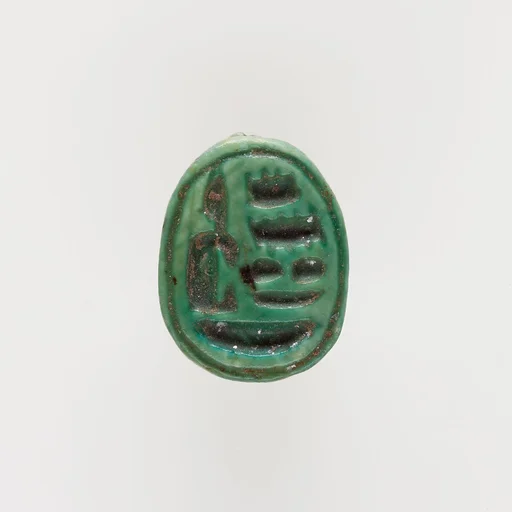
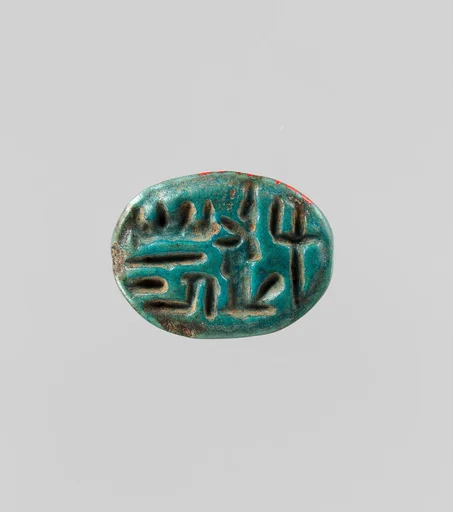
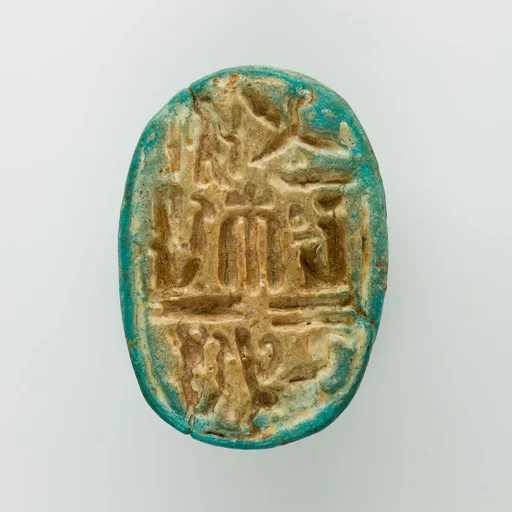
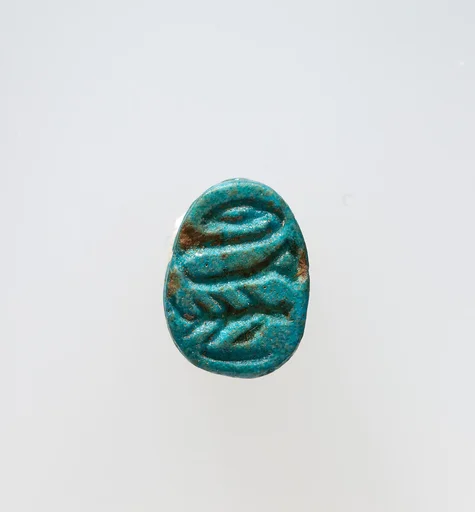
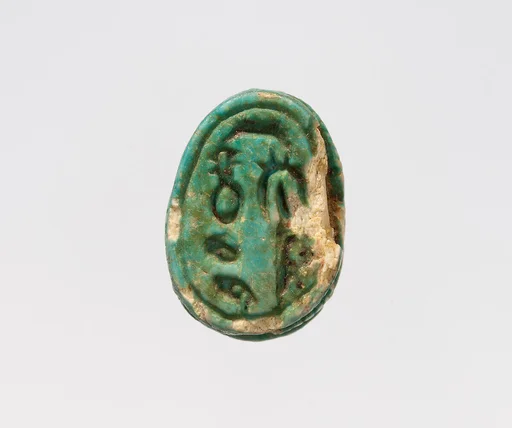
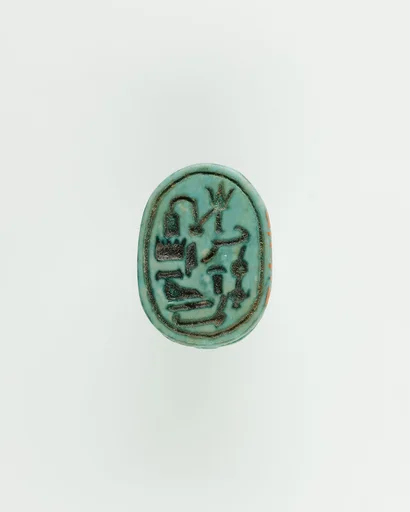
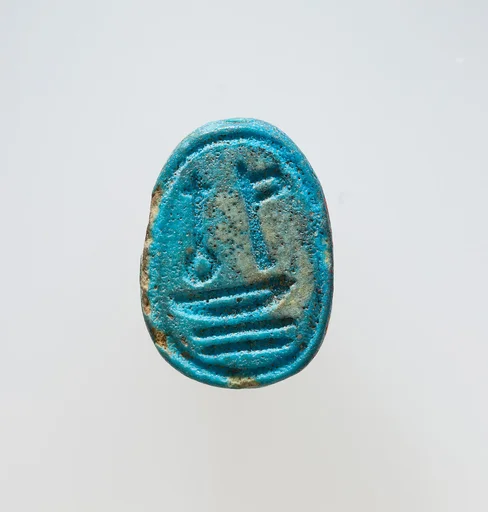
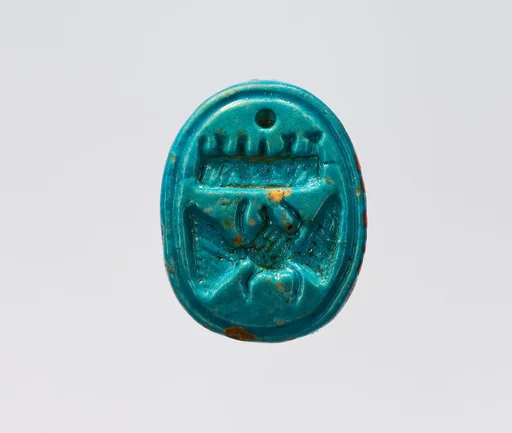
Scarab with Representation of an Enthroned King
Unknown
ca. 1070–900 B.C. · Bright green glazed steatite · Egyptian Art
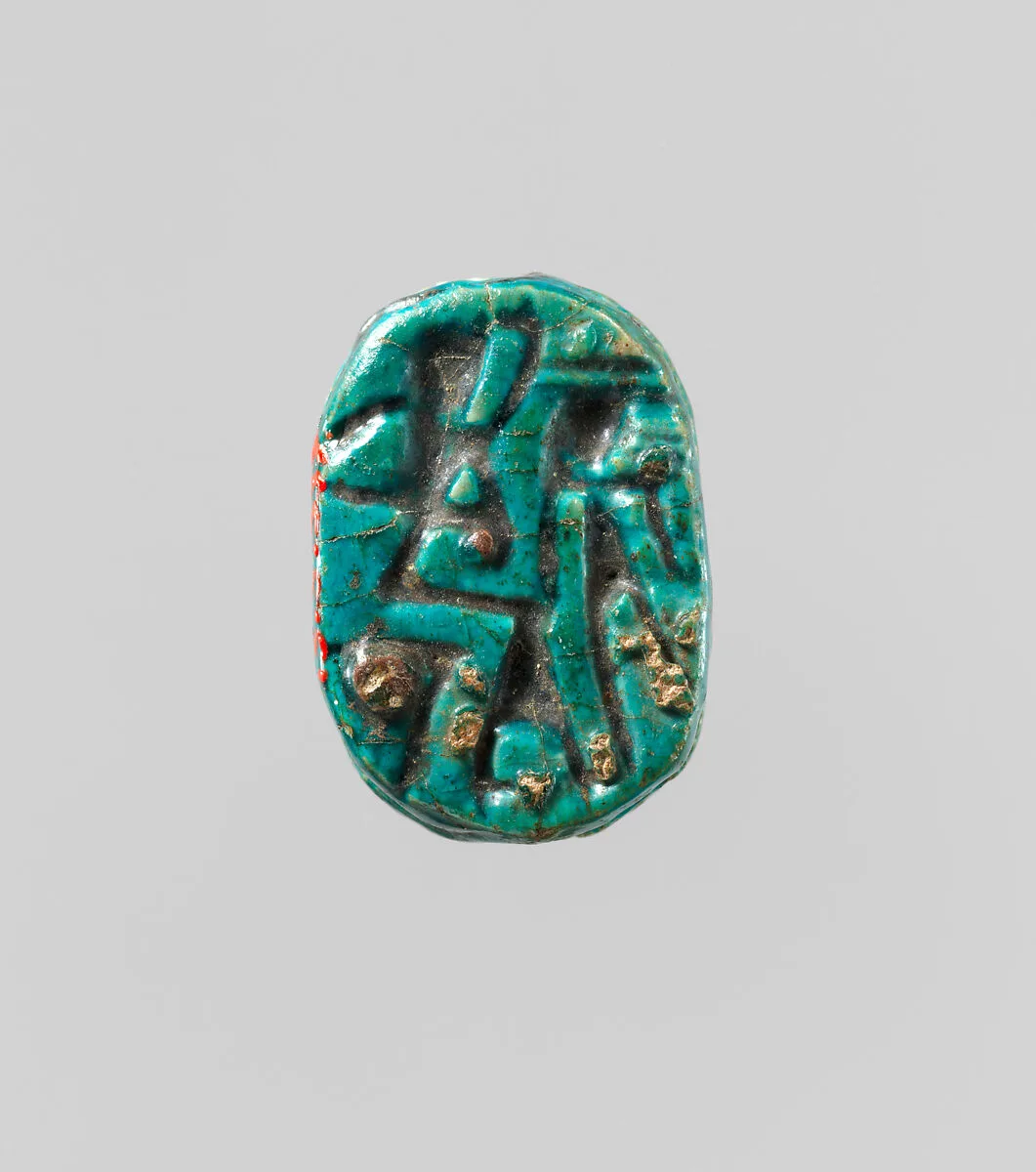
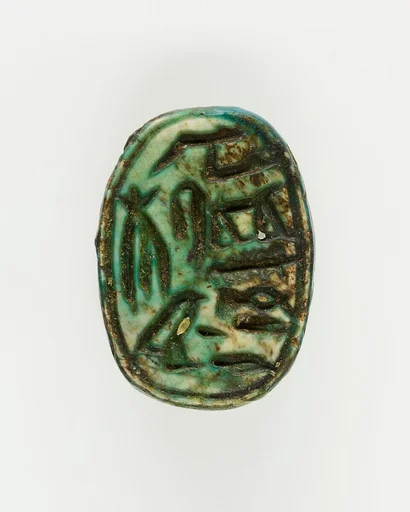
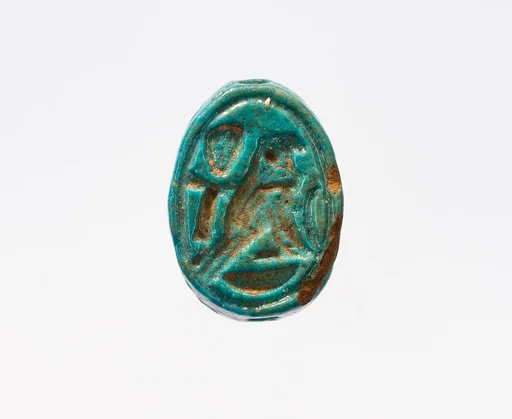
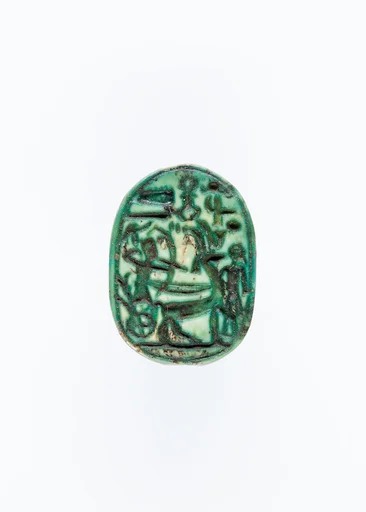
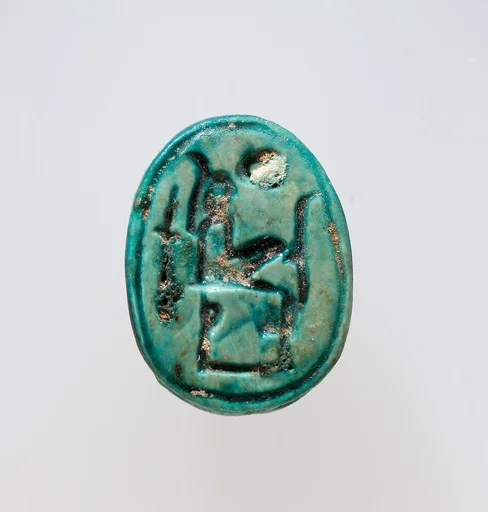
A particular type of seal-amulet is found in archaeological contexts from the 10th century B.C. onwards. They are quite crudely and irregularly carved and the motifs on the underside show predominantly hunting scenes, with varied combinations of horned quadrupeds, lions, ostriches, and hunters. Based on the style of the incisions and on the large numbers that have surfaced in (northern) Egypt, but especially in the southern Levant, these seal-amulets are considered to be the result of a mass production. Their origin, however, is still under discussion. In the scholarly literature, they are labelled ‘Post-Ramesside mass-produced seal-amulets’ and are dated to the late 11th and 10th centuries B.C., that is, Dynasty 21 and early Dynasty 22 in Egypt, or the end of the Iron Age IB – early Iron Age II in the southern Levant. This example shows a highly stylized human figure seated on a stool or throne without back. He holds a crook and flail crossed in front of his chest, an attitude that is associated in Egyptian imagery with the pharaoh and with the god Osiris. A small uraeus is placed on his forehead. A smaller figure stands in front of him, probably an attendant or supplicant paying his respects to the enthroned figure. The scene may convey the desire of the seal-amulet’s owner to show that he, too, wishes to express his respect in order to obtain royal or divine support.
- Artist
- Unknown
- Date
- ca. 1070–900 B.C.
- Medium
- Bright green glazed steatite
- Department
- Egyptian Art
- Credit line
- Rogers Fund, 1915