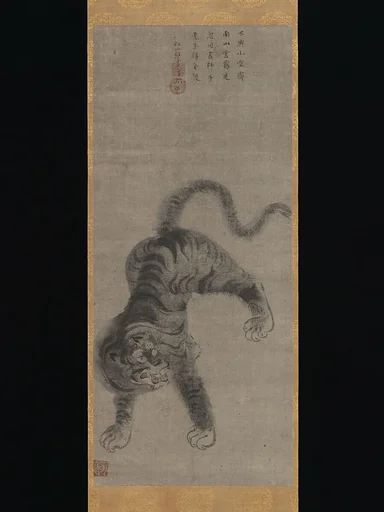
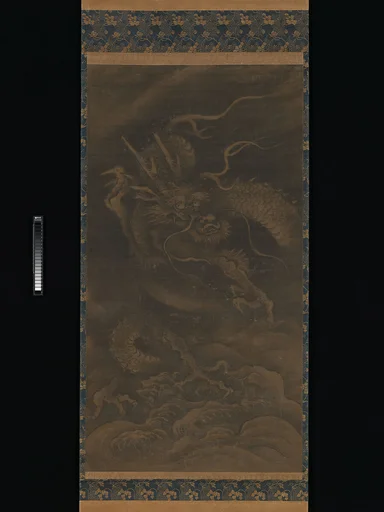
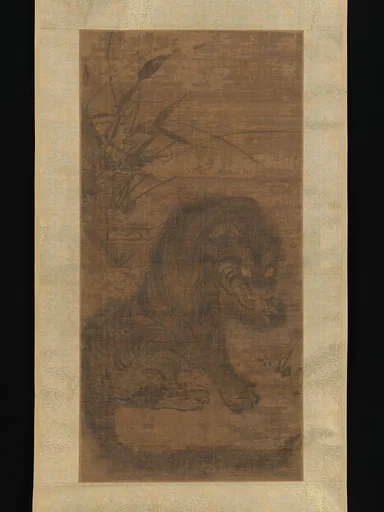
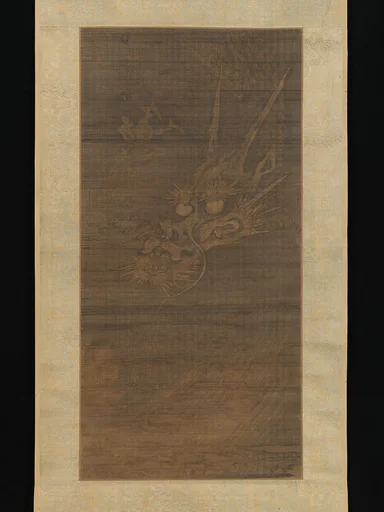
작자미상 용과 호랑이 조선 또는 일본 (에도)|簋簅痡萳 樻虎圖 朝鮮 日本 江戶|Tiger
Muqi
16th or 17th century · Hanging scroll; ink on silk · Asian Art
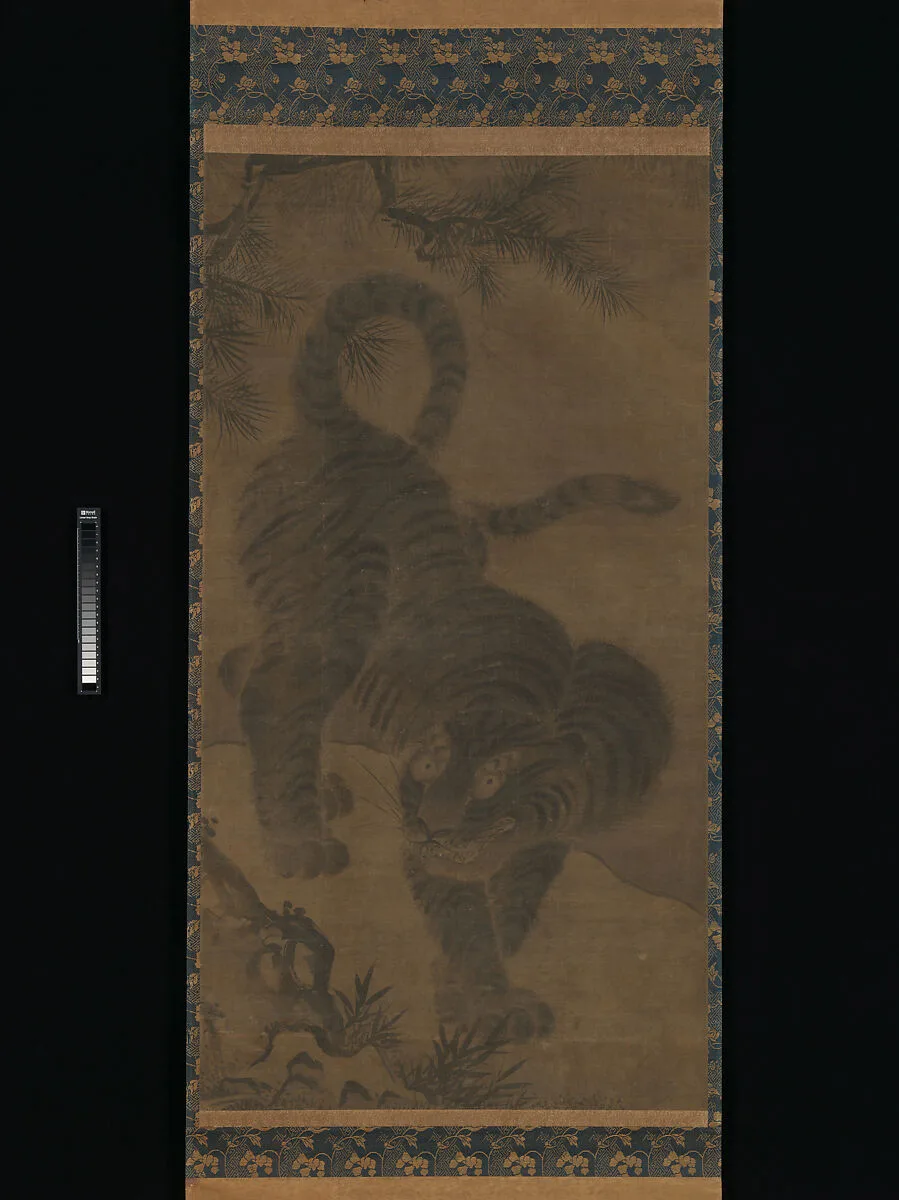
Each an auspicious beast, the dragon and tiger together are symbolic of the yin-yang principle, embodying the complementary opposites of male and female, east and west, and wind and water, respectively. Determining the nationality of works in this genre is difficult due to the long history of pairing these two animals in East Asian paintings. The practice of emulating and repeating established traditions by artists in China, Korea, and Japan meant that styles and conventions often crossed cultures. These scrolls were attributed to Muqi, the celebrated thirteenth-century Chinese artist, when they entered The Met collection in 1912. While they reflect what is known of his style they are most likely not by his hand; the tiger especially reflects elements found in Korean and Japanese examples. Read further about the scrolls online in The Met’s Timeline of Art History and make your own determination about their cultural origins.
- Artist
- Muqi
- Date
- 16th or 17th century
- Medium
- Hanging scroll; ink on silk
- Culture
- Korea or possibly Japan
- Department
- Asian Art
- Credit line
- Rogers Fund, 1912