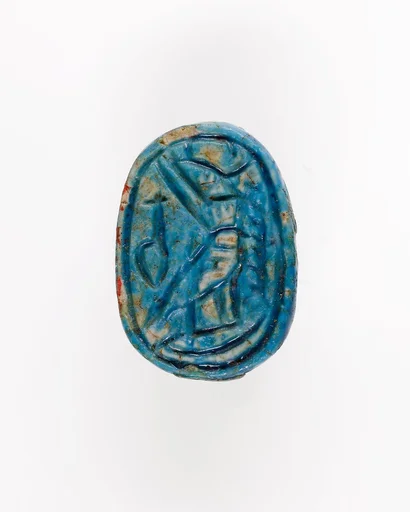
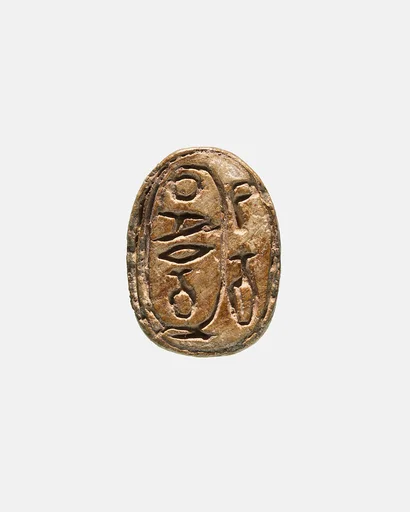
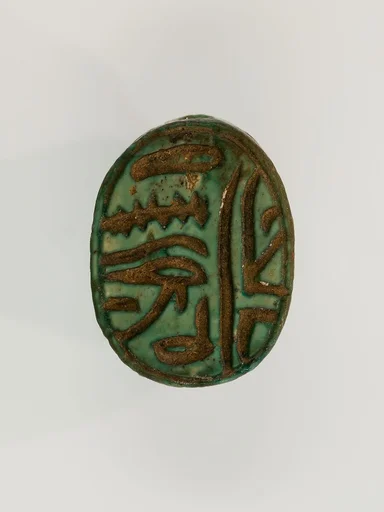
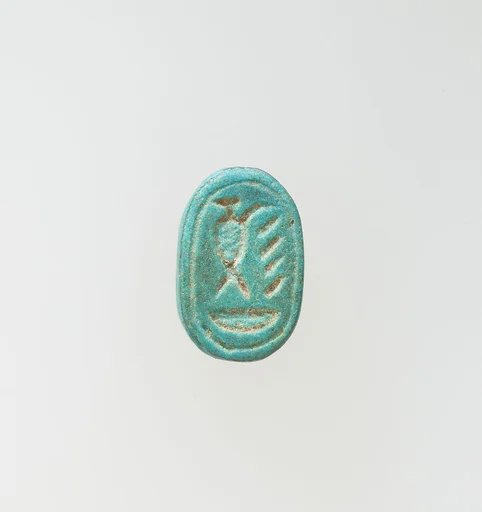
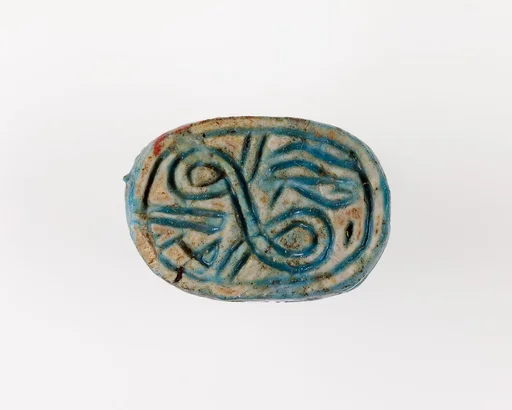
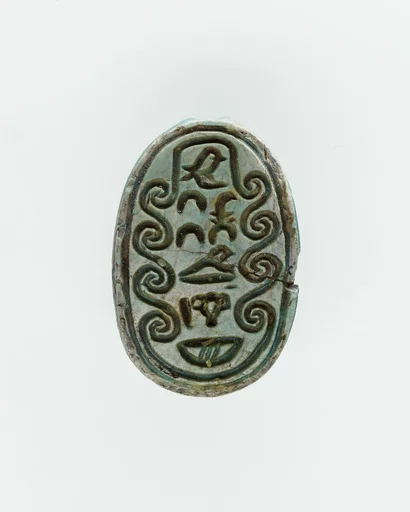
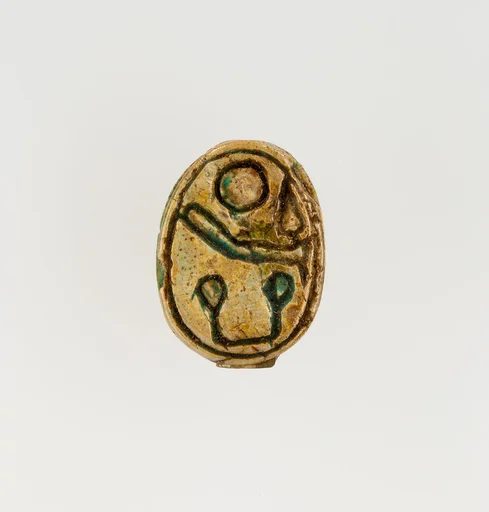
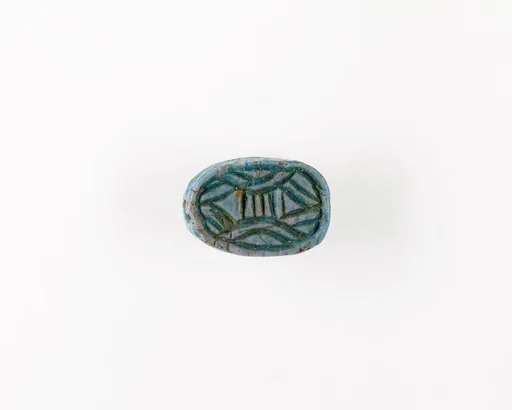
Scarab with Hathor-like Canaanite Goddess
Unknown
ca. 1640–1500 B.C. (Middle Bronze Age IIB-IIC) · Green glazed steatite · Egyptian Art
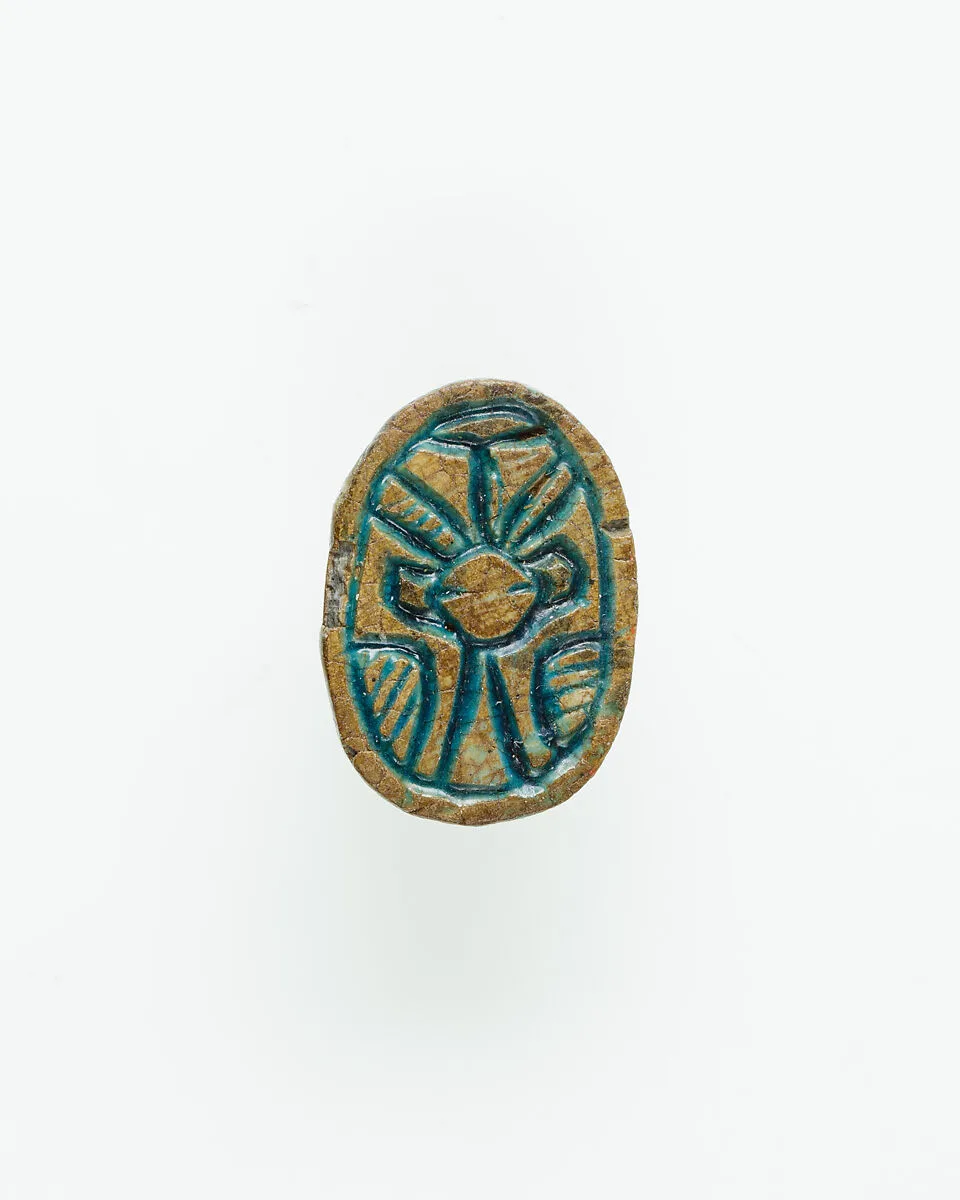
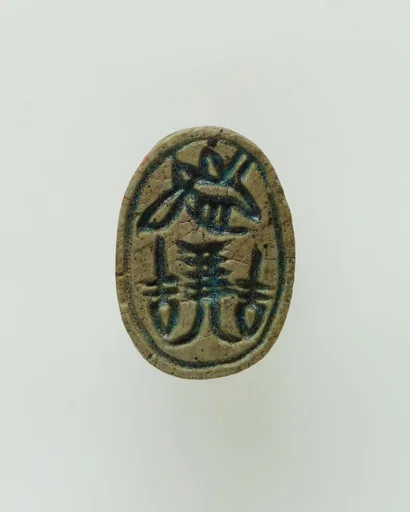
Around the middle of Dynasty 13 (ca. 1802–1640 B.C.), scarabs carved in the eastern Nile Delta, at a site presently known as Tell el-Dab’a, show decorative elements that reveal Canaanite influence. Part of the population in this region was of Levantine origin. Soon afterward, at the beginning of the Second Intermediate Period (ca. 1700/1640 B.C), when Canaanites took political control over the Delta, a Canaanite production of scarabs is initiated; these scarabs also show details on their back and sides that distinguish them from Egyptian Middle Kingdom and Second Intermediate Period scarabs. These Canaanite scarabs (ca. 1700–1500 B.C.) imitate Egyptian late Middle Kingdom models (ca. 1850–1640 B.C.) while also introducing new decorative elements and symbols. This Canaanite scarab shows a female face in frontal view with large plume-like extensions on her head. This is an example of how Egyptian motifs were adapted into the Canaanite repertoire, because the head strongly resembles the Egyptian representation of the Hathor emblem (often in the shape of a Hathor sistrum). On scarabs, the Canaanite "Hathor" head is paired with geometric decorative elements, plants, or sometimes by signs, and can be distinguished from the Egyptian Hathor motif because of the presence of two or three long extensions on her head.
- Artist
- Unknown
- Date
- ca. 1640–1500 B.C. (Middle Bronze Age IIB-IIC)
- Medium
- Green glazed steatite
- Department
- Egyptian Art
- Credit line
- Rogers Fund, 1915