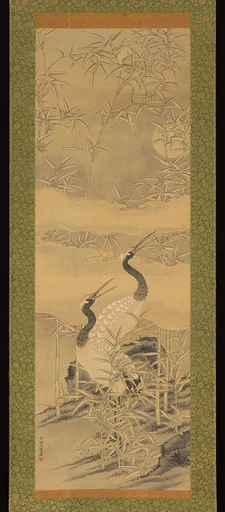
明 佚名 竹鶴雙清圖 軸|Crane in a bamboo grove
Unidentified artist
14th–early 15th century · Hanging scroll; ink and color on silk · Asian Art
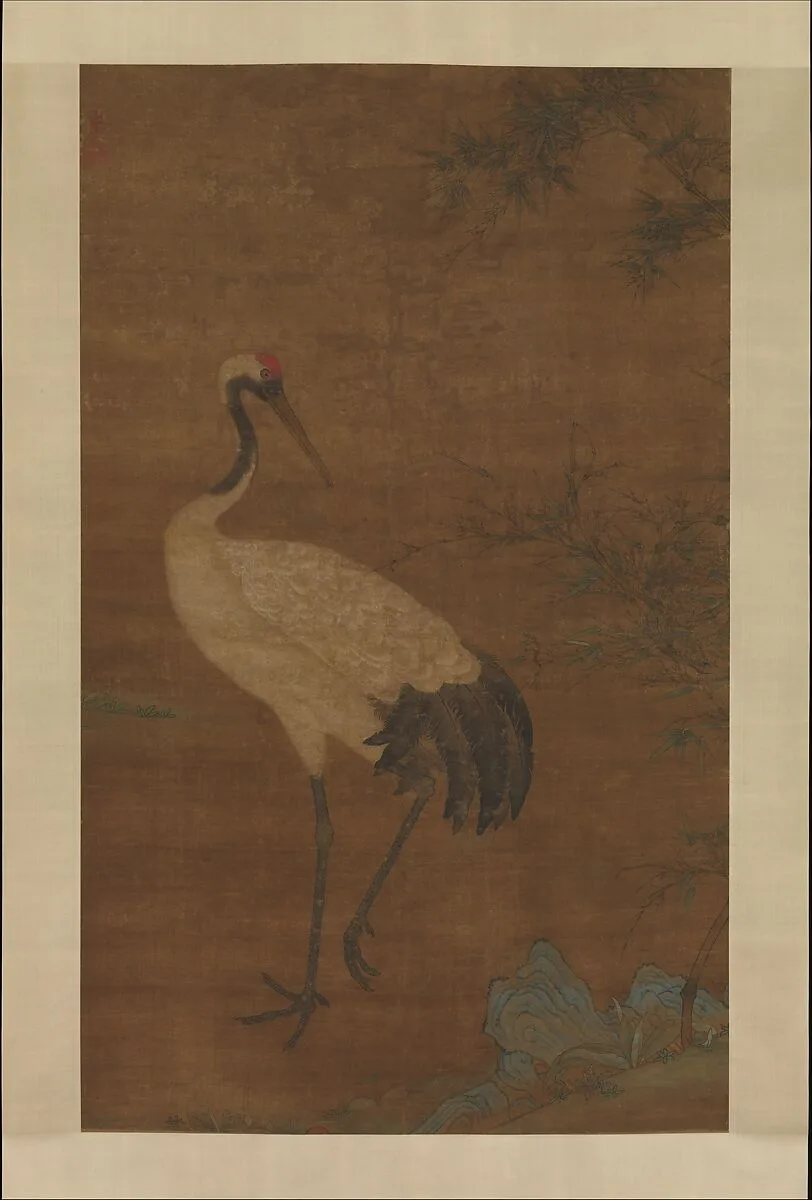
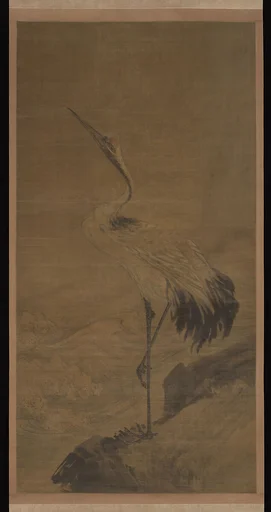
A favorite image in Chinese society and a familiar presence in imperial gardens as well as refined scholarly retreats, cranes were also renowned as the vehicles of Daoist immortals. Their long life span and loyalty to a single mate made them symbols of longevity and faithfulness. Here, a Manchurian crane, identified by its distinctive red forehead, strolls through a corner of the palace garden. Stopping in midstride and turning its head, the bird has just been startled by a branch of bamboo that has brushed against its tail feathers. One of only a handful of such large-scale images of birds to survive from the late Yuan or early Ming dynasty, this painting derives its subject from a composition by the emperor Huizong (r. 1100–25), who painted a set of six cranes in different poses. The complex branch structure of the twisting bamboo and the intricate detail of the bird's plumage—with every filament of the feathers carefully delineated—reveal a level of naturalistic description that predates the more conventionalized images of cranes created by the Ming court painter Bian Wenjin (ca. 1354–1428).
- Artist
- Unidentified artist
- Date
- 14th–early 15th century
- Medium
- Hanging scroll; ink and color on silk
- Culture
- China
- Department
- Asian Art
- Credit line
- Gift of Crane Co., 1991