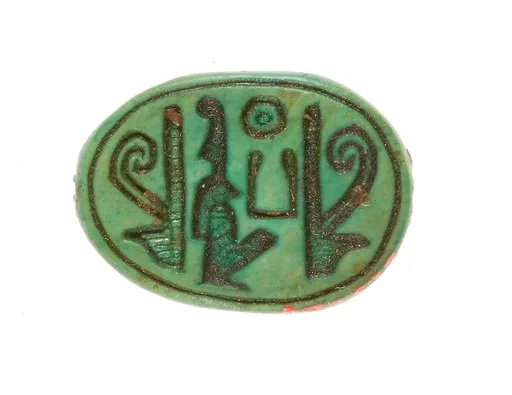
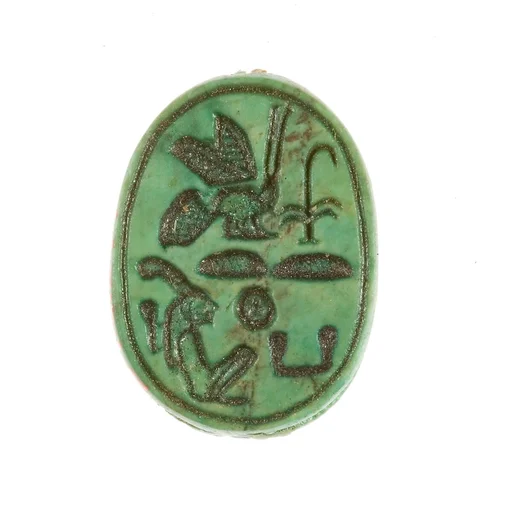
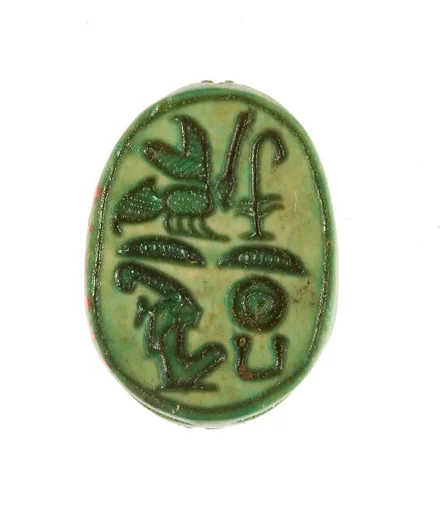
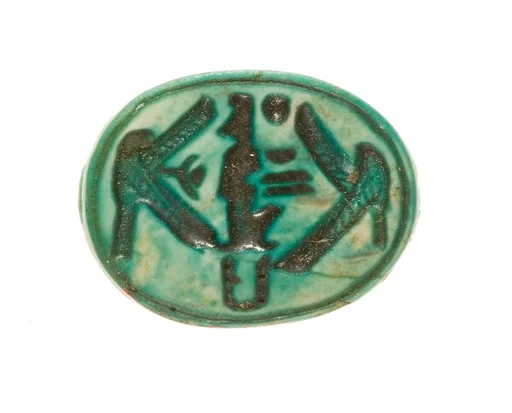
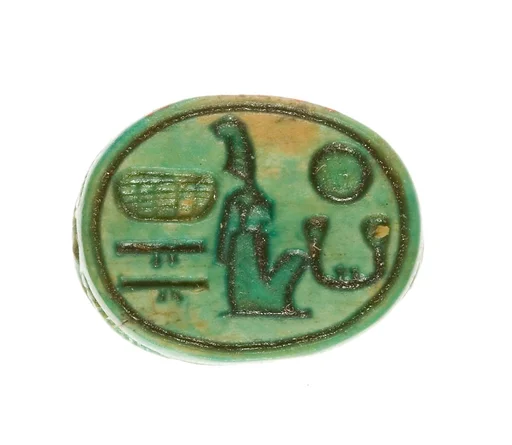
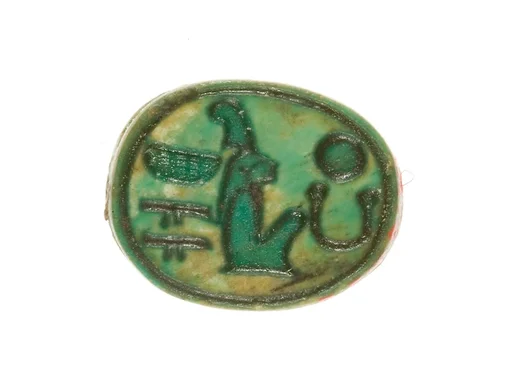
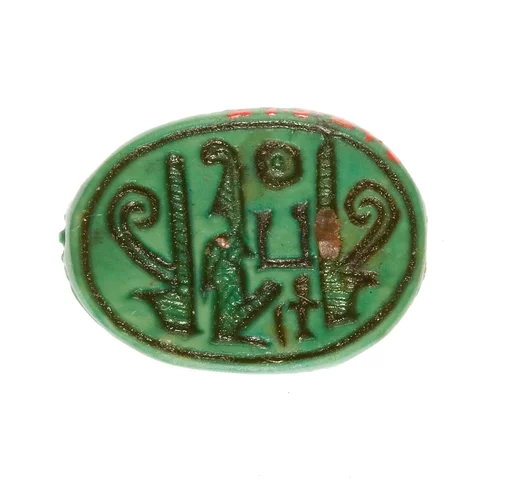
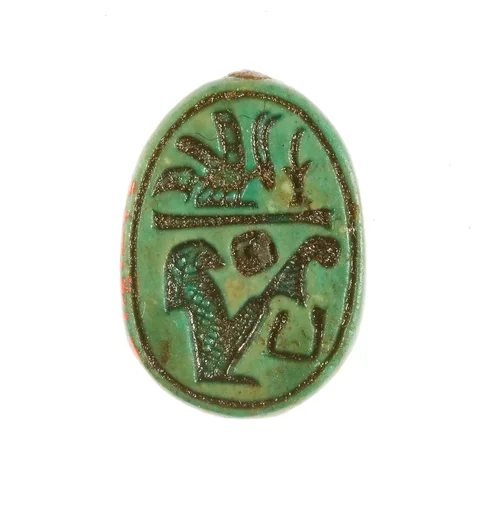
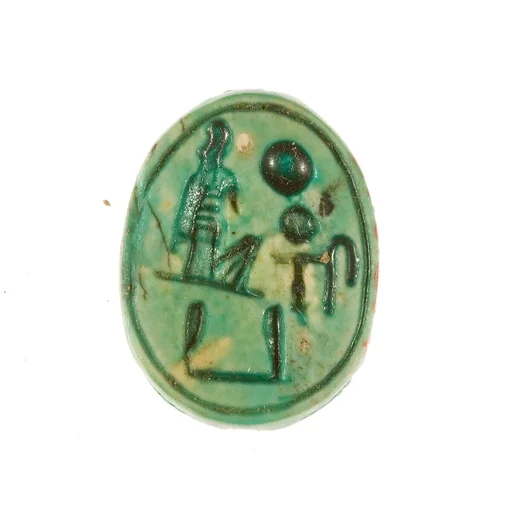
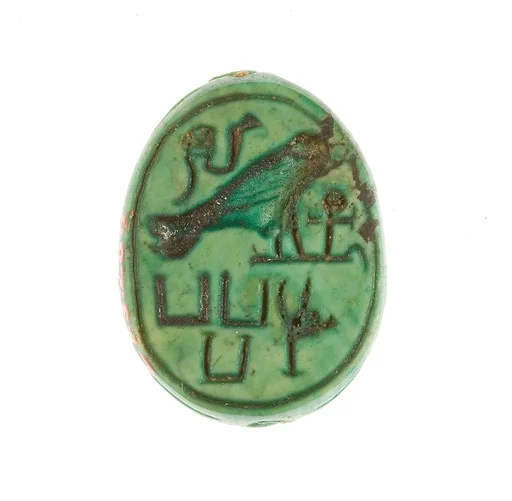
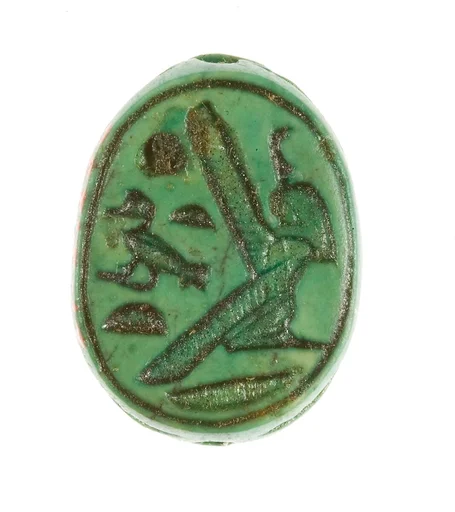
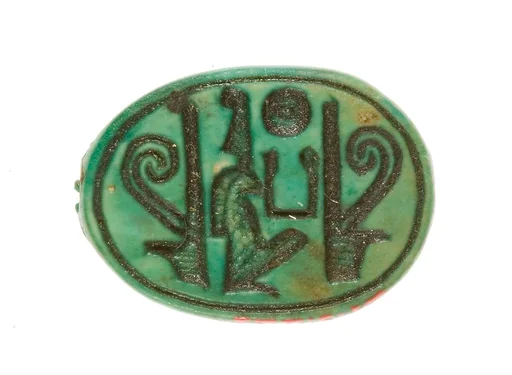
Scarab Inscribed with the Name Maatkare (Hatshepsut) Flanked by Two Falcons, One Proffering an Ankh
Unknown
ca. 1479–1458 B.C. · Steatite (glazed) · Egyptian Art
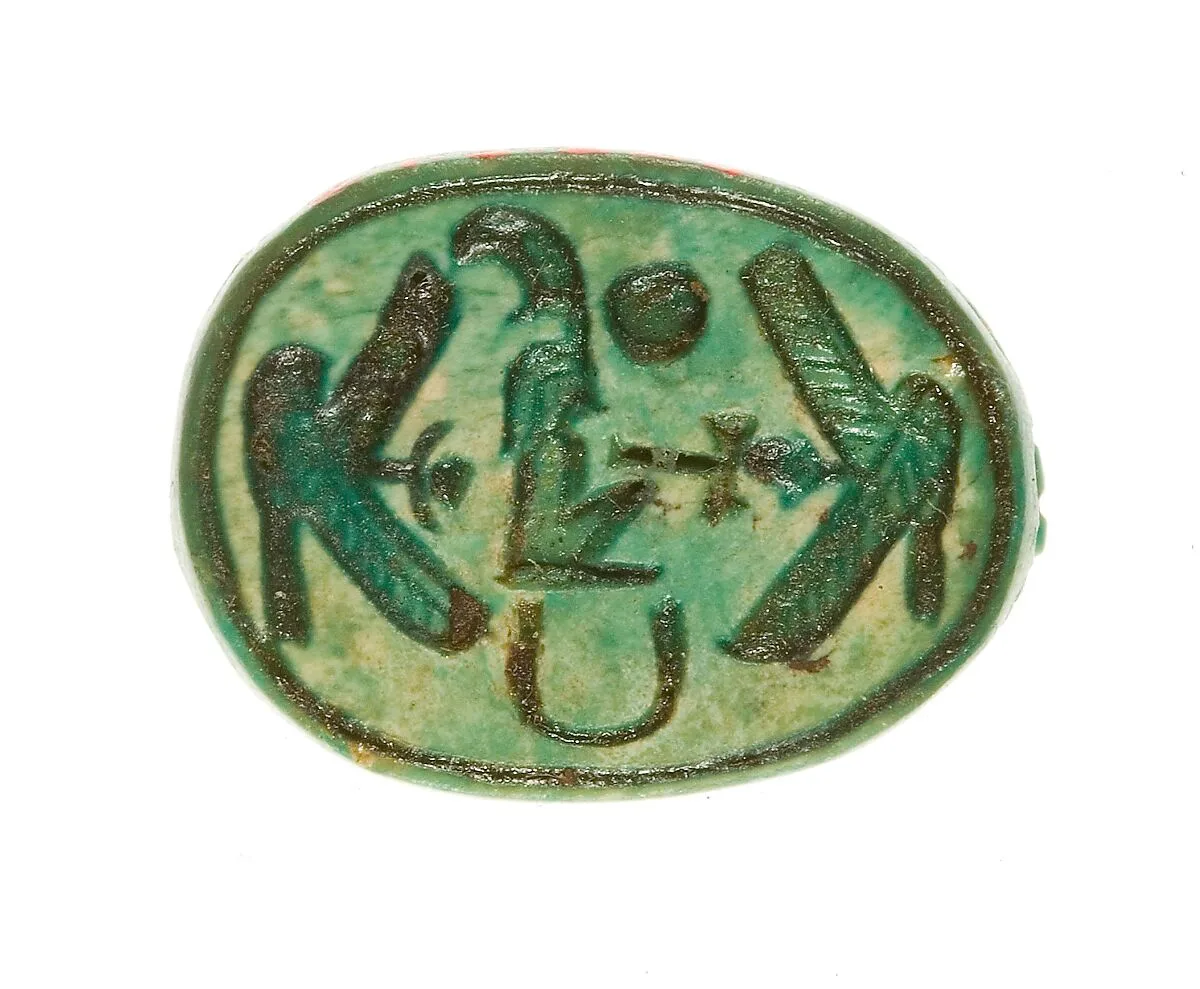
During the 1926-1927 excavation season, the Museum's Egyptian Expedition uncovered three foundation deposits along the eastern enclosure wall of Hatshepsut's funerary temple at Deir el-Bahri in Western Thebes. Among the contents were 299 scarabs and stamp-seals. Sixty-five of these are now in the Egyptian Museum, Cairo, and the rest were acquired by the Museum in the division of finds. Among the inscriptions on the bases of these scarabs and seals are examples of every title Hatshepsut held, from the time she was "king's daughter" during the reign of her father, Thutmose I; through the time she was queen of her half-brother, Thutmose II; and during her regency and co-reign with her nephew/step-son, Thutmose III. The inscription on the base of this scarab records Hatshepsut's throne name, Maatkare, enclosed in a cartouche and flanked by two falcons with outstretched wings. The bird on the right proffers an ankh hieroglyph (life), and the bird on the left probably holds a shen hieroglyph (eternity, protection). The name Maatkare may be roughly translated as Maat (the goddess of truth) is the life force of Re (the sun god).
- Artist
- Unknown
- Date
- ca. 1479–1458 B.C.
- Medium
- Steatite (glazed)
- Department
- Egyptian Art
- Credit line
- Rogers Fund, 1927