Untitled
Unknown
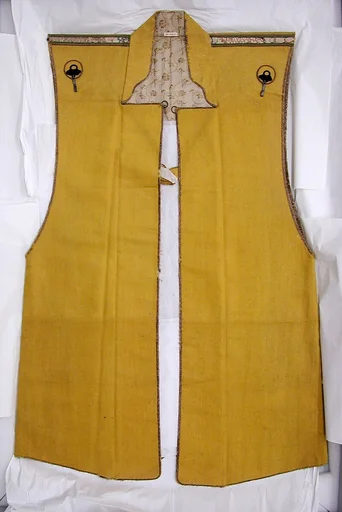
17th century · Body: China, for the European market, late 16th–17th century; silk velvet, cut and voided Lining: China, late 16th–17th century; silk damask Lapels: Japan, probably 18th century; lampas, silk and gilt-paper strips · Asian Art
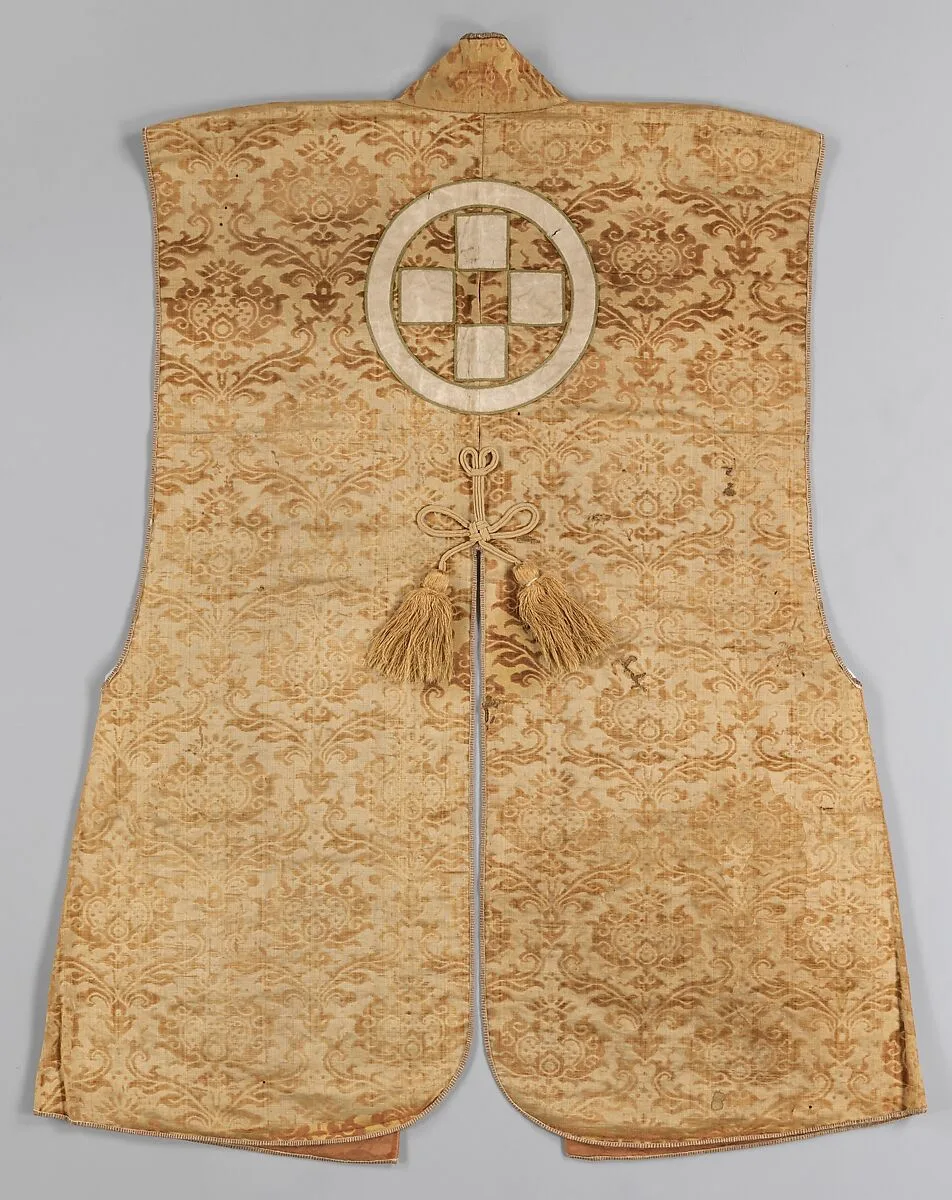
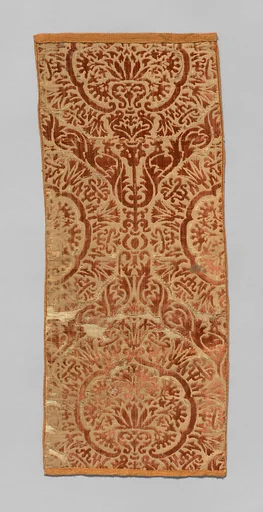
Samurai jinbaori were frequently made from expensive and flamboyant imported textiles like this Chinese silk velvet, which has a reddish pile pattern on a once vivid yellow background. The European-style “pomegranate” design features bilateral symmetry (mirror-imaged along a vertical axis) and a single direction of orientation. Patterns of this type—rare in Japan—frequently appear in European textiles of the sixteenth to seventeenth century. An exquisite Chinese silk damask lines the jinbaori, but its pattern is asymmetrical and features multiple orientations—traits more common in East Asian textiles. Both fabrics demonstrate the versatility of Chinese textile makers and the Japanese elite’s enthusiasm for such imports. cat. no. 31
- Artist
- Unknown
- Date
- 17th century
- Medium
- Body: China, for the European market, late 16th–17th century; silk velvet, cut and voided Lining: China, late 16th–17th century; silk damask Lapels: Japan, probably 18th century; lampas, silk and gilt-paper strips
- Culture
- Japan
- Department
- Asian Art
- Credit line
- Friends of Asian Art, Purchase, Mr. and Mrs. Andrew Saul Gift, 1998