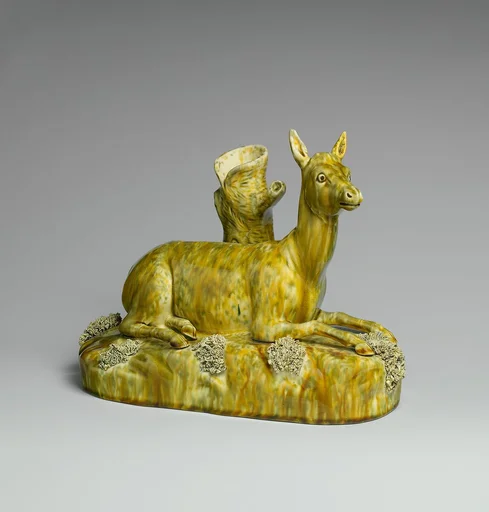
Figural spill vase
Unknown
1830–70 · Earthenware with flint enamel glaze · The American Wing
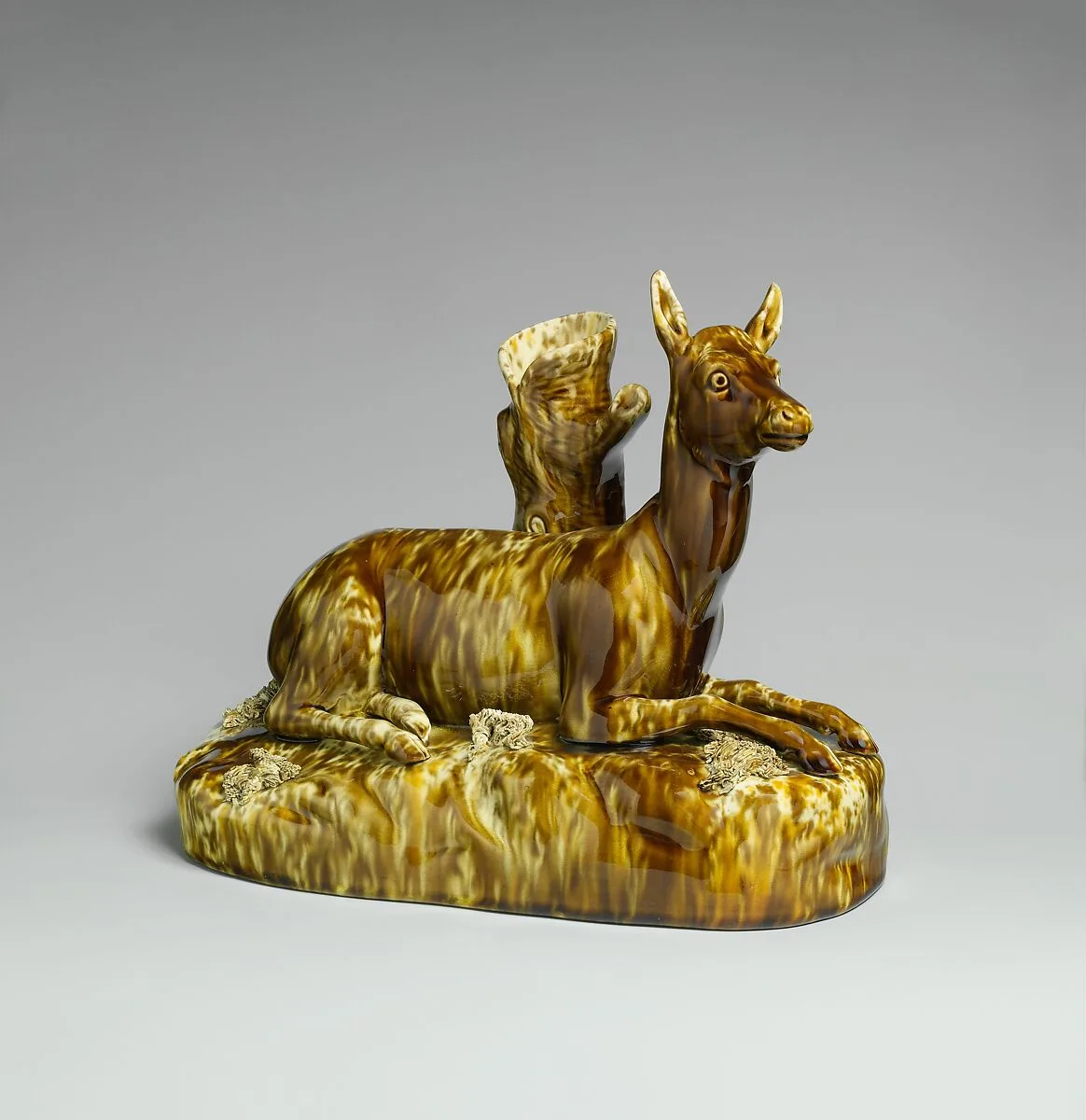
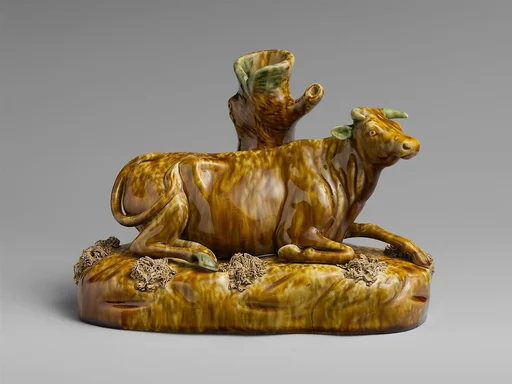
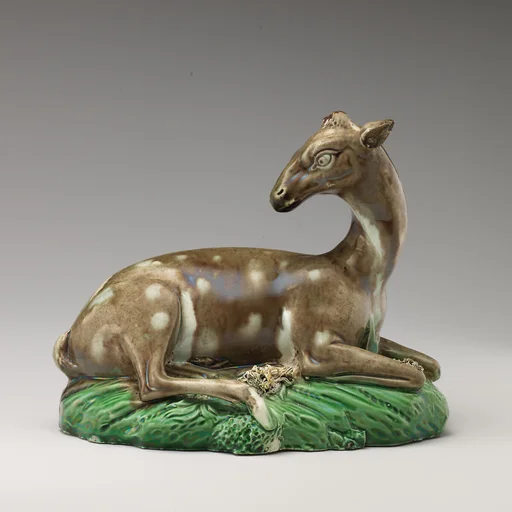
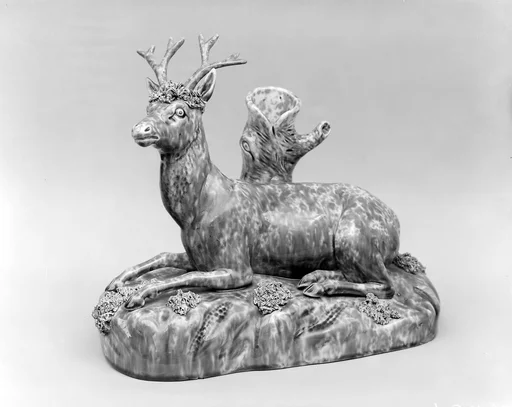
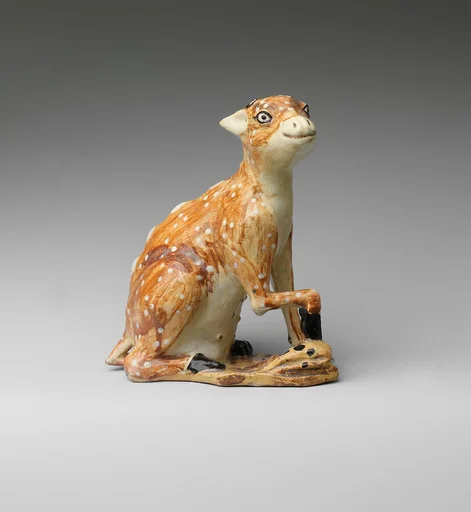
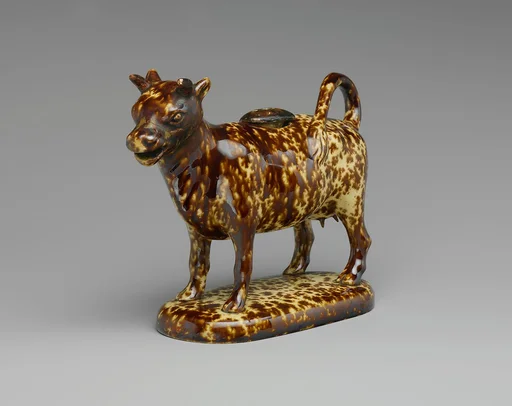
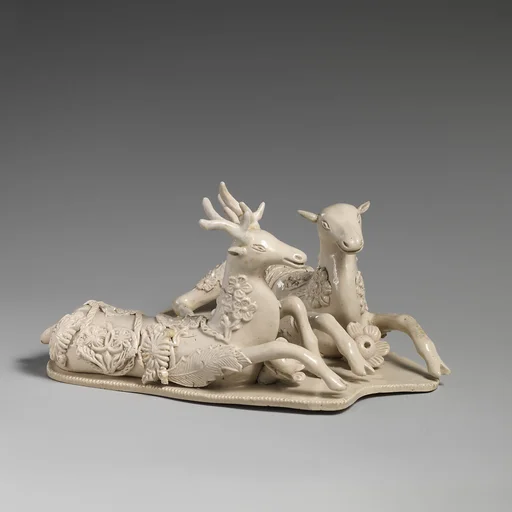
The middle of the nineteenth century witnessed a proliferation of relief-molded earthenware covered with an allover mottled brown enameled glaze. Often referred to as Rockingham ware in homage to similar ware first produced in England on the property of the marquis of Rockingham, many of the original molds and designs were brought from England by itinerant potters who fashioned these wares. Variations occur in the glazes by the means of application—dipping, sponging, or splashing—and with the addition of colored oxides. Relief-molded pitchers were the most common forms, but slip-cast animal figures such as a recumbent cows, lions, poodles, and deer, were also popular. This figure of a reclining doe was likely intended as a mantel ornament. The hollow tree trunk behind the doe was used to hold paper or wood spills for lighting candles or oil lamps. The piece is covered in an overall mottled cream and brown flint enamel glaze, commonly known as Rockingham glaze.
- Artist
- Unknown
- Date
- 1830–70
- Medium
- Earthenware with flint enamel glaze
- Culture
- American
- Department
- The American Wing
- Credit line
- Bequest of Helen Hay Whitney, 1944