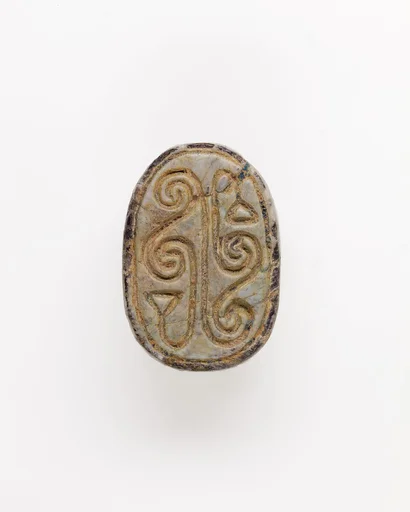
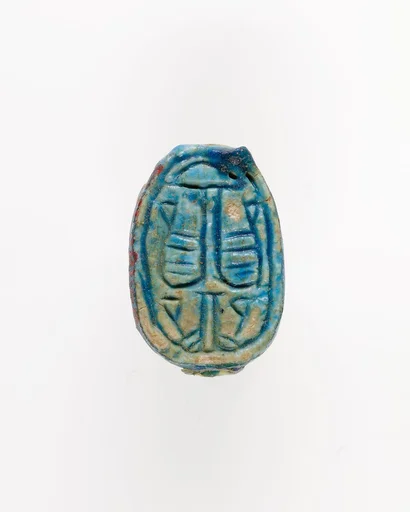
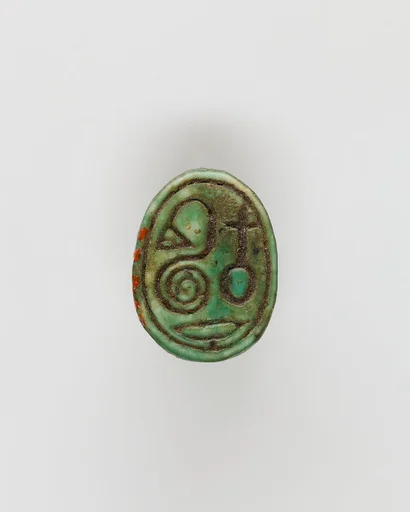
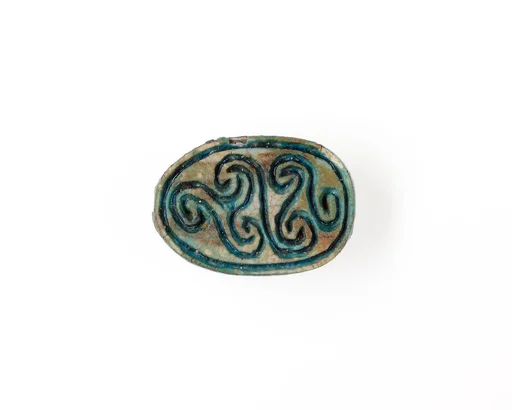
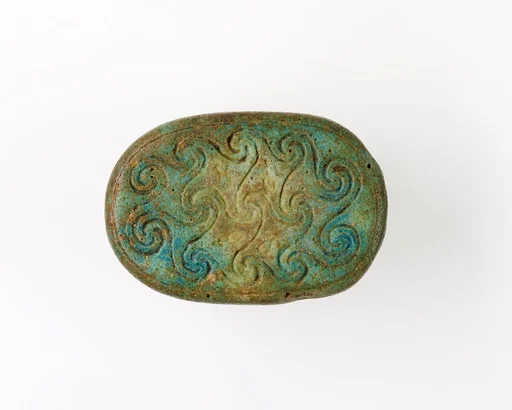
Scarab Decorated with Scrolls
Unknown
ca. 1740–1640 B.C. · Blue glazed steatite · Egyptian Art
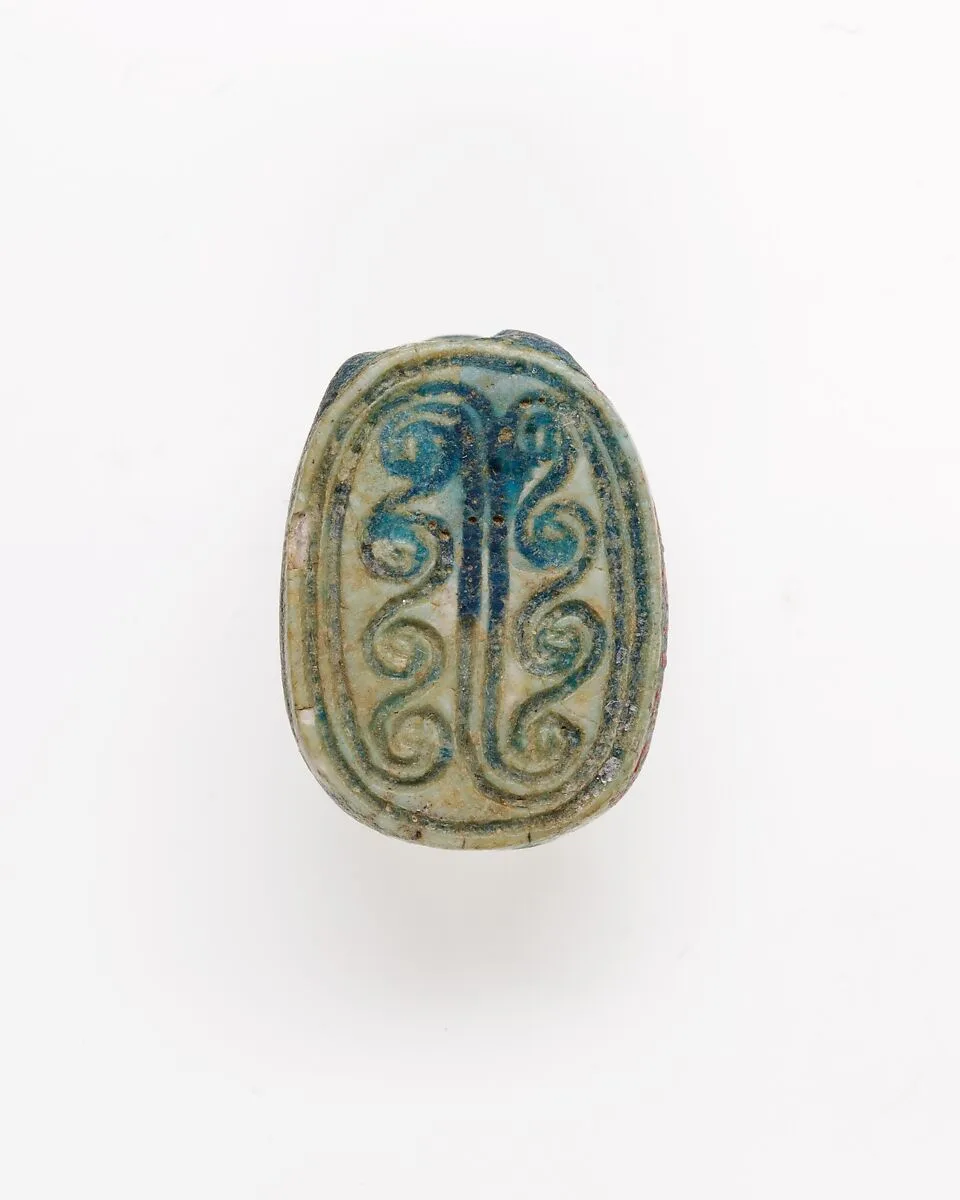
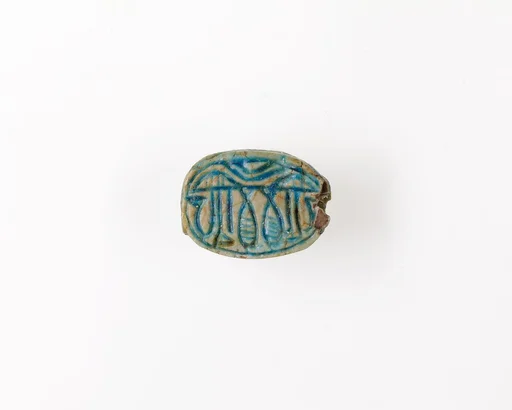
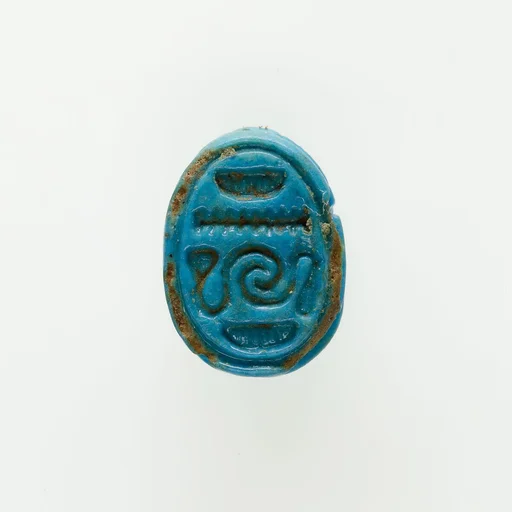
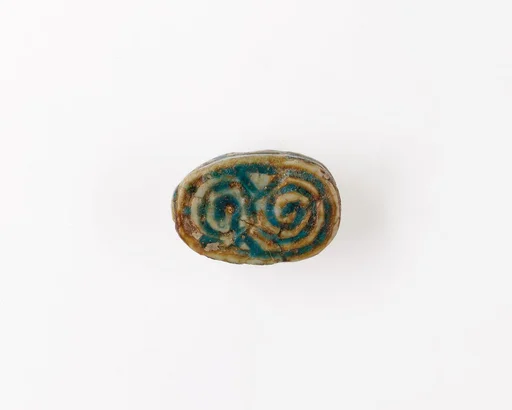
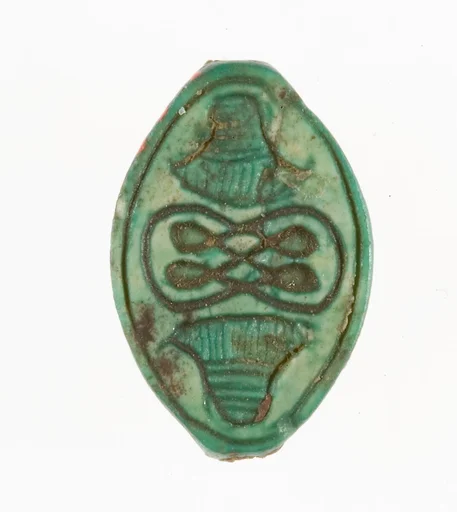
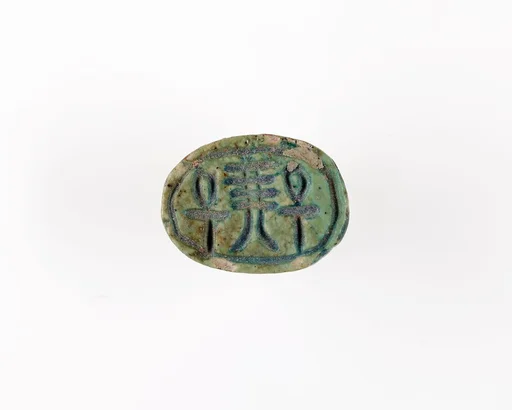
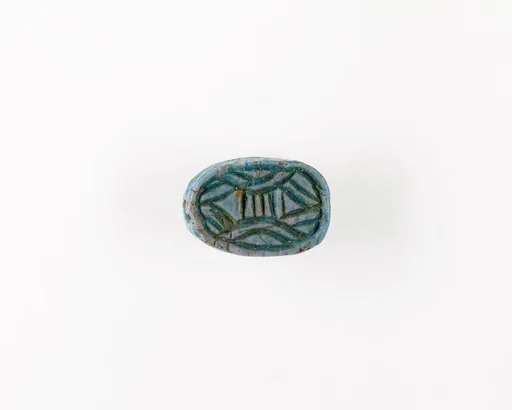
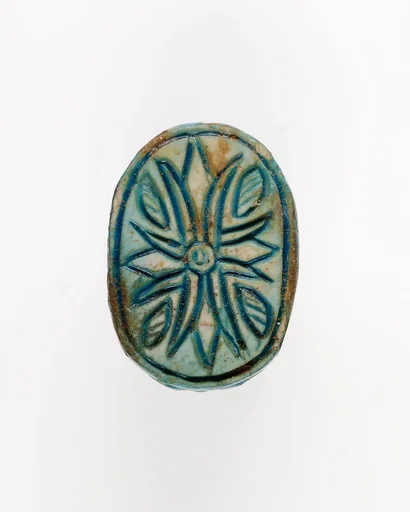
Scrolls and spirals –whether single or interlocking, or in combination with hieroglyphs or floral motifs– already decorate the earliest types of scarabs and are common throughout the first half of the second millennium B.C. While their meaning and source of inspiration remains unknown, scroll designs are also appealing to the eye. A wide variety of combinations, some of which more complex than others, is found on Egyptian scarabs of the Middle Kingdom and scrolls become particularly popular during late Dynasty 12 and Dynasty 13 (ca. 1850–1640 B.C.). While these designs continue to appear on scarabs in the Second Intermediate Period (ca. 1640–1550 B.C.) and on contemporary Canaanite imitations, details in the composition or on the scarab’s back or its legs allow the seal-amulet to be more precisely dated. This scarab shows, for example, features on its back and sides that are characteristic for mid to late Dynasty 13 scarabs, probably carved at a scarab workshop active in Avaris (present-day Tell el-Dab’a).
- Artist
- Unknown
- Date
- ca. 1740–1640 B.C.
- Medium
- Blue glazed steatite
- Department
- Egyptian Art
- Credit line
- Rogers Fund, 1909