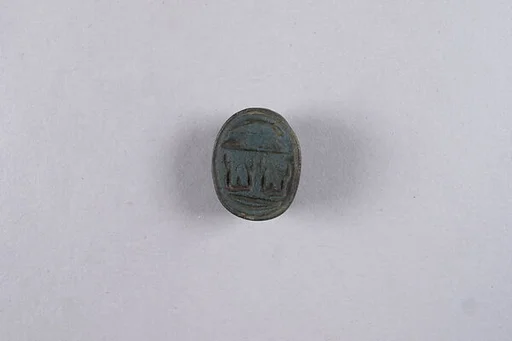
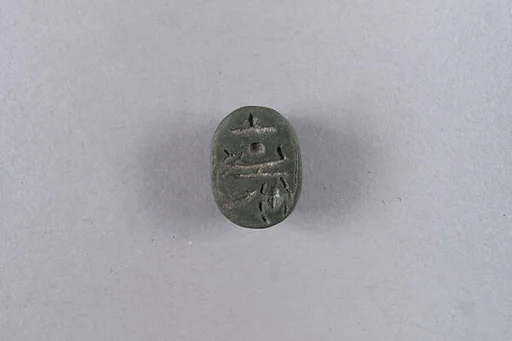
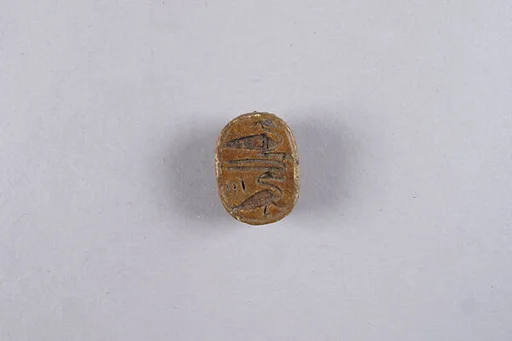
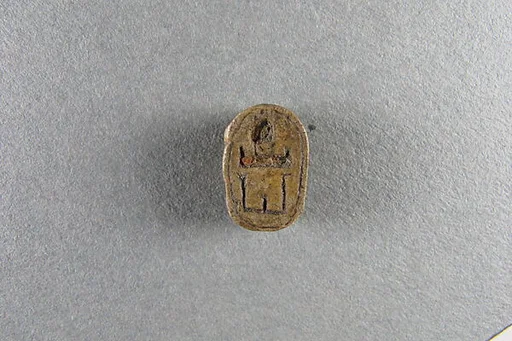
Scarab with blessing related to Amun
Unknown
ca. 1070–664 B.C. · Blue faience or glass · Egyptian Art
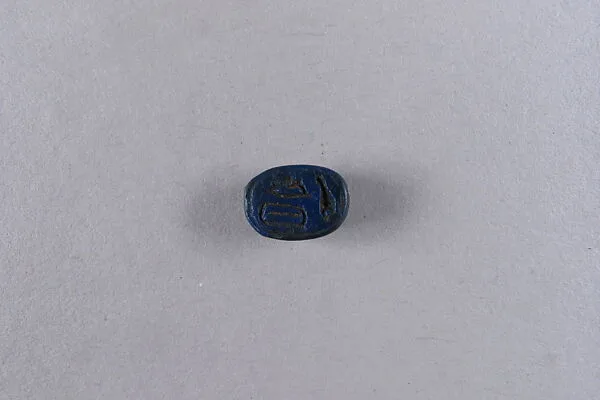
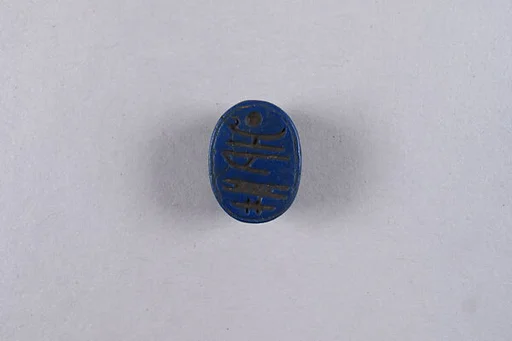
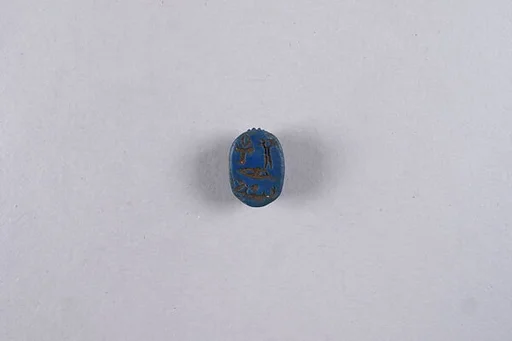
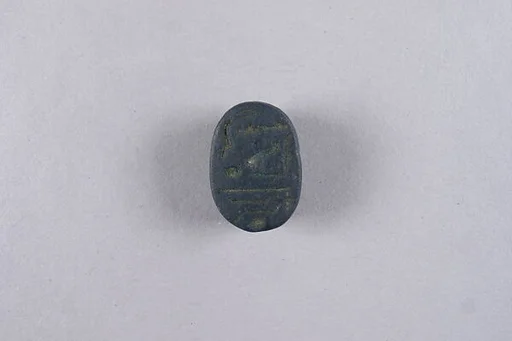
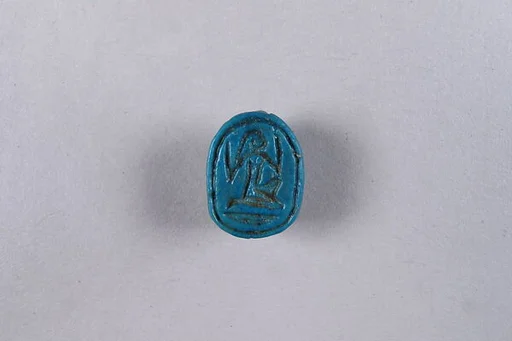
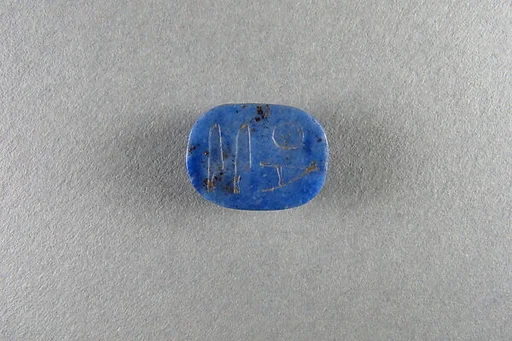
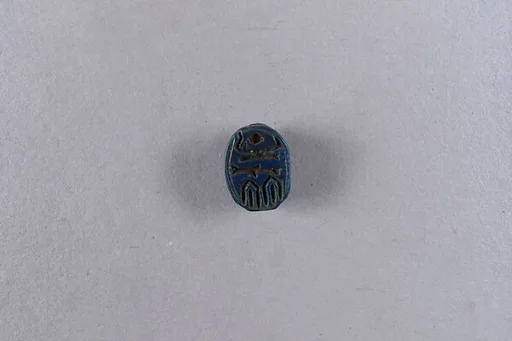
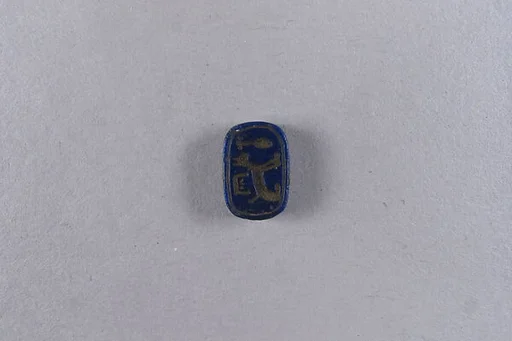
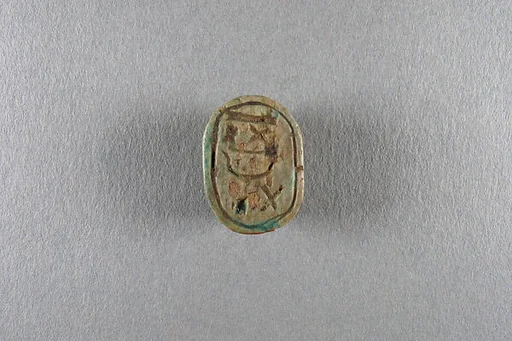
Scarabs bearing wishes and blessings related to divinities whose protection individuals wished to summon are particular popular during the (late) New Kingdom and the Third Intermediate Period (ca. 1295-664 B.C.). Given the limited surface on scarab bases, seal engravers were often very creative in using as few hieroglyphs and signs as possible in order to convey their message. This scarab calls for the protection of the sun god Amun, referred to in the lower left corner by the oval hieroglyph for island surrounding a wavy water line. According to ancient Egyptian cryptography, the oval with water line forms the name of the god Amun. Cryptographic writing makes use of standard signs’ atypical values and introduces alternative signs based on such principles as acrophony, generally with the objective to form divine names. The eye above specifies that the sun god is vigilant. The hieroglyph of the White Crown of Upper Egypt is here not referring to the king or to authority, but is to be read as a sign for good and beautiful. The entire inscription thus forms a blessing that bestows good things on the owner because the sun god is watchful.
- Artist
- Unknown
- Date
- ca. 1070–664 B.C.
- Medium
- Blue faience or glass
- Department
- Egyptian Art
- Credit line
- Gift of Helen Miller Gould, 1910