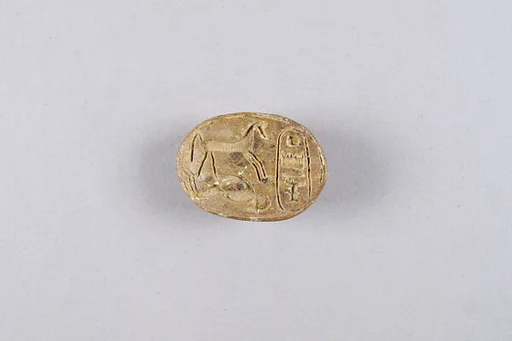
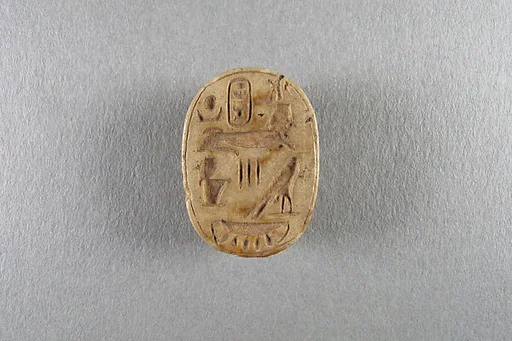
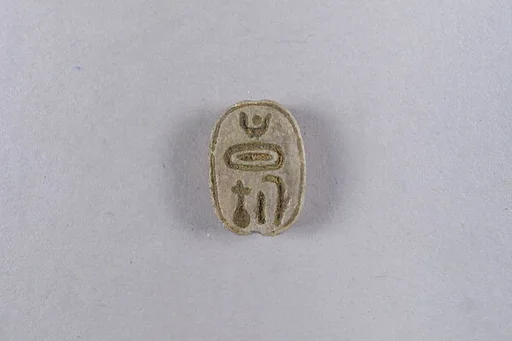
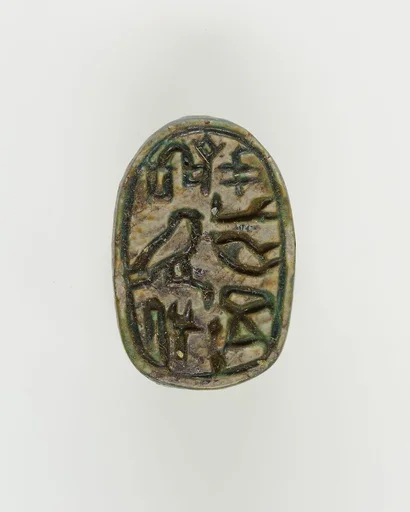
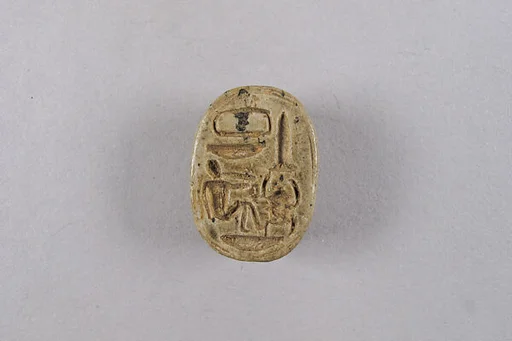
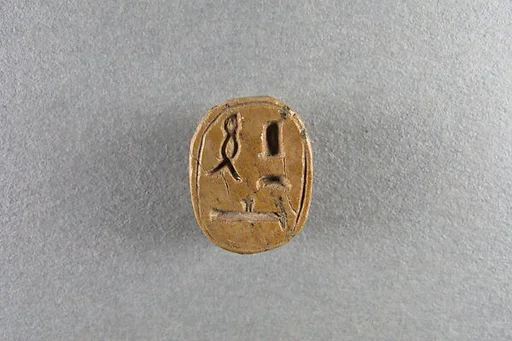
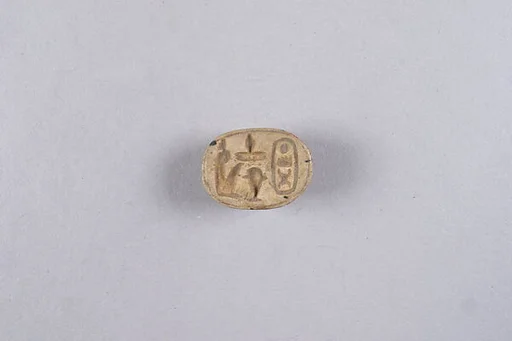
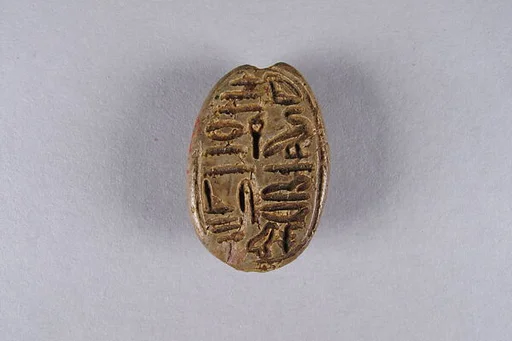
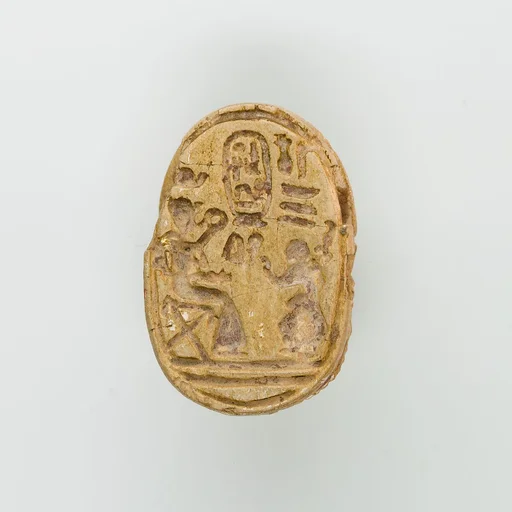
Scarab with a Kneeling Pharaoh and the Name Menkheperre (Thutmose III)
Unknown
ca. 1295–1070 B.C. · Steatite · Egyptian Art
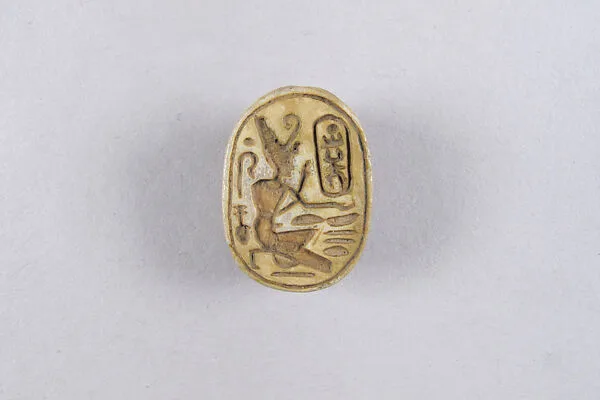
A man faces right and kneels down on his right knee. He is identified as the pharaoh by his crown, the Double Crown of Upper and Lower Egypt dressed with a uraeus on the front. However, the chin displays no royal beard. Within the kneeling figure details are carefully engraved, such as the folds of his kilt with ritual apron (sporran), a belt, a wesekh-collar around his neck, and the facial traits. Behind his back are the heqa-scepter and the nefer-hieroglyph, together forming the royal epithet ‘good ruler’, which was not frequently used on scarabs but is known to be associated with royal names of Dynasty 18 (ca. 1550-1295 B.C.). The king raises his right hand in front of him in a gesture of adoration while his left hand is stretched out to support an oval. The oval is suggestive of a cartouche and is inscribed with the name Menkheperre, known mainly as the throne name of Thutmose III (Dynasty 18, ca. 1479-1425 B.C.). The horizontal signs in front of the king are a debased rendering of the well-known royal title Lord of the Two Lands. A small dot in the upper left of the composition may refer to the sun disk of Re.
- Artist
- Unknown
- Date
- ca. 1295–1070 B.C.
- Medium
- Steatite
- Department
- Egyptian Art
- Credit line
- Gift of Helen Miller Gould, 1910