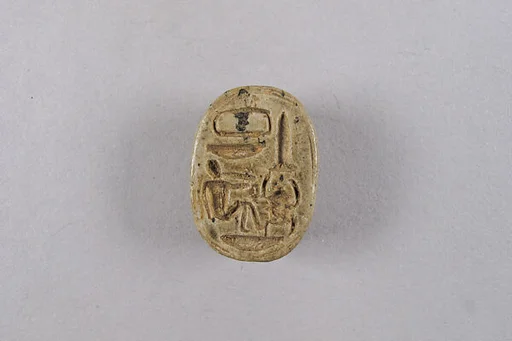
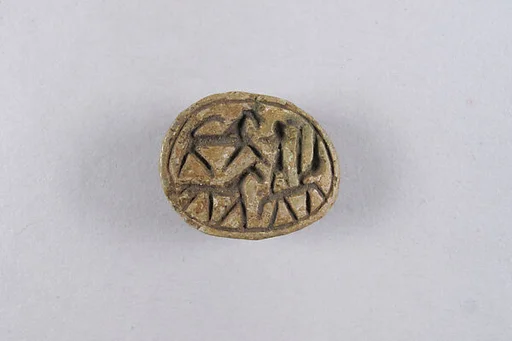
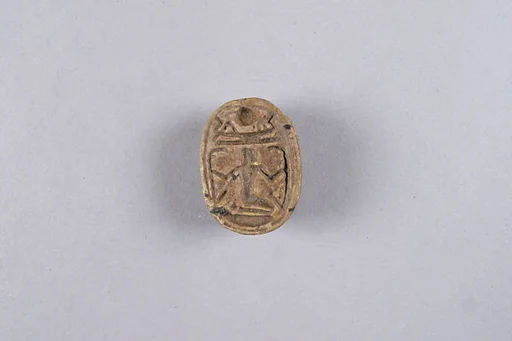
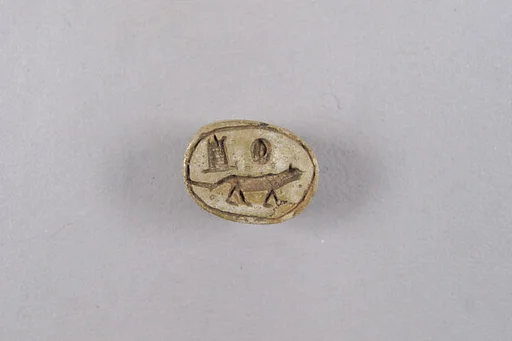
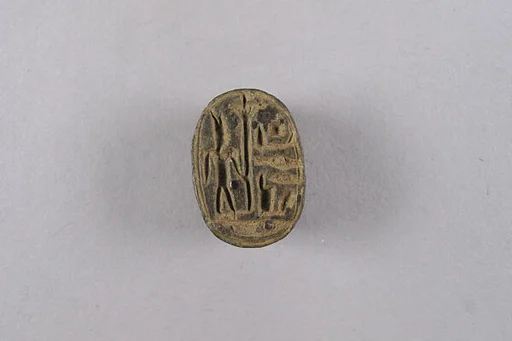
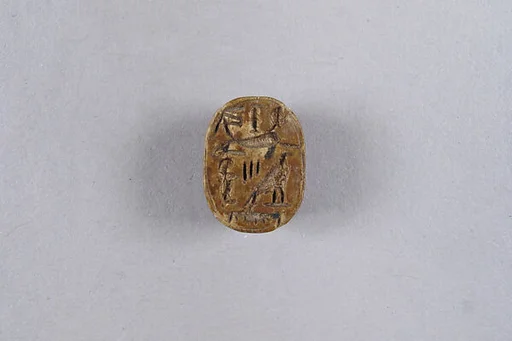
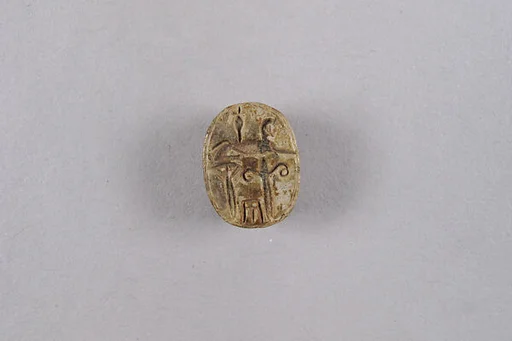
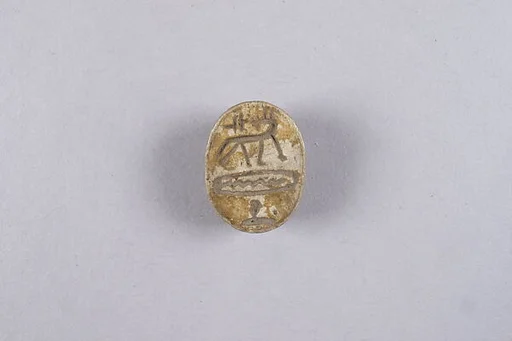
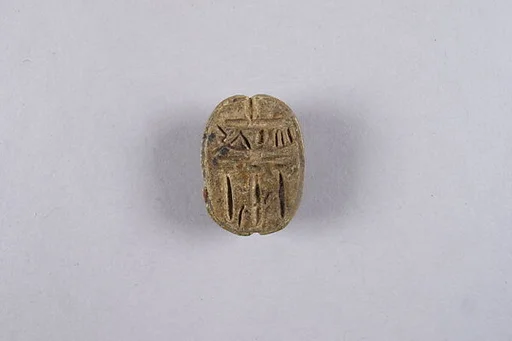
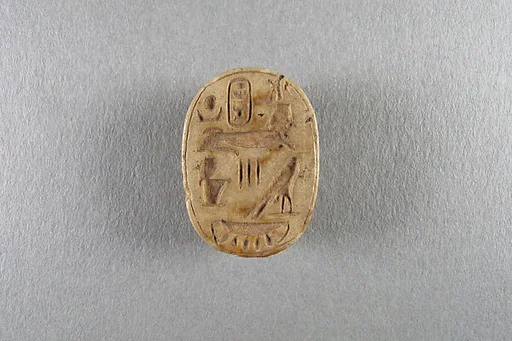
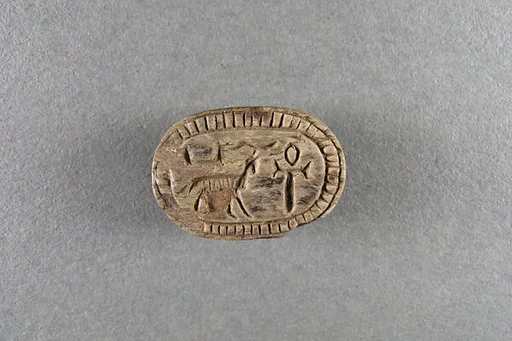
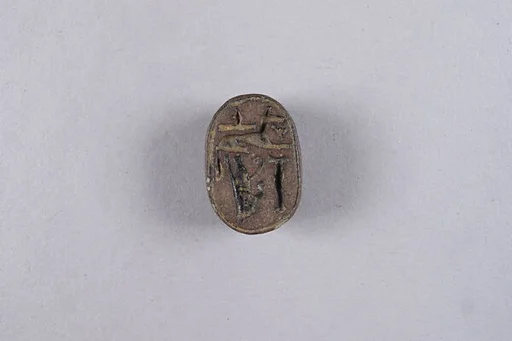
Scarab with Representations of Taweret and Hathor
Unknown
ca. 1070–664 B.C. · Steatite · Egyptian Art
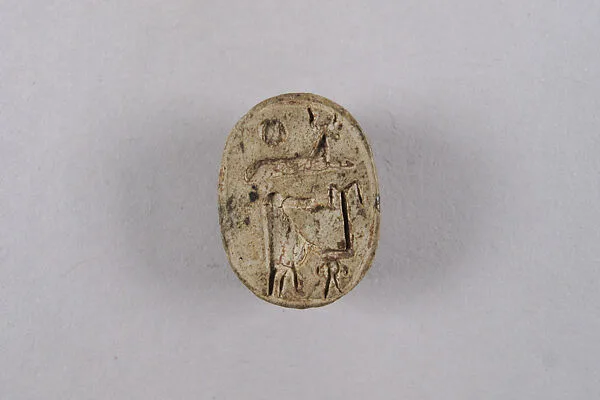
A hippopotamus goddess appears on seal-amulets as early as the First Intermediate Period (ca. 2100-2030 B.C.). On this scarab, she is probabably the ancient Egyptian goddess Taweret, represented as a composite deity with features of a pregnant woman standing upright, with the head of a hippopotamus, the hair and claws of a lion, and the tail of a crocodile. She is a protective deity, often holding knives or other objects that ward off danger and evil. This hippopotamus goddess is also associated with fertility and pregnancy. As such, she generally appears in the sphere of personal religion and is often called upon to protect the mother and child, for example as seen on the so-called ivory knives or birth tusks of the Middle Kingdom (ca. 2030-1640 B.C.). Here we see her holding a fire poker, while the hieroglyph for protection is placed in front of her, at her feet. It is therefore not surprising to see the recumbent cow with a sun disk placed on top: she is to be identified as the goddess Hathor, who was also worshipped as a fertility goddess and protector of motherhood. By appearing together on this scarab, the goddesses reinforce the protective nature of the scarab and offer their divine support, possibly for a pregnancy or for the children of the scarab’s owner.
- Artist
- Unknown
- Date
- ca. 1070–664 B.C.
- Medium
- Steatite
- Department
- Egyptian Art
- Credit line
- Gift of Darius Ogden Mills, 1904